
6
Margherita Leo, MRT (R) (ACR)
Cardiac MRI Technologist
Research Institute of the McGill University Health Center
Montreal, Quebec, Canada
Margherita Leo, MRT (R) (ACR)
Cardiac MRI Technologist
Research Institute of the McGill University Health Center
Montreal, Quebec, Canada
Elizabeth Hillier, PhD
Research Scientist
McGill University, University of Alberta
Montreal, Quebec, Canada
Katerina Eyre, MSc
PhD(C)
McGill University Health Center
Montreal, Canada
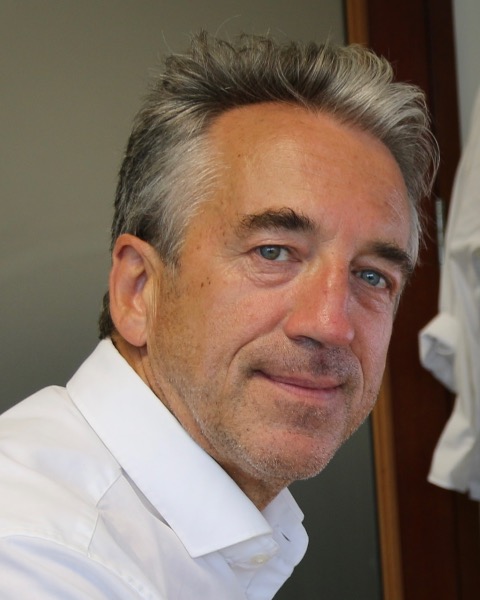
Matthias G. Friedrich, MD, FSCMR
Senior Author
Research Institute of the McGill University Health Center
Montreal, Quebec, Canada
Current standard tests for coronary artery disease (coronary angiography, SPECT, stress echocardiography, first-pass perfusion cardiac magnetic resonance imaging, CMR) require the application of pharmacological or physical stress and/or the administration of a contrast agent or radioactive tracer. None of these methods measure coronary vascular function on a microvascular level or can assess tissue oxygenation changes as the relevant biomarker. Recently, oxygenation-sensitive CMR (OS-CMR) has been established as a non-invasive technique to track changes in myocardial oxygenation and assess coronary vascular function during vasoactive breathing maneuvers. This presentation will explain the protocol for breathing-enhanced OS-CMR and the acquisition of the breathing-induced myocardial oxygenation reserve in healthy volunteers and patients.
Methods:
OS-CMR uses the so-called BOLD (blood oxygen level dependent) effect on myocardial T2* associated with an increased presence of iron or de-oxygenated hemoglobin to visualize changes in tissue oxygenation1. BOLD- or T2*-“sensitive” sequences are used to assess myocardial iron overload in patients with hemochromatosis but can also be used to track changes in myocardial oxygenation. Hyperventilation and breath-holds lead to endothelium-dependent coronary vasoconstriction and vasodilation, respectively, thus can be used as physiological vasoactive maneuvers that do not require the administration of a pharmacological stress agent. Current protocols typically start with an OS-CMR image acquisition during a short breath-hold. These baseline images are used to verify that both short axis slices have a good quality, are void of artifacts, and are well-positioned (Fig.1). The second series is a continuous acquisition with 2 minutes of relaxed breathing followed by 1 minute of paced hyperventilation using a pre-recorded metronome (set at 30 beats per minute) and ending with a voluntary, end-expiratory breath hold of at least 40 seconds to ensure that images of 3 full cardiac cycles for each planned slice are obtained (Fig.2).
Results:
The global myocardial signal intensity at end-systole acquired at 30 seconds of the post-hyperventilation breath-hold is compared to the end-systolic image acquired at the beginning of the post-hyperventilation breath-hold. The Breathing-induced Myocardial Oxygenation REserve (B-MORE) is then calculated as a percentage change in signal intensity over the breath-hold (Fig.3). It reflects the change of myocardial oxygenation from vasoconstriction (immediately post hyperventilation) to vasodilation (voluntary apnea), and directly reflects the entire endothelium-dependent vasoactive capacity of the coronary vascular system.
Conclusion:
This novel acquisition method has the potential to eliminate the use of pharmacological stress and contrast agents. The results can be presented as a vascular function map and thereby provide important information for clinical decision-making.