
Pediatric Heart Disease

Jason N. Johnson, MD
Associate Chief, Pediatric Cardiology
Le Bonheur Children's Hospital
Memphis, Tennessee, United States
Jason N. Johnson, MD
Associate Chief, Pediatric Cardiology
Le Bonheur Children's Hospital
Memphis, Tennessee, United States
Cara E. Morin, MD, PhD
Pediatric Radiologist
Cincinnati Children's Hospital Medical Center
Memphis, Tennessee, United States
Subodh Selukar, PhD
Instructor
St. Jude Children's Research Hospital, Tennessee, United States
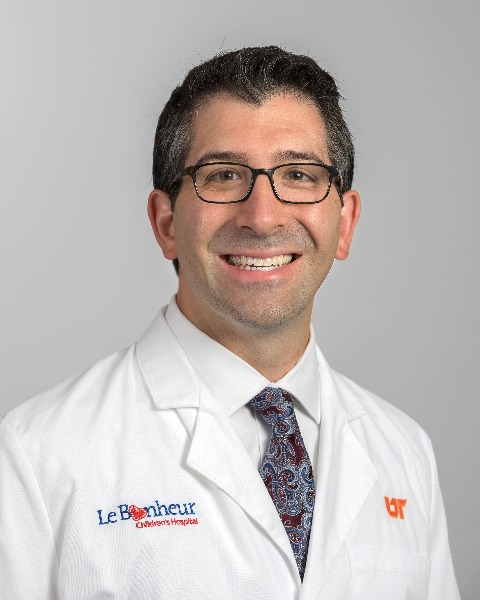
Anthony Merlocco, MD
Pediatric Cardiologist
Le Bonheur Children's Hospital
Memphis, Tennessee, United States
Chris Goode, MRT
Cardiac MR Technologist
St. Jude Children's Research Hospital, Tennessee, United States
Parul Rai, MD
Instructor
St. Jude Children's Research Hospital, Tennessee, United States
Jeffrey A. Towbin, MD
Division Chief, Pediatric Cardiology
Le Bonheur Children's Hospital
Memphis, Tennessee, United States
Jane Hankins, MD, MSc
Member
St. Jude Children's Research Hospital, Tennessee, United States
Akshay Sharma
Assistant Member
St. Jude Children's Research Hospital, Tennessee, United States
We performed a retrospective chart review of pediatric and young adults with SCD who underwent CMR between 2020 and 2021. CMR-derived ventricular volumes were used to calculate ejection fraction and myocardial mass. ECV was measured from T1 maps acquired with a modified Look-Locker inversion recovery (MOLLI) sequence in short-axis pre- and post-contrast. T2 and T2* maps were obtained before contrast. Regions of interest for analysis were drawn in the interventricular septum at the mid-myocardial level.
Results:
Thirty-six patients (31 [86%] Hemoglobin [Hgb] SS, 4 [11%] Hgb SC, 1 [3%] Hgb SB+ thalassemia) underwent CMR during the study period (Table 1) due to abnormal echocardiograms. The median age at the time of CMR was 16.8 years (IQR 14.7-17.9). At the time of CMR, 13 (36%) patients were receiving hydroxyurea for a median treatment duration of 2.3 years (IQR 0.0–8.4), and 14 (39%) were receiving chronic transfusions (CTXN) for a median treatment duration of 0.3 years (IQR 0.0–2.5). Some patients switched from hydroxyurea to CTXN or vice versa, so the collective median duration of any DMT was 7.1 years (IQR 0.7-11.5). In the two years preceding the CMR, the frequency of SCD acute complications was as follows: 5 (14%) patients had 1-2 episodes of acute chest syndrome, and 7 (19%) patients had ≥1 episode of vaso-occlusive pain. The remaining participants had no vaso-occlusive events two years before undergoing CMR.
Many patients had left ventricle (LV, 22 [61%]; and right ventricle (RV, 17 [47%]) dilation. Twenty-one (58%) patients also had left atrial (LA) enlargement. Most (23 [64%]) patients had elevated LV cardiac index. Both LA volume and LV cardiac index were elevated despite DMT, whether hydroxyurea, CTXN or a combination of both, and no differences were observed relative to the type of DMT (Figure 1).
Nearly all patients (34 [94%]) had increased ECV, median ECV=31% (IQR 29-34). Duration of exposure to DMT was not associated with ECV (slope of ECV% versus years on DMT: 0.05, p=0.615). There was no difference in ECV among patients who started DMT before or after three years of age (Figure 2).
Conclusion: Our study highlights that diffuse myocardial fibrosis is nearly universal in children and young adults with SCD, even among patients with normal cardiac size and function. Our data further suggest that DMT does not mitigate the development of myocardial fibrosis, even if it is begun very early in life. These data demonstrate the use of CMR as an essential tool to identify cardiac changes from SCD and highlight the need of developing better cardioprotective strategies in patients with SCD.