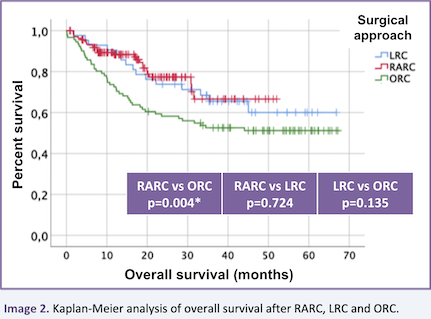
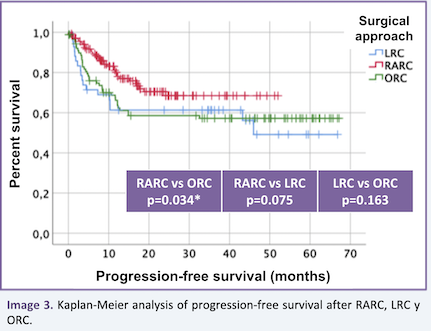
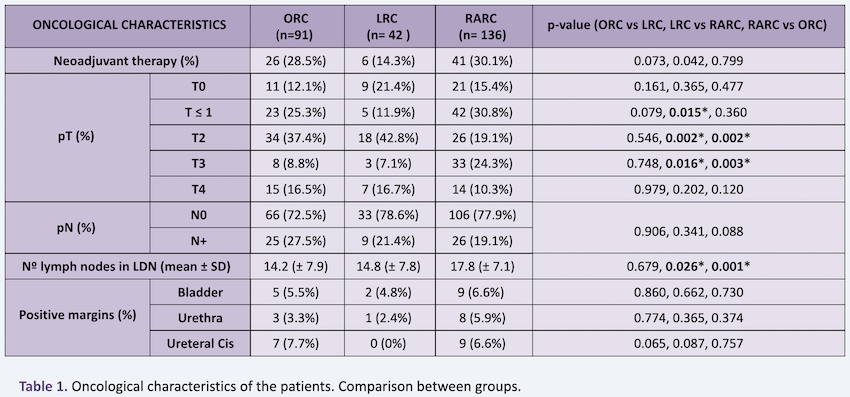
Introduction: The development of minimally invasive techniques such as laparoscopy and robot-assisted surgery have been introduced in the treatment of bladder cancer in order to reduce postoperative morbidity after a radical cystectomy. The aim of our study is to analyze and compare the oncological outcomes after open (ORC), laparoscopic (LRC) and robotic-assisted radical cystectomy (RARC). Methods: Retrospective analysis of the radical cystectomies performed as treatment for bladder cancer in our center from January 2016 to May 2021 and comparison of oncological outcomes after ORC, LRC or RARC. Results: During the mentioned period 269 radical cystectomies for bladder cancer were performed in our center. Oncological features of the patients are shown in Table 1. No differences where found in positive surgical margins between the three approaches. Lymph node dissection count was superior for RARC. Mean follow-up times were 32 (± 32.5), 35 (±17.1) and 19 (± 12.3) months after ORC, LRC and RARC respectively. Overall survival and progression-free survival were significantly superior for patients after RARC compared to ORC (p=0.004 and p=0.034 respectively) (Figures 1 and 2). LRC didn’t show any statistical differences in terms of overall survival and progression-free survival compared to RARC or ORC (Figure 1 and 2). Conclusions: In our series, overall survival and progression-free survival were superior for patients after RARC compared to ORC. SOURCE OF Funding: None.