Madrona Oncology and University of British Columbia
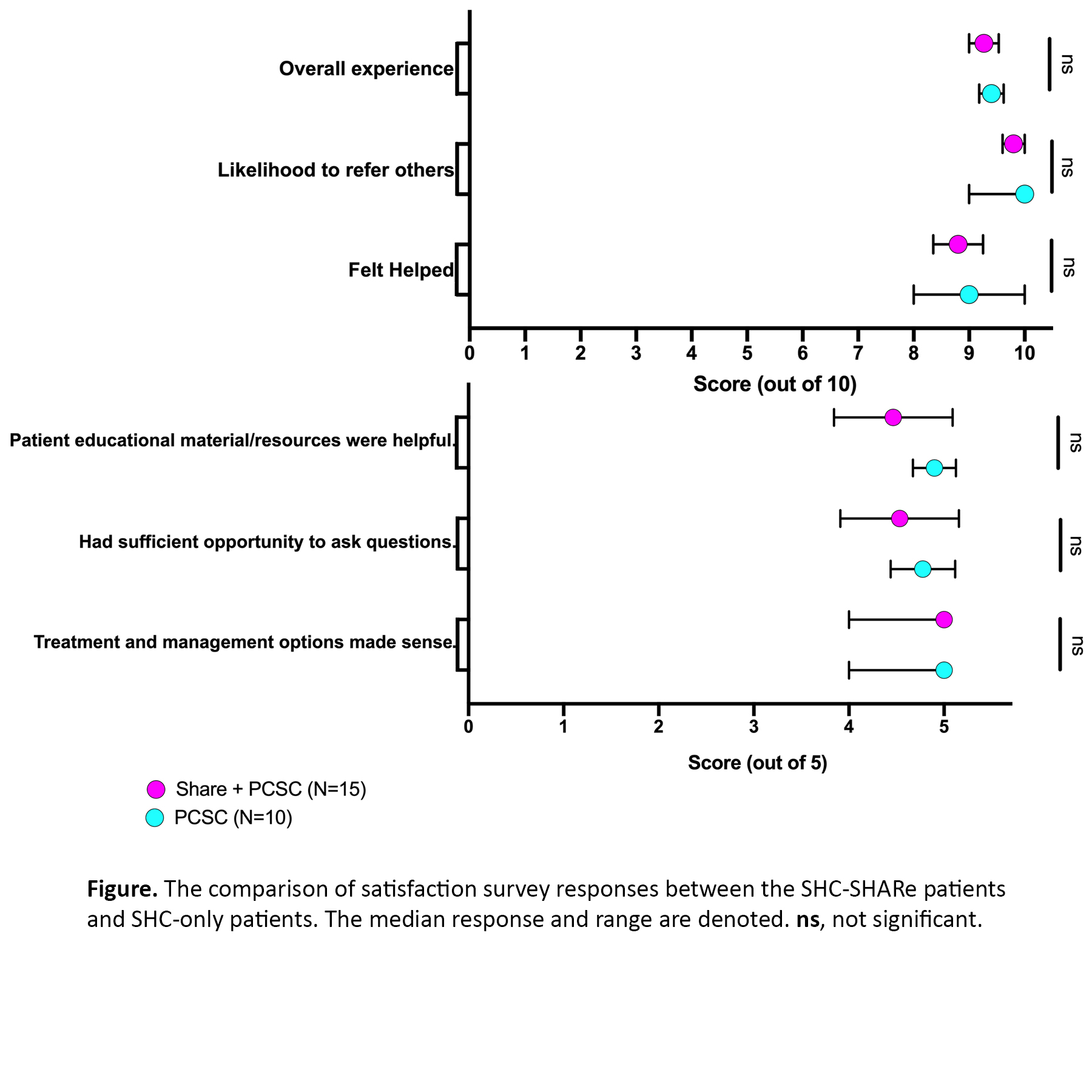
Introduction: The PCSC SHC uses a biopsychosocial approach for men with prostate cancer (PC) and their partners. SHARe is a web-based program developed with Movember funding (AM) to assist in adaptation to and recovery of sexual function after PC therapy. In Nov 2021, the SHC implemented SHARe as an optional adjunct resource to the SHC. We describe the demographics of those who chose to add SHARe compared to those who did not and the results of a satisfaction survey (SS). Methods: SHC patients receive SHARe information at the pre-clinic education session. SHARe enrollment is recommended but optional. Patients receive 3 verbal or email reminders to sign up for SHARe. SHC-SHARe patients were matched with SHC-only patients who did not register for SHARe by i) the time from treatment to the first SHC appointment, ii) age at diagnosis and when invited to participate in the SS, which were collected simultaneously over 6 days. We used Mann-Whitney tests to compare the two groups. Results: Between Nov 2021 and Aug 2022, 76/128 new patients opted to participate in SHARe, but only 34 (41%) activated their SHARe code. Median time from receiving the code to activation is 29 days (0-109). 32 SHC-only patients were matched to the SHC-SHARe patients by the above criteria. 78.1% vs. 56.3% were Caucasian, 59.4% vs 46.9% were retired in SHC-SHARe vs matched SHS-only groups. 15/32 (46.9%) SHC-SHARe patients responded to the SS with 86.7% agreeing that SHARe helped reinforce the material learned in the clinic. 10/32 (31%) SHC-only pts responded to the SS. Technical issues, forgetting to sign up, too much information, and not being interested were reasons cited for not participating. Figure 1 shows the comparison of SS responses between SHS-SHARe and SHS-only groups. Conclusions: SHARe was successfully integrated into our SHC. The English-only format of SHARe may have been a barrier for non-native English speakers. Although our sample size is small, patient satisfaction did not differ between groups and most SHC-SHARe patients found SHARe to be helpful. As a result of this analysis, we are proactively contacting those interested in SHARe to remind them how to access the program and to offer technical assistance if needed. SOURCE OF Funding: N/A