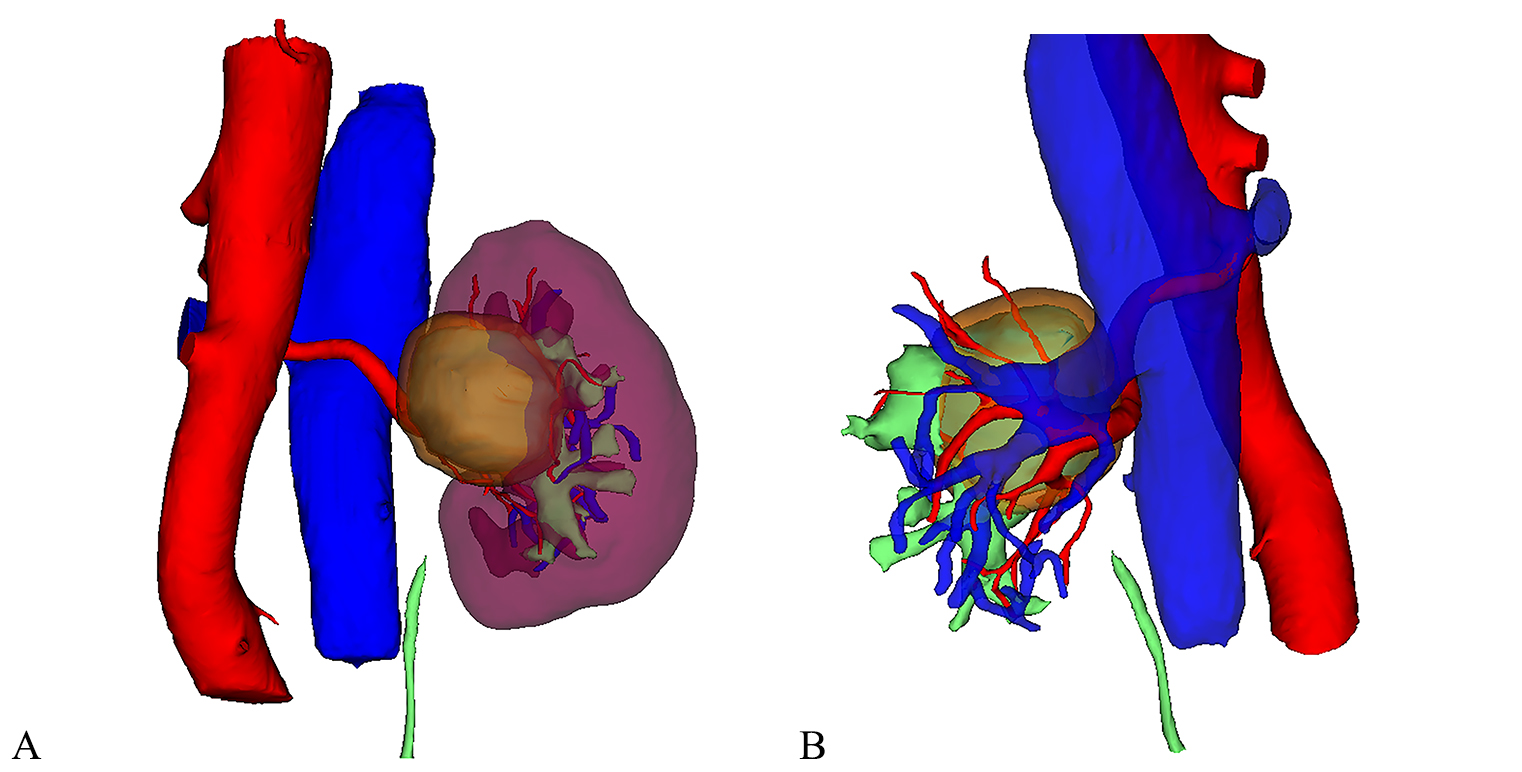
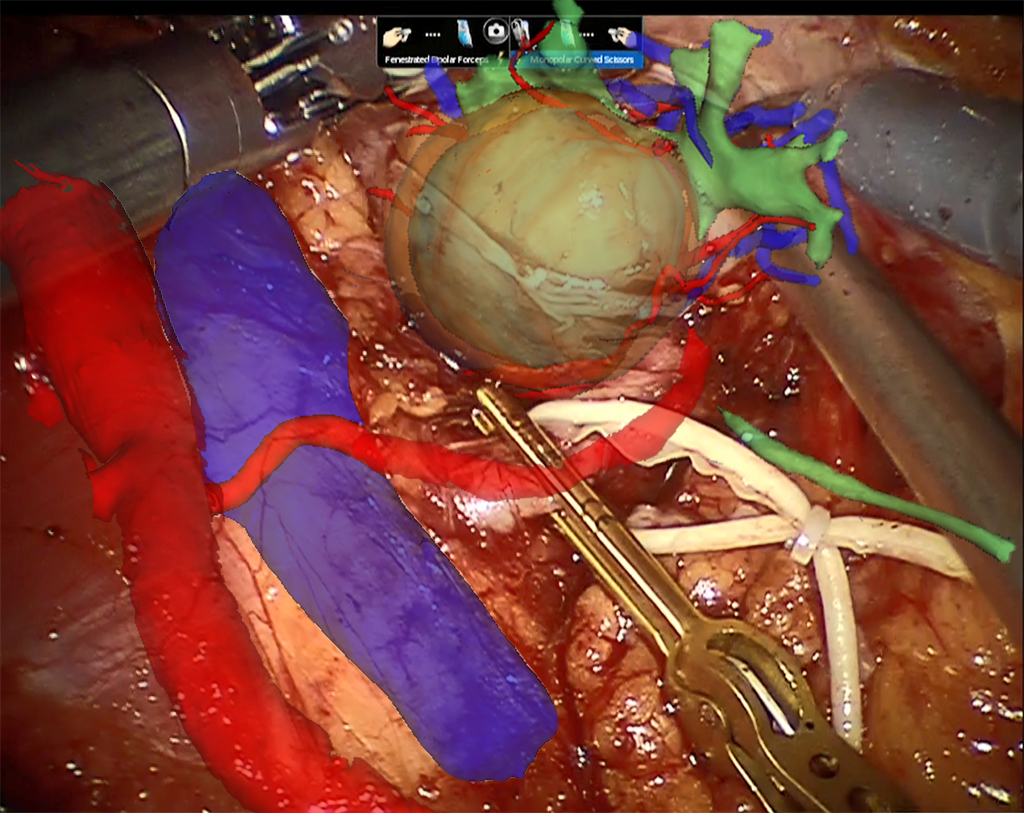
Introduction: To describe a tumor planar extension technique in three-dimensional (3D) model and assess its practicability in robot-assisted partial nephrectomy (RAPN). Methods: A total of 231 patients with a renal tumor who underwent RAPN between Mar 2019 and Mar 2022 was prospectively enrolled. The 3D model was obtained based on enhanced CT urography. The tumor plane was extended equidistantly (10 mm) according to the original shape. The patients were divided into the collecting system involvement (CSI) group and the collecting system negative (CSN) group based on the relationship between the extended plane and the collecting system. The evaluation indicators included operative time, ischemia time, positive margin, major complication, and trifecta outcome (negative margin, ischemic time = 25min, no major complication). Results: The tumor diameter was 2.9 (0.8-10.0) cm. Median PADUA score was 8 (6-15). There were 173 and 58 patients in CSN and CSI groups, respectively. The operative time was 110.3±36.2 and 116.9 ± 36.6 min in CSN and CSI groups (p=0.228). The ischemic time in CSI group was significantly longer than that in CSN group (26.7±10.0 vs 21.0 ± 7.8 min, p<0.001). The patients in CSI group had a higher positive margin rate (1.72% vs. 0.58%) and higher risk of complications (8.62% vs 5.78%), but there was no statistical significance. Patients in CSI group whose ischemia time greater than 25 min was significantly more than that in CSN group (44.83% vs 21.39%, p=0.001). The failure rate in trifecta outcome in CSI group was significantly higher (46.55% vs 24.42%, p=0.003). The area under ROC curve in predicting trifecta outcome was 0.599 (p=0.017) based on the relationship between the tumor planar extension and the collecting system. Conclusions: The 3D tumor planar extension is a novel technique for tumor anatomy assessment and helps predict surgical outcomes of RAPN. SOURCE OF Funding: None.

.jpg "Xinfei Li, MD (he/him/his) photo")