Session: MP13: Benign Prostatic Hyperplasia: Surgical Therapy & New Technology I
MP13-03: Complications Associated with Minimally Invasive Surgical Therapies (MIST) for Surgical Management of Benign Prostatic Hyperplasia (BPH): A Manufacturer and User Facility Device Experience (MAUDE) Database Analysis
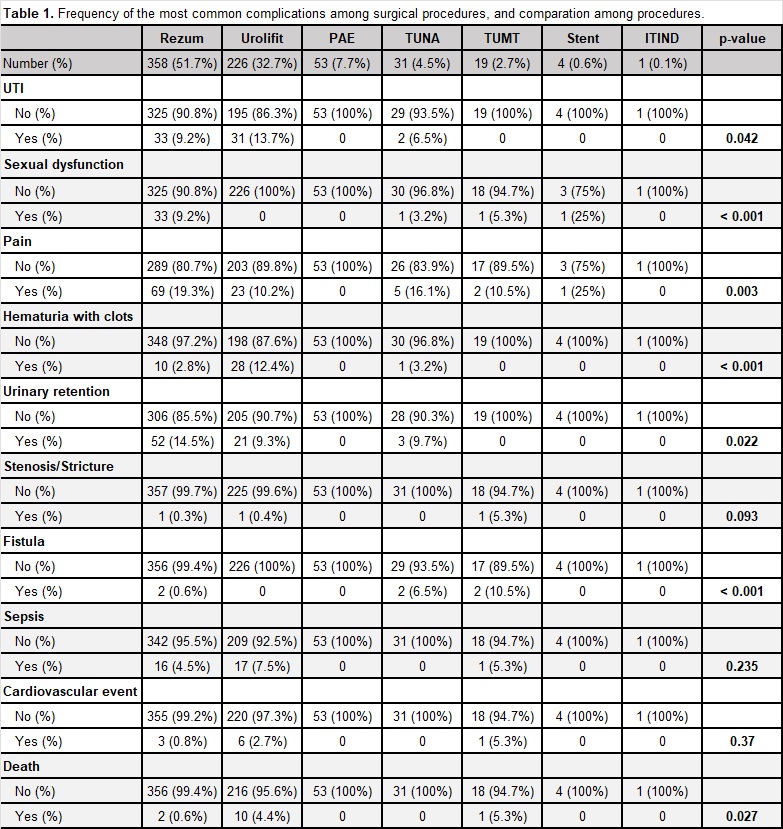
Introduction: MAUDE database houses medical device reports of suspected device related complications received by FDA. In the present study we aim to evaluate the MAUDE database for reported complications of MIST procedures. Methods: The FDA, MAUDE database website was queried using keywords: rezum, urolift, prostate artery embolization (PAE), transurethral needle ablation (TUNA), transurethral microwave therapy (TUMT), prostate stent and Temporarily Implanted Nitinol Device (ITIND) on 10/1/22. Details related to the device problem, complications, aborted/canceled procedures, use of anticoagulant drugs, blood transfusion, operative intervention, hospitalization were extracted from the cases. We used the Gupta classification system to stratify complications. Statistical analysis was performed with SPSS v.28. Chi-square was used to compare frequency of complications among surgical procedures. Results: We found a total of 780 cases of MIST procedures and after removing irrelevant/no information (n=58) and duplicate cases (n=30), we included 692 cases. (Rezum-358, urolift-226, PAE-53, TUNA-31, TUMT-19, prostatic stent-4 and ITIND-1). Level I complications were commonest (62%) and most of these (95%) were related to devices. The screen display error was responsible for 93% and 83% aborted cases in rezum and TUNA, respectively. The PAE showed 40% of device component detachment/fracture. Most of the level II-III complications were not related to device or user (table 1). Urolift had 49% of II-III complications, especially due to pelvic/retroperitoneal hematoma, which was associated with hospitalization and blood transfusion. There were 10 deaths reported after urolift, 2 after rezum and 1 after TUMT mostly due to cardiovascular events, which, according to the physicians involved, were not associated with the proposed treatment. Conclusions: Although MIST for BPH is a procedure with low complication rates, it is important to point out that adversities can happen. Our data should assist urologists and patients in selecting appropriate MIST procedure with shared decision-making process. SOURCE OF Funding: N/A