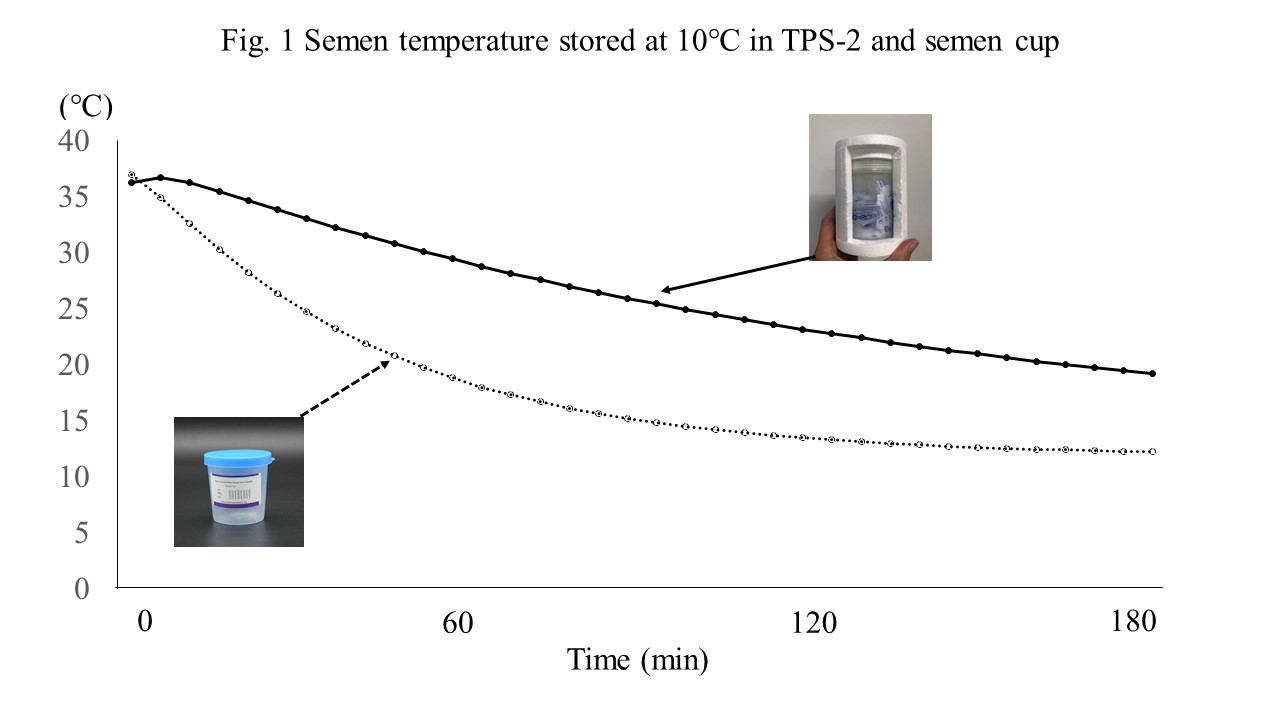
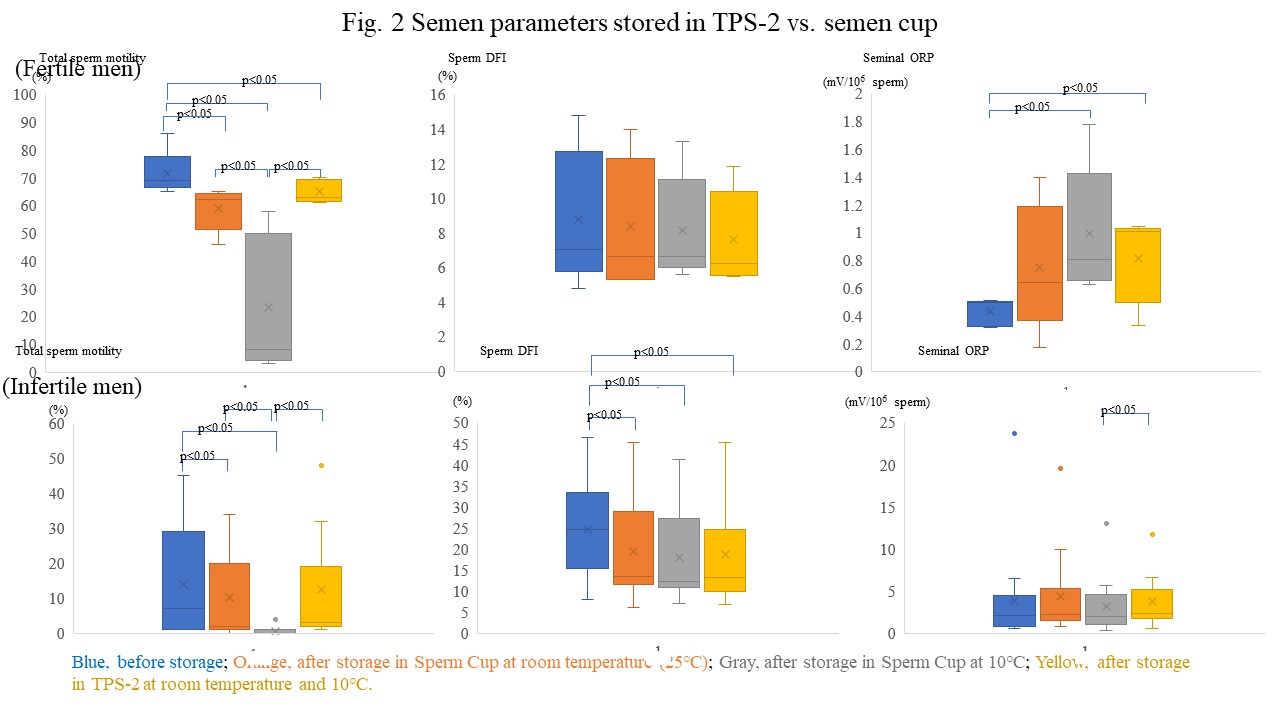
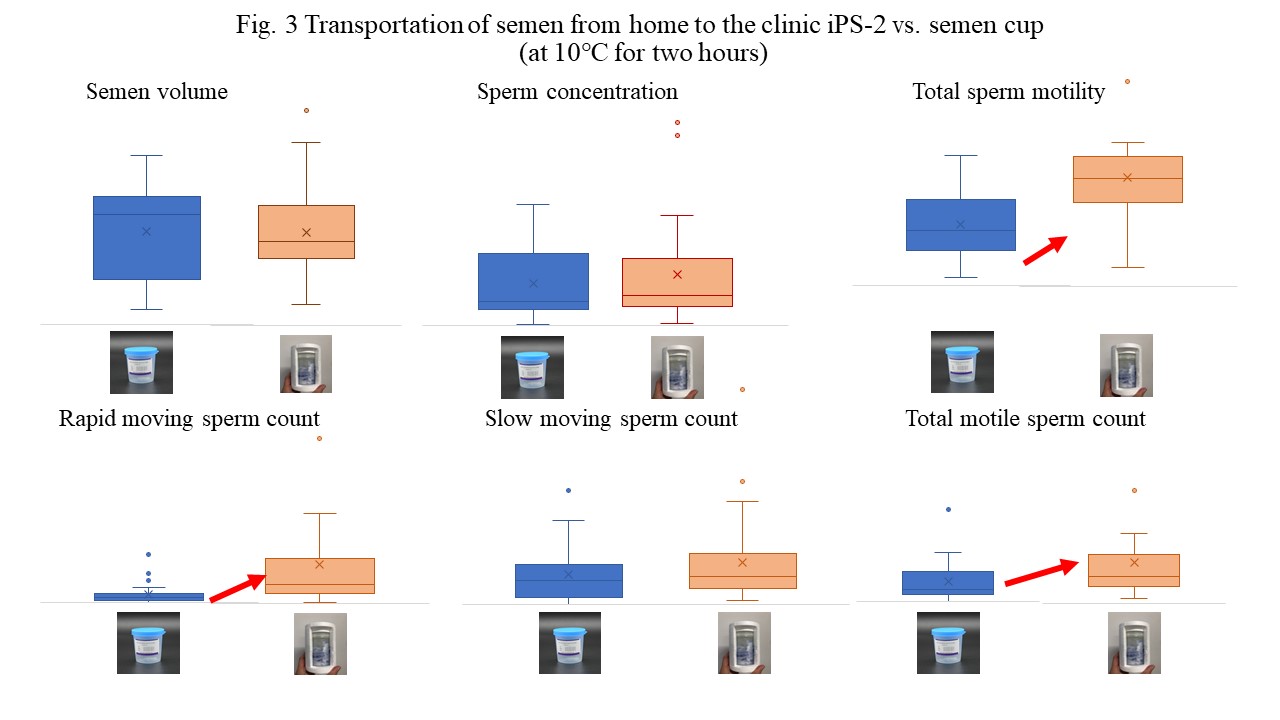
Introduction: Rapid cooling is believed to be harmful to mammalian spermatozoa. Thus, special care should be taken when transporting semen in low temperature conditions. A new semen container, TPS-2 was designed to protect sperm against damage caused by cold shock. We investigated the ability of TPS-2 to protect sperm from low temperature conditions, using sperm from both fertile and infertile men. Methods: We measured the change in temperature of semen stored in TPS-2 at 10°C compared with Sperm Cup, a conventional semen collecting cup. We also investigated change in total sperm motility, sperm DNA fragmentation index, and seminal oxidation-reduction potential when stored in TPS-2 or Sperm Cup at 10°C. We used Sperm Cup and TPS-2 to transport 25 semen samples of infertile patients from home to the clinic below 10°C,and compared the difference of sperm motion parameters. Results: After storage for 3 h, the temperature in TPS-2 and Sperm Cup was 20.1°C and 12.1°C, respectively (Fig. 1). The temperature dropped more gradually in TPS-2 than in Sperm Cup. Semen from fertile volunteers stored in Sperm Cup showed significantly lower total sperm motility, whereas in TPS-2, total sperm motility was the same as at 25°C (Fig. 2). Semen from infertile patients stored at 10°C showed significantly lower total sperm motility in Sperm Cup. In TPS-2, total sperm motility did not change after storage at 10°C for 3 h. TPS-2 could maintain sperm motility (P=0.000), percentage of rapid moving sperm (P=0.002) and total motile sperm count (P=0.014) during transportation in low temperature conditions (Fig. 3). Conclusions: TPS-2 maintains the temperature of semen stored in it during exposure to low temperatures conditions, preventing sperm damage. TPS-2 is recommended for transportation of semen in cold conditions. SOURCE OF Funding: None