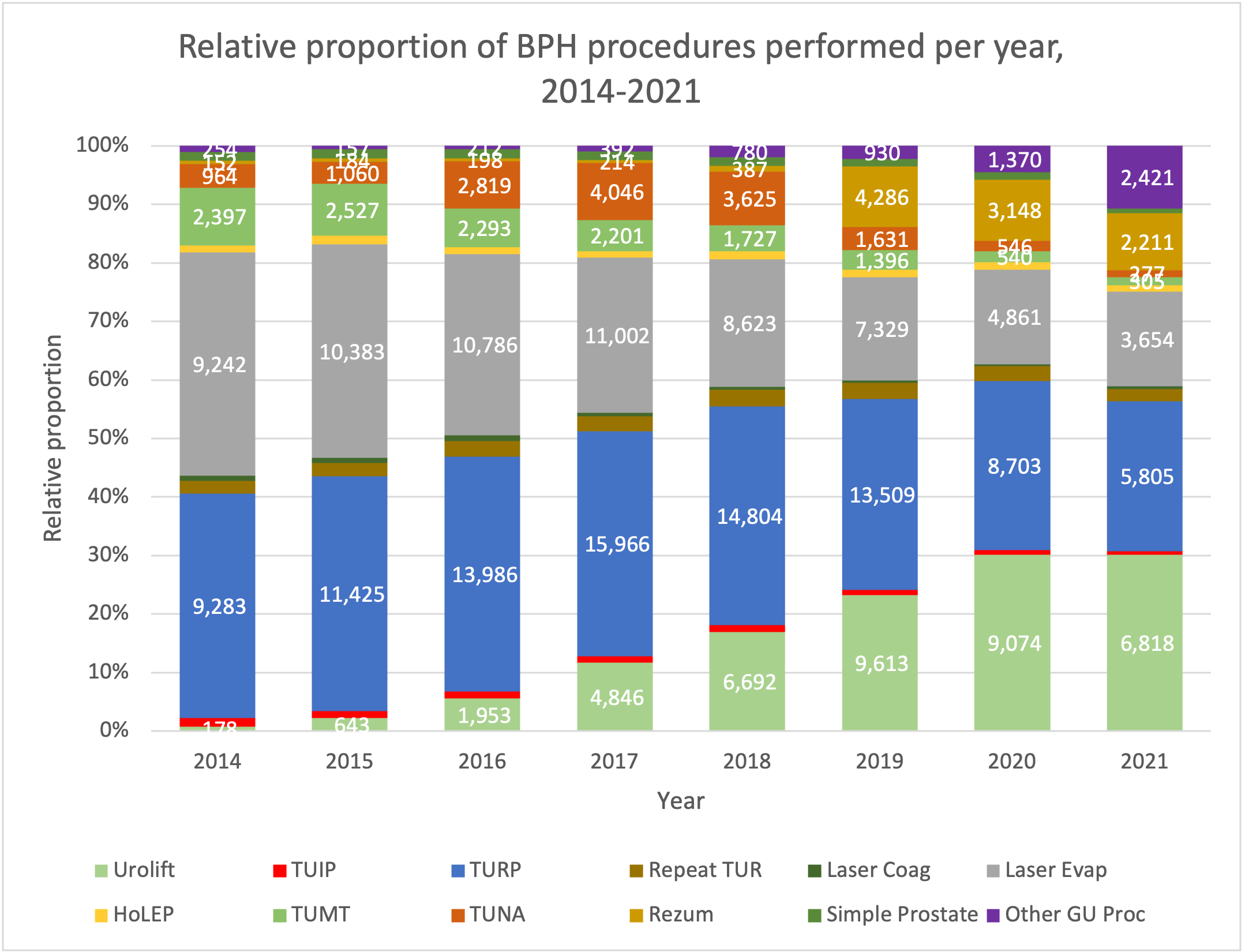
Introduction: The list of surgical options for benign prostatic hyperplasia (BPH) has exploded in recent years, but little is known about the uptake of these new procedures in community urology practice. In this study we aimed to examine surgical BPH practices and trends across the country using the American Urological Association Quality Registry (AQUA). Methods: The AQUA Registry was launched in 2014 to centralize quality reporting and improvement, primarily among community-based urology practices. Data regarding surgical BPH management from 2014-2021 were accessioned directly from electronic health records at 245 practices across the country. Procedures were grouped by CPT code. These included prostatic urethral lift (Urolift), transurethral incision of the prostate (TUIP), transurethral resection of the prostate (TURP), repeat TURP, laser coagulation of the prostate, laser vaporization of the prostate, holmium laser enucleation of the prostate (HoLEP), transurethral microwave therapy (TUMT), transurethral needle ablation (TUNA), transurethral destruction of the prostate by water vapor thermal therapy (Rezum), simple prostatectomy, and other genitourinary procedure. Patients were characterized by race and age. Practice location was also examined. Results: The mean age of BPH diagnosis was 66.4 years old. 72% were White, 7% Black, 1% Asian, and 20% unknown. A total of 300,215 BPH procedures were recorded from 2014-2021. TURP had the greatest overall decline from a relative incidence of 40.1% of total BPH procedures in 2016 to 25.6% in 2021. TURP was used for 32% of White patients, 34% of Black patients, and 26% of Asian patients. Urolift use grew from 0.7% of cases in 2014 to 30.1% in 2021. HoLEP comprised approximately 1% of procedures throughout the time period studied. Conclusions: There has been a large shift in the procedures of choice for surgical management of BPH within community urology practices in the United States, with Urolift having a significant increase in total and relative proportions of procedures performed since its FDA approval in 2013. There has been a concurrent decrease in TURP, while HoLEP has stayed relatively consistently uncommon in community practice. SOURCE OF Funding: AQUA Registry is funded by the American Urological Association