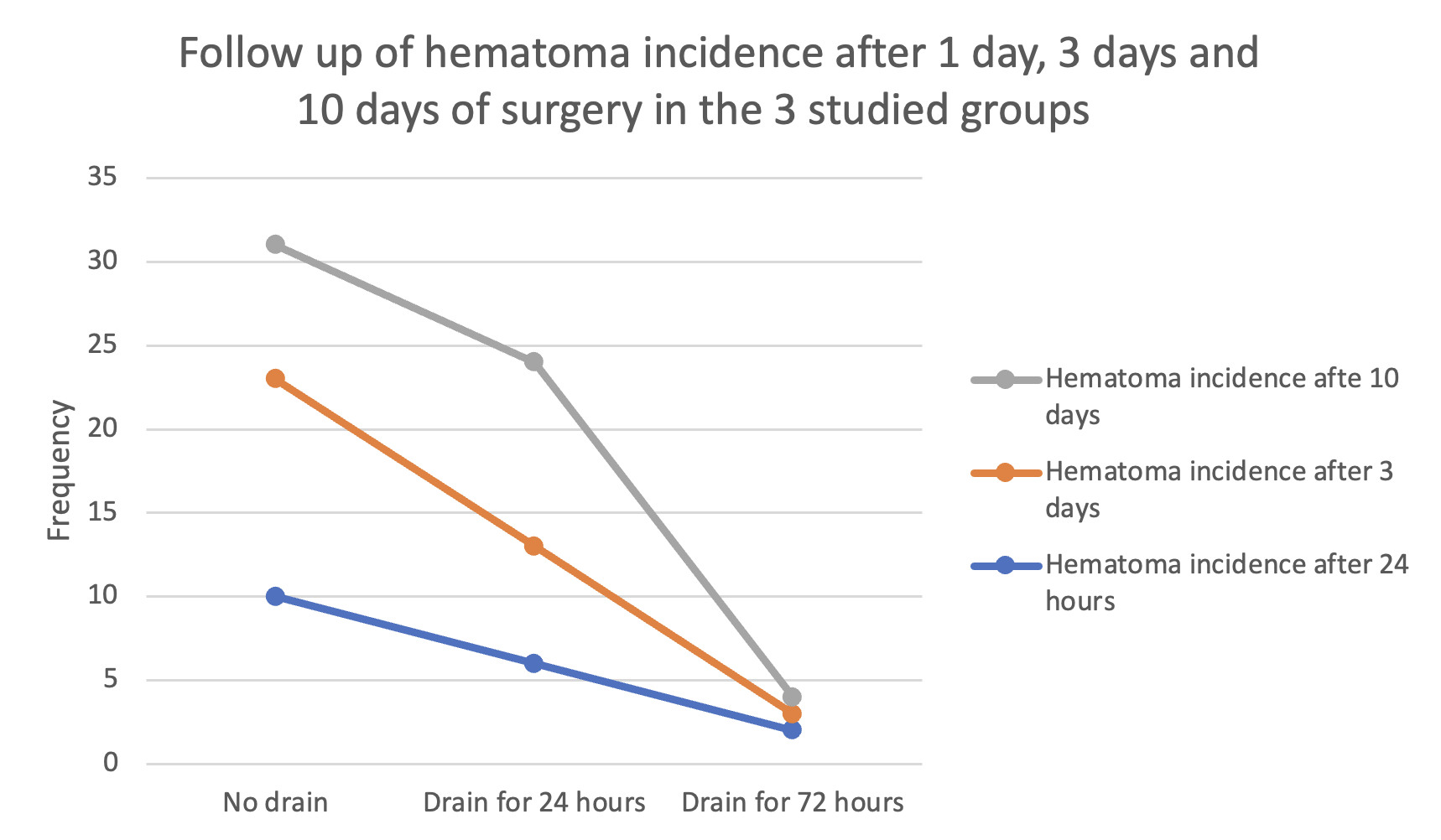
Introduction: Despite the wide utilization of post-inflatable penile prosthesis (IPP) implantation drainage, many surgeons still regard it as a potential source of infection. Our aim was to understand the risks and benefits of post-IPP drainage and optimal duration. Methods: Patients underwent IPP implantation for the first time by four European high volume surgeons through penoscrotal access receiving similar perioperative antibiotics. They were divided into 3 groups based on the presence and duration of drainage. Group 1 (n=114) had no drain placed, Group 2 had a drain placed for 24 hours (n=114) and Group 3 had a drain placed for 72 hours (n=117). The presence or absence of postoperative (PO) scrotal hematoma and prosthesis infection were evaluated and compared between the groups via scrotal ultrasound (US) examination carried out 24 hours then 3 and 10 days PO. All patients were followed up postoperatively for a minimum of 80 days. Results: The patients from Group 3 demonstrated a statistically significant lower incidence of hematoma on the 10th PO day: (n=1, 0.9%) compared to Group 2: (n= 11, 9.6%) and Group 1: (n=8, 7%, p=0.013). However, on the 3rd PO day, which showed the highest hematoma prevalence, there was a statistically significant lower incidence of hematoma in Groups 3 and 2: (0.9% and 7%, respectively) versus Group 1: (11.4%, p=0.004). Hematoma rates followed the same order after the first day of surgery for Groups 1-3: 8.8% (n=10), 5.3% (n=6), and 1.7% (n=2), respectively. (p=0.054). Five patients (4.4%) in Group 1 and four patients (3.5%) in Group 2 developed an IPP associated infection, opposed to only a single patient (0.85%) in Group 3. Conclusions: Prolonged scrotal drainage for 72 hours after virgin IPP implantation significantly reduces hematoma and infection rates. It is likely that hematoma formation per se, is a predisposing factor for IPP infection. SOURCE OF Funding: None