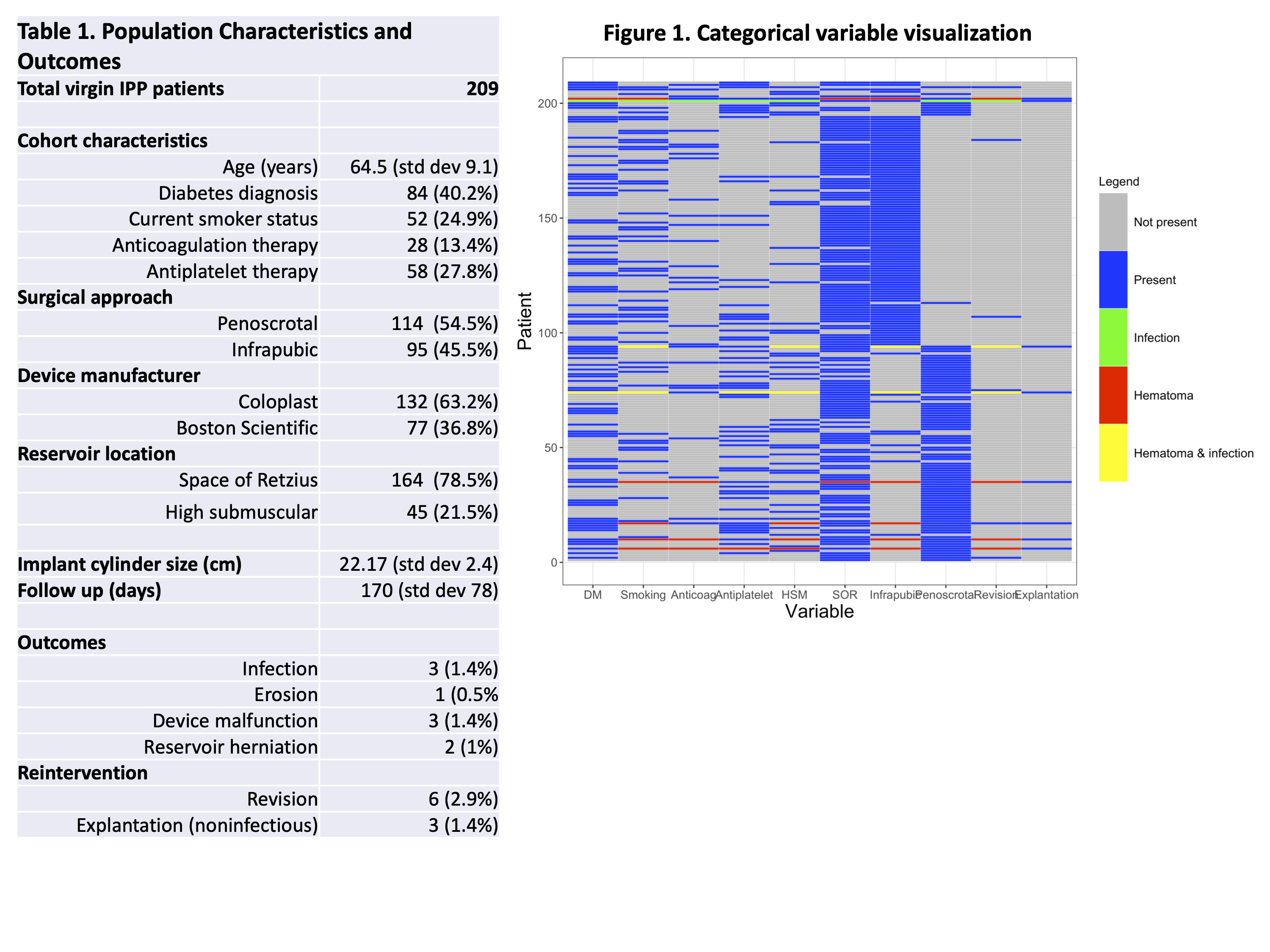
Introduction: There is little published data regarding percutaneous drain (PD) duration after inflatable penile prosthesis (IPP) placement. The dissection associated makes scrotal hematomas common in the first 72 hours. Maintaining a percutaneous drain represents a strategy to reduce scrotal hematoma formation. However, a percutaneous tract also represents a feasible path for seeding of a new prosthesis. Given the severe consequences of infection, establishing comparable outcomes for delayed drain removal patients is necessary. Here we detail rates of infection, hematoma, device explantation and other standard post IPP metrics in a multi-institutional cohort with delayed PD removal (48-hours or greater). Methods: Data was collected retrospectively for 224 patients undergoing virgin IPP placement with delayed PD removal. Cases were performed by three surgeons at three high-volume centers between 01/01/2020 and 3/31/2022. It was the practice of these surgeons to leave PDs 48 hours or greater. 15 patients had PDs removed before 48 hours due to scheduling, patient preference, or inadvertent removal. These patients were excluded leaving 209. R for Statistical Computing was used to generate statistics and data visualization. Results: Mean drain duration was 2.8 days. Mean follow-up interval was 170 days. 84 patients (40%) carried the diagnosis of diabetes mellitus with a mean hemoglobin A1c of 7.2. Penoscrotal and infrapubic approaches were employed (114 versus 95). Reservoir location was split between space of Retzius (SOR) and high submuscular with SOR being more common (164 versus 45). 7 discrete hematomas were observed. Despite this small number, Fisher’s exact testing demonstrated significant association between hematoma formation and both anticoagulation and antiplatelet therapy (p < 0.01 in both cases). There were 3 device infections (1.4%). 9 patients (4.3%) required revision for non-infectious causes. Conclusions: Rates of infection and explantation observed in virgin IPP implantation with delayed PD removal are similar to other modern virgin cohorts where drains were not employed. Additional prospective research would be useful to characterize effect of delayed drain removal on hematoma formation, postoperative pain, and interval to device use. SOURCE OF Funding: NA