Session: MP79: Sexual Function/Dysfunction: Medical, Hormonal & Non-surgical Therapy II
MP79-16: Analysis of the effect of testosterone replacement on body composition, physical fitness and the correlation with hypogonadal symptoms in the testosterone deficiency
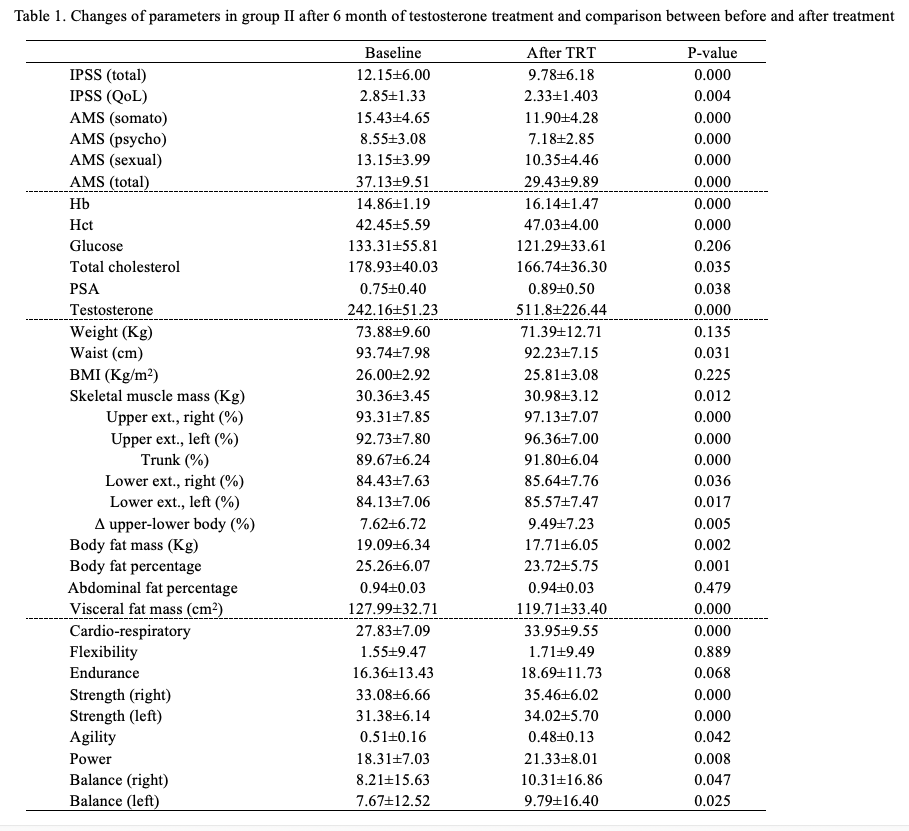
Introduction: This study aimed to investigate how testosterone replacement therapy (TRT) change body composition and physical fitness, and which those changes correlate with serum testosterone level and hypogonadal symptoms. Methods: Seventy patients with testosterone deficiency (TD) were divided into group I (n: 23) and group II (n :47). Only group II was given testosterone enanthate intramuscularly for 6 months. Both groups were investigated following items at the beginning and end of the study: Baseline demographics and serologic test; questionnaires of aging male symptom (AMS) scale and international prostate symptom score (IPSS); BMI, waist circumference, body composition; and physical fitness. Body composition was assessed by bioelectrical impedance analysis. Seven types of basic exercise tests were used to measure physical fitness. Results: No significant difference was observed in baseline measurements between the two groups before treatment. After 6 months, group I showed no significant change in all measurements. Group II showed significant improvement in IPSS and AMS scales. Hematocrit, and prostate specific antigen slightly increased, while total cholesterol significantly decreased after treatment. As to body composition parameters, TRT significantly decreased body fat mass, visceral fat mass and waist circumference. Skeletal muscle mass was significantly increased by TRT although upper body muscle appeared to be more responsive. Most parameters of physical fitness resulted in improvement except for flexibility and endurance. The decrease of waist circumference was significantly correlated with serum testosterone level changes. AMS scale improvement was correlated with the changes of IPSS, cardiorespiratory fitness and agility. Conclusions: TRT improved hypogonadal and lower urinary tract symptoms. TRT also resulted in overall improvement in metabolic syndrome components, body composition and physical fitness. Testosterone increment and hypogonadal symptom improvement are correlated with waist circumference, cardiorespiratory fitness, and agility, respectively. Combined adjunctive exercise program that improve those parameters, might maximize the effect of TRT. SOURCE OF Funding: No conflict of interests