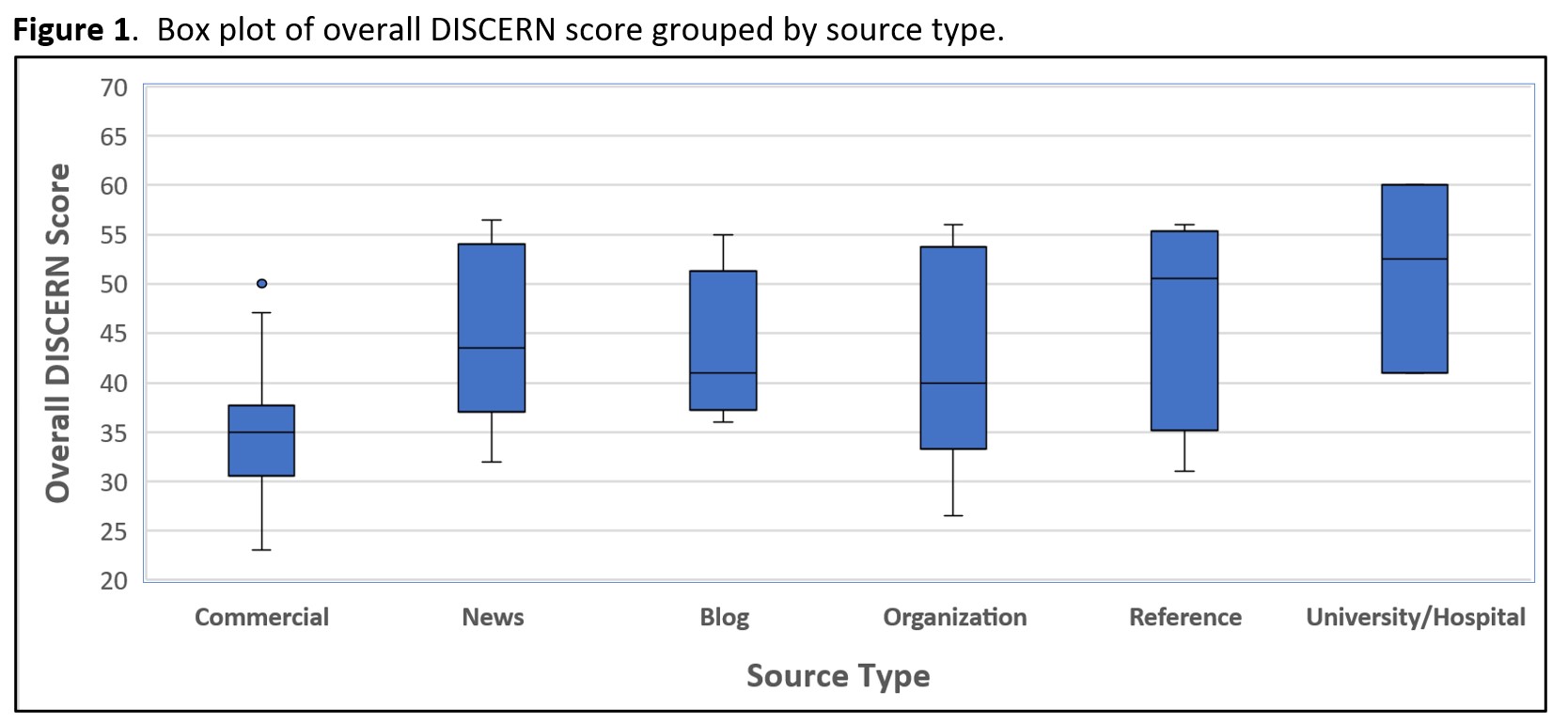
Introduction: It is estimated that more than half of adult men in the United States express concerns about their penis size. With lack in available scientific data, the American Urological Association (AUA) and International Society for Sexual Medicine (ISSM) currently do not recommend any treatment options for penile augmentation. Nonetheless, many online resources speak on this topic and may be providing patients with inaccurate information. Therefore, we aimed to assess the quality of online educational information regarding treatment options for penile augmentation. Methods: A Google search was performed using the terms “penile augmentation”, “penile enlargement”, and “penile enhancement”. The first 100 webpages were assessed. Duplicate websites, scientific publications, sub-pages of identical websites, or websites with pay walls were excluded from analysis. The quality of the website was assessed by presence of Health on the net (HON) code certification and by the DISCERN instrument. Two independent reviewers scored each webpage and inter-rater reliability calculated. Websites were categorized by the type of resource. Results: After applying the exclusion criteria, a total of 69 websites were included in the data analysis. There were 9 (12.7%) websites with HON code certification. The mean DISCERN score was 38.2 out of 80, which is considered “poor” quality. Inter-rater reliability of the DISCERN score was 0.76. Webpages with HON code certification had a higher mean DISCERN score (52.7 versus 36.1, p < 0.0001). Of the 45 commercial webpages, cosmetic and plastic surgeons (48.9%) comprised the larger proportion whereas urologists (42.2%). There was no significant difference in the DISCERN scores of commercial websites by urologists (n = 19) compared to commercial websites by all other medical specialties (n= 26) (34.9 versus 34.4, p = 0.80). Conclusions: Overall, the quality of online patient education regarding penile augmentation is poor. Websites with HON certification were seen to have better quality of health information. Although regulation of online material is difficult, promotion of accurate information from the AUA or ISSM can help improve online content for patients. SOURCE OF Funding: None