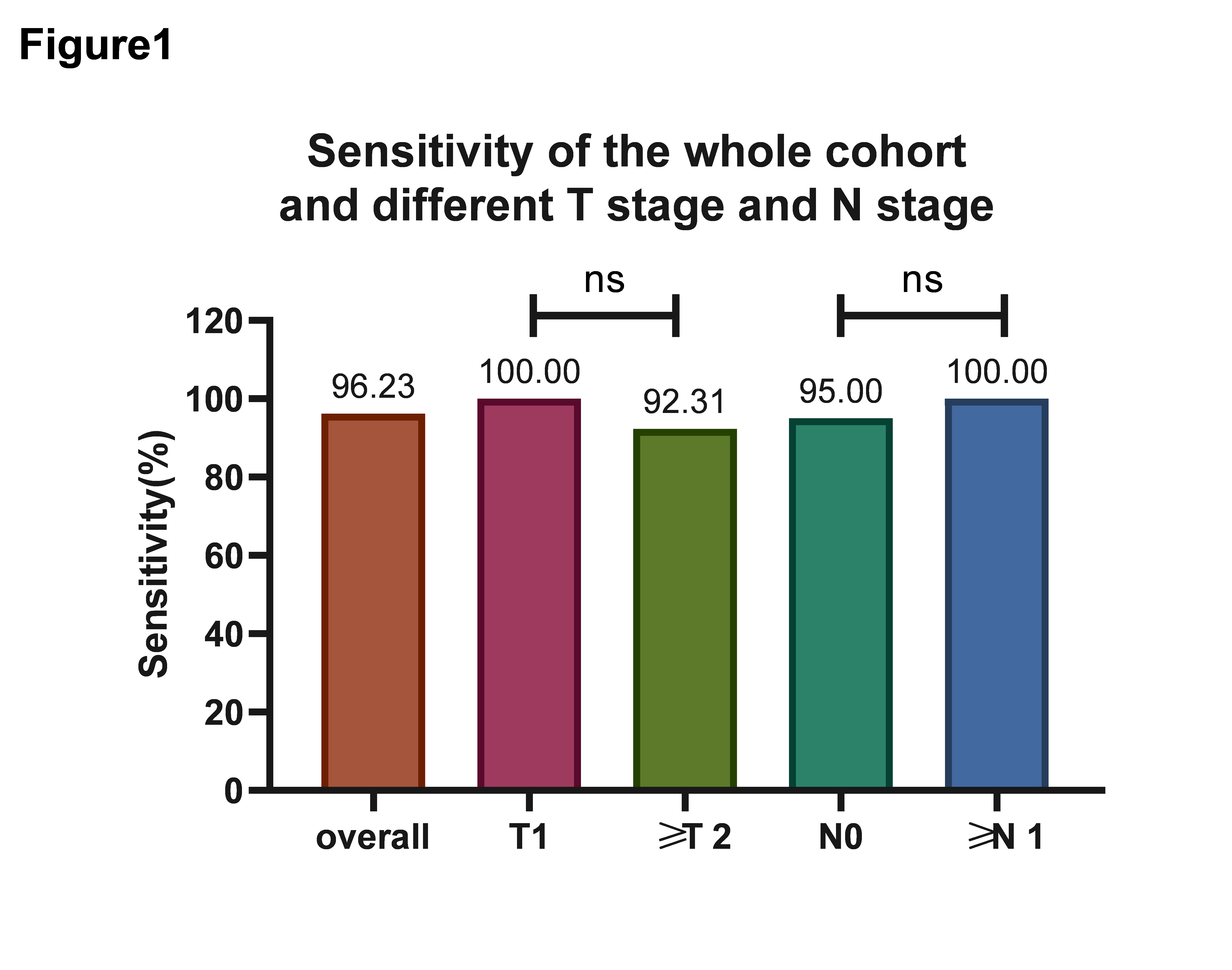
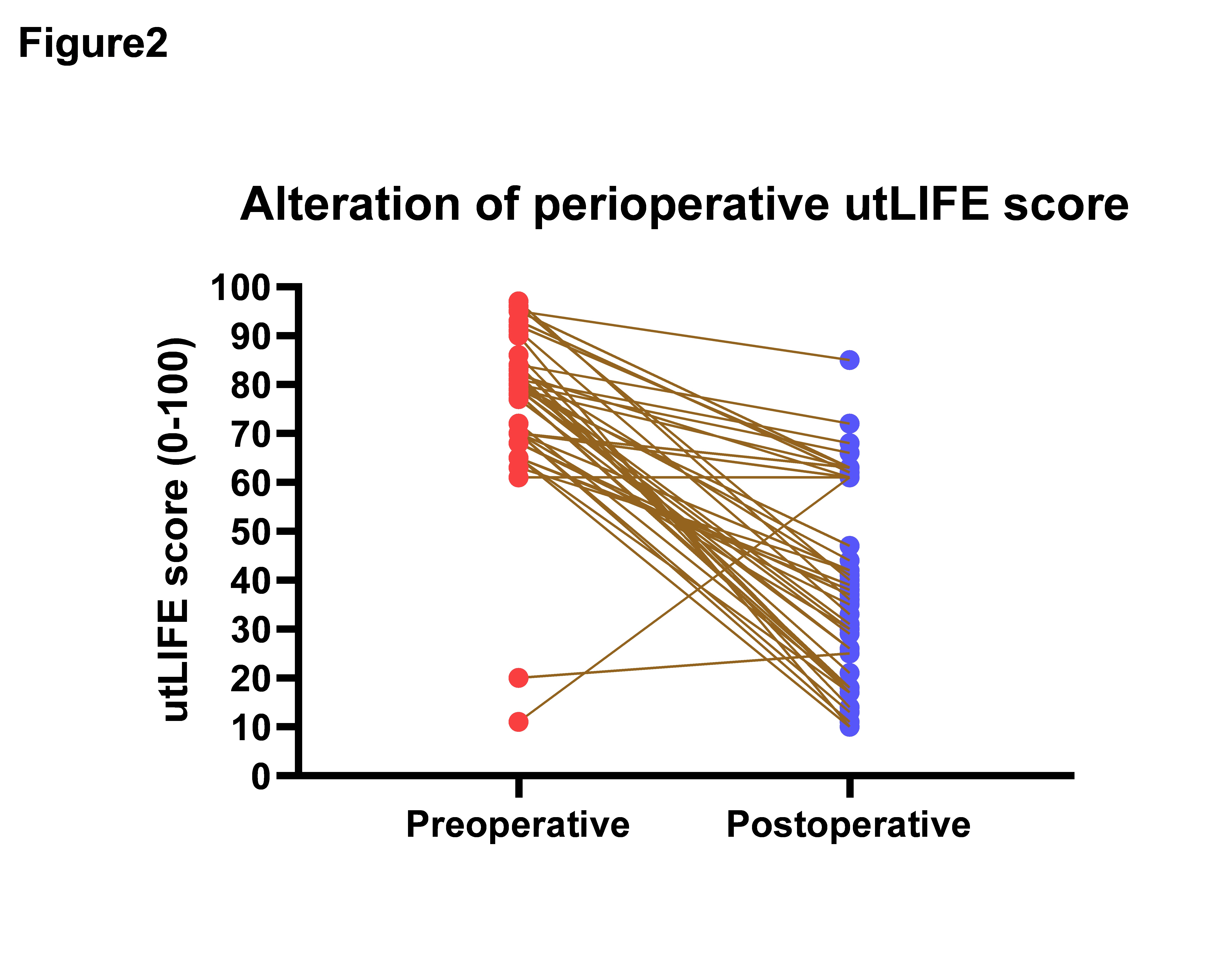
Introduction: As for early detection and postoperative monitoring of upper tract urothelial carcinoma (UTUC), traditional detection methods were limited to invasiveness and insufficient sensitivity. It has been reported that urine tumor DNA was used to detect monitoring minimal residual disease (MRD) with better sensitivity.We tended to develop a novel noninvasive method to detect and monitor the disease. Methods: To determine the performance of utLIFE-UC (a urine tumor DNA multidimensional bioinformatic predictor) which was established by low-coverage whole-genome sequencing and targeted deep sequencing in UTUC, an independent prospective validation cohort of 53 patients diagnosed with UTUC without metastasis were recruited. Morning urine samples were collected on the day of operation and 1 week after operation. A score of utLIFE-UC higher than 60 was defined as positive. Results: utLIFE-UC of preoperative samples could discriminate UTUC with high sensitivity of 96.23% (51/53), both in different T stages (T1, 100.00%(27/27); =T2, 92.31%(24/26); P=0.236) and N stages (N0, 95.00%(38/40); =N1, 100.00%(13/13); P=1.000) (Figure1). Moreover, the utLIFE-UC of preoperative samples also possessed greater sensitivity in the detection of UTUC than urine cytology (100.00%(13/13) vs 23.08%(3/13), P<0.0001), fluorescence in situ hybridization (FISH) (100.0%(16/16) vs 56.25%(9/16), P=0.007) and cystoscopy (100.0%(15/15) vs 60.00%(9/15), P=0.017). Notably, postoperative utLIFE-UC scores of minimal residual disease monitoring were significantly lower than those of preoperative samples(P <0.0001) (Figure2). Conclusions: utLIFE-UC, a multidimensional bioinformatic predictor, tends to be a rapid and noninvasive approach with high sensitivity for early detection and perioperative MRD monitoring in UTUC. SOURCE OF Funding: This study was supported by no grants.