Session: PD41: Benign Prostatic Hyperplasia: Surgical Therapy & New Technology V
PD41-05: Second generation temporary implantable nitinol device (iTIND) impact on serum PSA level: results from a multicenter prospective study (MT-06-study)
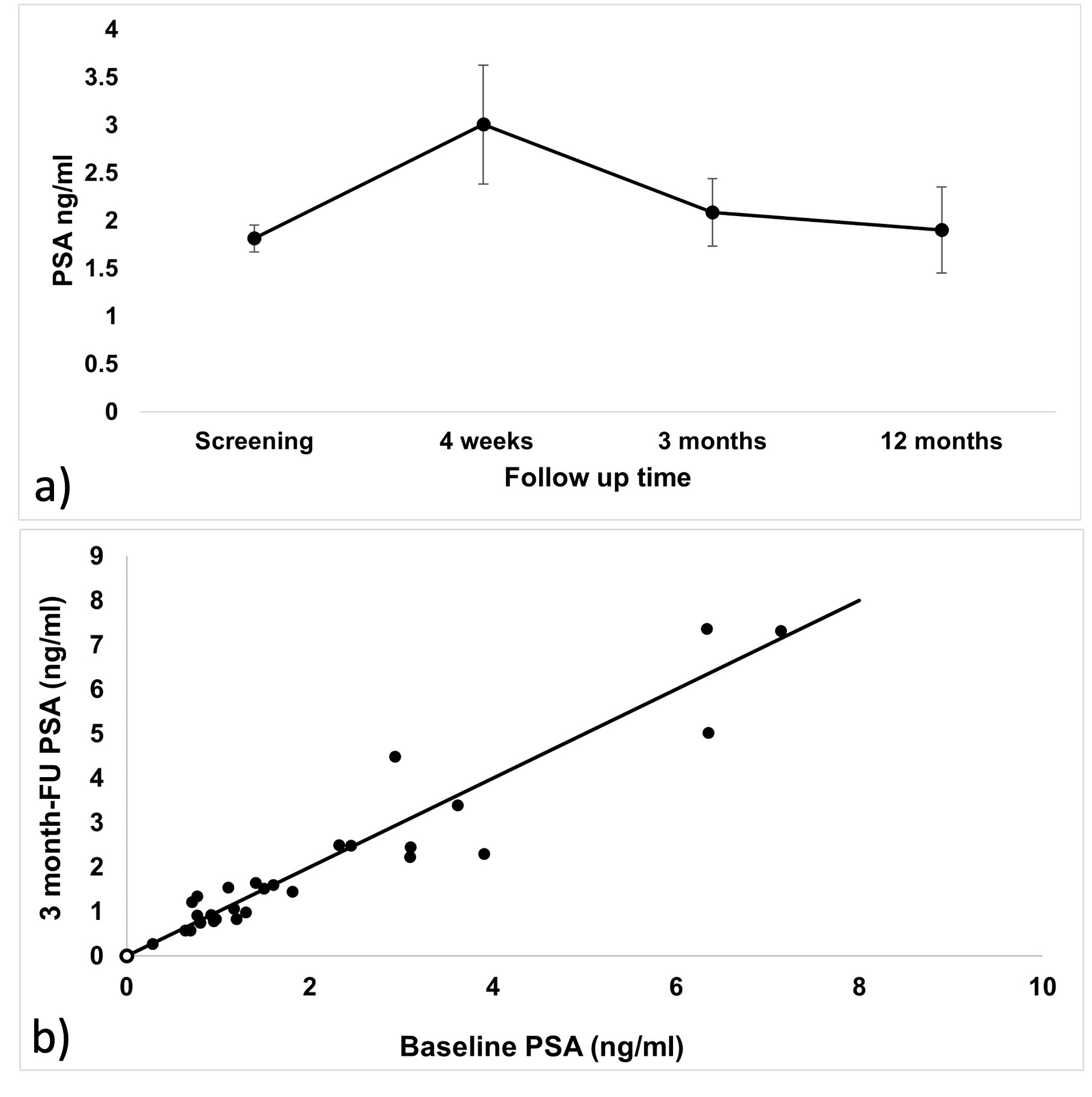
Introduction: The aim of this report was to demonstrate the impact of he second-generation temporary implantable nitinol device (iTIND; Medi-Tate Ltd®, Israel) on serum PSA in the MT-06 study population. Methods: From 06/2018 to 09/2019 patients with IPSS =10, Qmax <12 ml/s and prostate volume (PV) <120 ml were enrolled in this single-arm, prospective multicenter study (MT-06) and underwent iTIND implantation for the treatment of BPH-related LUTS. Patients included into the study had previously passed prostate cancer screening and none of them had a history of prostate cancer. Moreover, they were not washed out of BPH medication. PSA was assessed at baseline and at 1, 3, and 12 months postoperatively. Pearson correlation coejcient was used to examine the association between the baseline PSA and the PSA at 3 months follow-up. A P value <0.05 was considered statistical significant. Results: 140 MT-06 study patients who had baseline serum PSA assessed were included in this analysis. The mean age was 61.16 years (IQR 54.33-68.89), with mean prostate volume of 37.27 ml (IQR 26.00-45.00 ml) and mean baseline serum PSA of 1.81 ng/ml (IQR 0.72 -2.40 ng/ml). Post implantation PSA showed a peak at 4 weeks, reaching a mean of 3.00 ng/ml (IQR 1.03-3.46 ng/ml). This result is consistent with the iTIND mechanism of action, which by producing remodeling of the prostatic urethra, produces local inflammation from ischemic necrosis. Subsequently, the serum PSA decreased to a mean of 2.09 ng/ml (IQR 0.87-2.47 ng/ml), 1.90 ng/ml (IQR 0.64-2.81 ng/ml) at 3, and 12months, respectively, (p values were all >0.05, respectively compared to baseline; Figure 1a). Change in PSA levels from baseline showed a linear correlation throughout the follow up, with a Pearson correlation coefficient at 3 months follow up of R=0.944 (p>0.0001) (Figure 1b). Conclusions: The implantation of iTIND for the treatment of BPH-related symptoms showed to have only a transient impact on serum PSA levels. This data suggests that the iTIND procedure is likely to not affect PSA monitoring in patients undergoing screening for prostate cancer or be on active surveillance protocols who would receive treatment for symptomatic BPH. SOURCE OF Funding: Olympus Corporation funded this study.