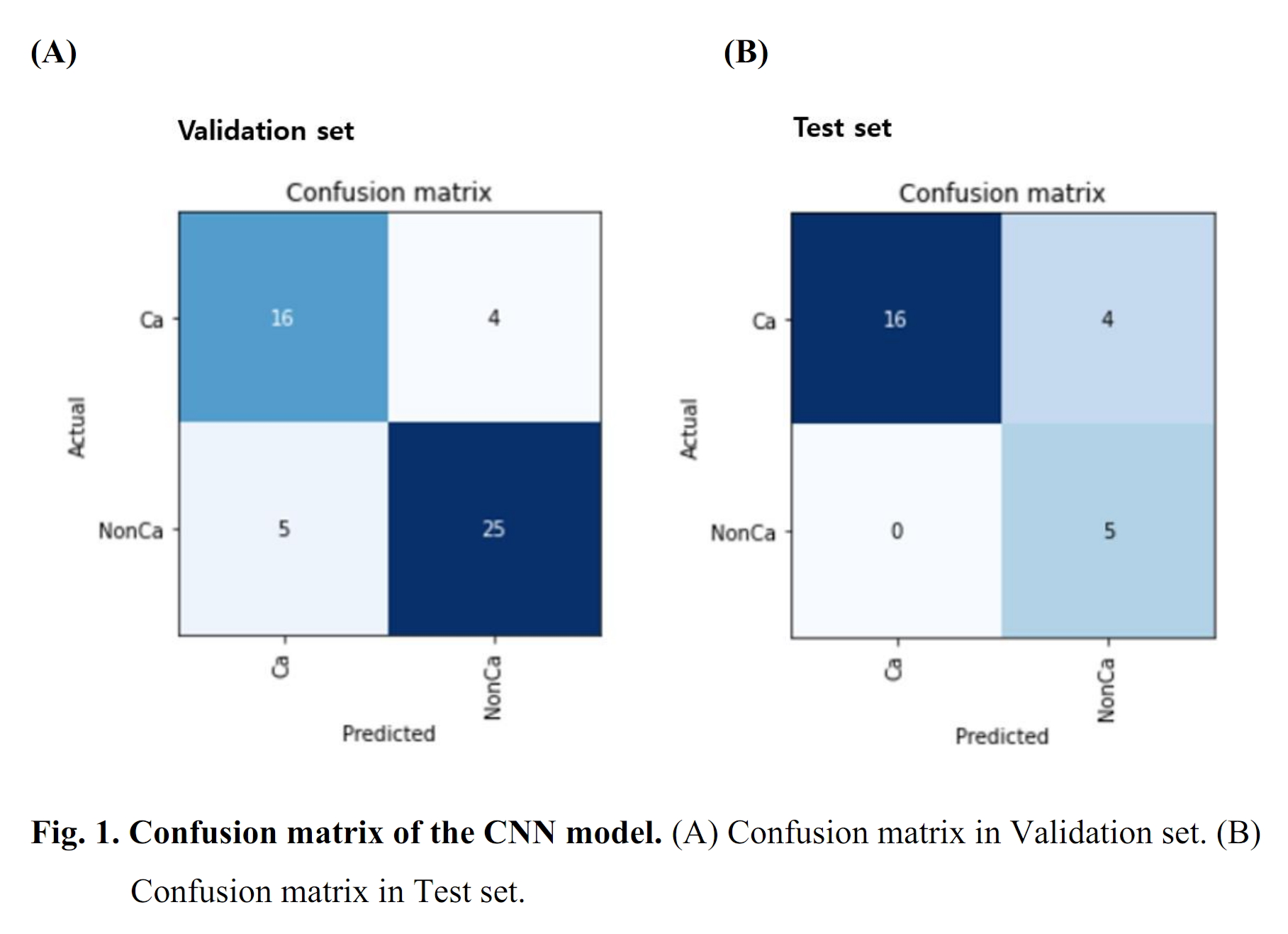
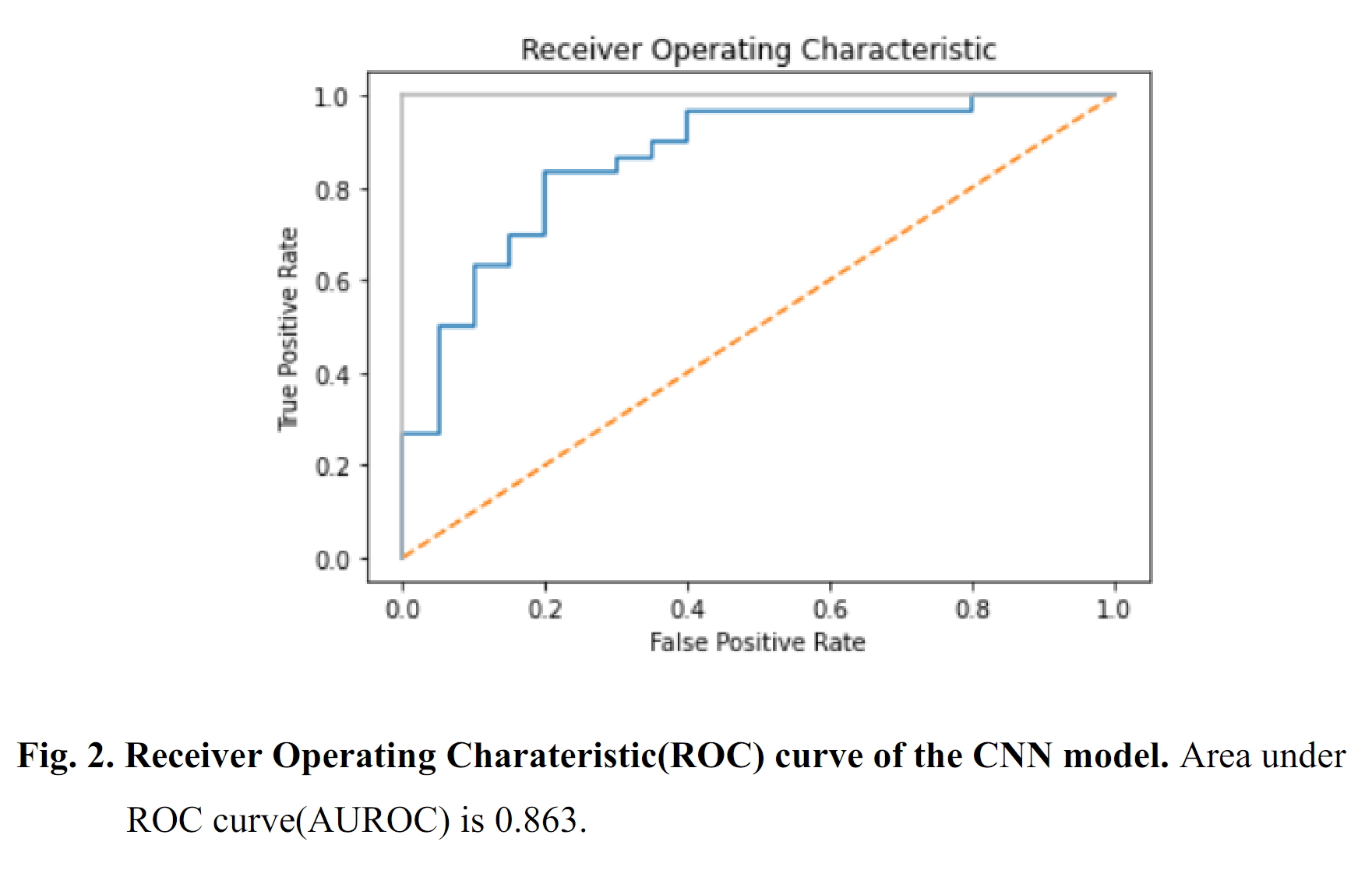
Introduction: This study investigated whether Convolutional neural network (CNN) can show decent results in predicting urinary stone composition even in single-use flexible ureterorenoscopic (fURS) images with relatively low resolution. Methods: This study retrospectively used surgical videos of fURS performed by a single surgeon using single-use scope (LithoVue) between 2018 and 2021. Digital images of the surface of the stone before laser fragmentation were captured in the surgical full HD video clips. Cases were divided into two groups according to whether they contained any calcium oxalate (Calcium group) or not (Non-calcium group). Among total 512 cases, 207 of stone surface images were finally included. Among total images, 25 were first designated as the test set, then augmentation for Non-calcium group was performed. The train set and validation set were divided by random split in an 8 to 2 ratio. In the CNN model, Resnet-18 model was used, and only endoscopic digital images and stone classification data were input to achieve minimal supervised learning (Fig 1). Results: There were 175 cases in the Calcium group, and 32 cases in the Non-calcium group. After whole training, in validation set, the total accuracy was 82.0%, and recall, specificity and precision for Calcium group was 80.0%, 83.3% and 76.2%, and for Non-calcium group, it was 83.3%, 80.0% and 86.2%, respectively. Area under ROC curve of the model, which represents the classification performance of the model, was 0.863. After training and validation, the model was tested using the test set, and the total accuracy was 84.0%. Recall, specificity and precision of the test result was 80.0%, 100.0% and 100.0% in Calcium group, and 100.0%, 80.0% and 55.6% in Non-calcium group, respectively (Fig 2). Conclusions: As far as we know, this study is the first artificial intelligence study using a single-use fURS images. SOURCE OF Funding: None.