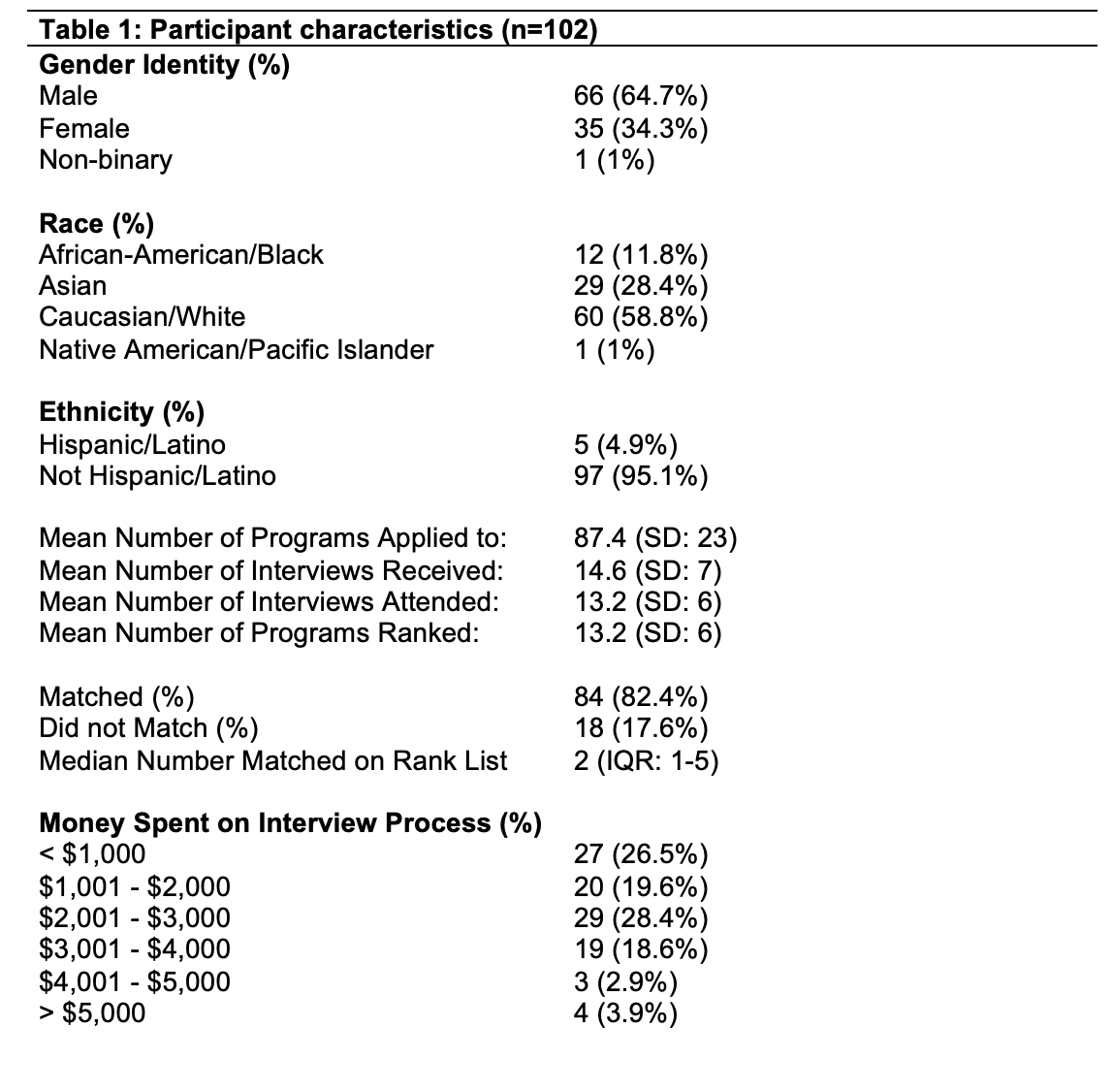
Introduction: Though virtual residency interviews have decreased interview-related costs, they have led to challenges for applicants in making informed decisions about residency programs. We conducted a survey-based study to clarify this trade off and assess applicant understanding of residency programs. Methods: An anonymous, web-based survey was sent to applicants of the 2022 Urology Residency Match who submitted an application to our institution (283/601). Results: Of 283 applicants receiving the survey, 102 (36%) responded. On average, respondents applied to 87.4 (SD: 23) programs, received 14.6 (SD: 7) interviews and ranked 13.2 (SD: 6) programs. 82% of survey respondents matched, with a median match of program number 2 (IQR: 1-5) on their rank list. Participants chose goodness of fit within the program (38%), program location (28%), or resident happiness (23%) as the single most important factor when making their rank lists. Participants felt faculty interviews and resident happiness were well-replicated virtually, but program location was not. 44% of participants found virtual resident question and answer sessions and pre/post-interview socials helpful in assessing resident happiness. Applicant feedback included adding virtual tours, interactive maps, and “day in the life” social media posts. Conclusions: Perceived resident happiness and program location are key variables for applicants evaluating urology residency programs. Applicants found virtual events helpful in assessing resident happiness, but not program location. With the prospect of continuing virtual residency interviews going forward, urology programs should utilize social media, pre-recorded videos, and live virtual events to enhance the interview experience. SOURCE OF Funding: This research did not receive any specific grant from funding agencies in the public, commercial, or not-for-profit sectors.