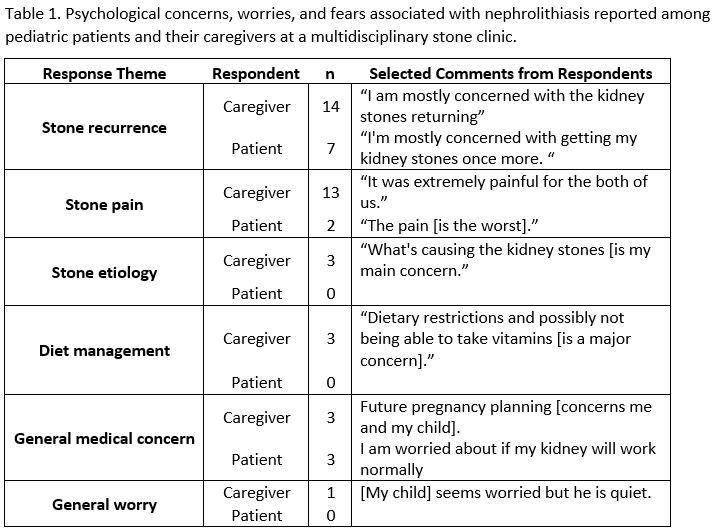
Introduction: Pediatric patients with nephrolithiasis may face psychological concerns associated with pain episodes, preparation for surgery, and behavioral modification. This study sought to determine the psychological concerns and needs of children with nephrolithiasis and their caregivers seen at a multidisciplinary kidney stone clinic. Methods: Questionnaires were administered to pediatric patients aged =7 years and/or caregivers seen in a multidisciplinary stone clinic due a diagnosis of nephrolithiasis from 2020-2021. Participants reported on adherence to physician instructions regarding diet and medication use, desire to see a psychologist in a multidisciplinary stone clinic, and psychological concerns, worries, and fears associated with nephrolithiasis. Worries and concerns were analyzed qualitatively and grouped into categories including stone etiology, recurrence, pain, diet management, general medical concerns, and general worry (Table 1). Results: 51 participants completed questionnaires, including 19 pediatric patients and 32 caregivers. Thirty percent of caregivers (n=11) and 16.7% percent of patients (n=3) reported that they always eat a stone-prevention diet. Additionally, 45.2% of caregivers (n=14) and 13.3% of patients (n=2) stated that they always take prescribed stone-prevention medications as instructed. Worries surrounding stone recurrence was the primary concern reported among both patients (36.8%, n=7) and caregivers (43.8%, n=14, Table 1). Caregivers were frequently concerned regarding their child’s pain (40.6%, n=13). Regarding the role of a psychologist, 28.1% (n=9) of caregivers and 21.1% (n=4) of patients reported desires to see a psychologist for stone-related psychological concerns. Conclusions: Among patients managed for nephrolithiasis in a multidisciplinary kidney stone clinic and their caregivers, psychological concerns surrounding stone recurrence and pain were commonly reported. Adhering to a stone-prevention diet and stone-prevention medications was difficult among most participants surveyed. The inclusion of a psychologist in a multidisciplinary stone clinic may help children with nephrolithiasis to address worries, fears, and behavioral modifications. SOURCE OF Funding: None