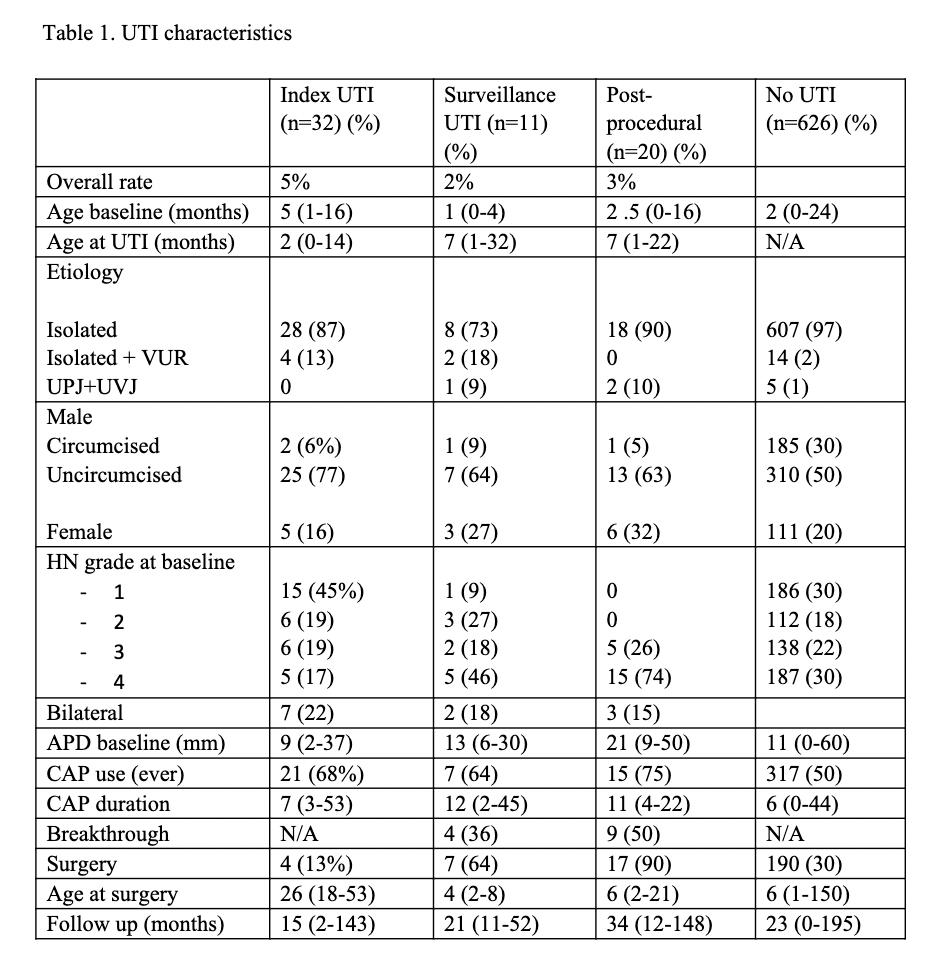
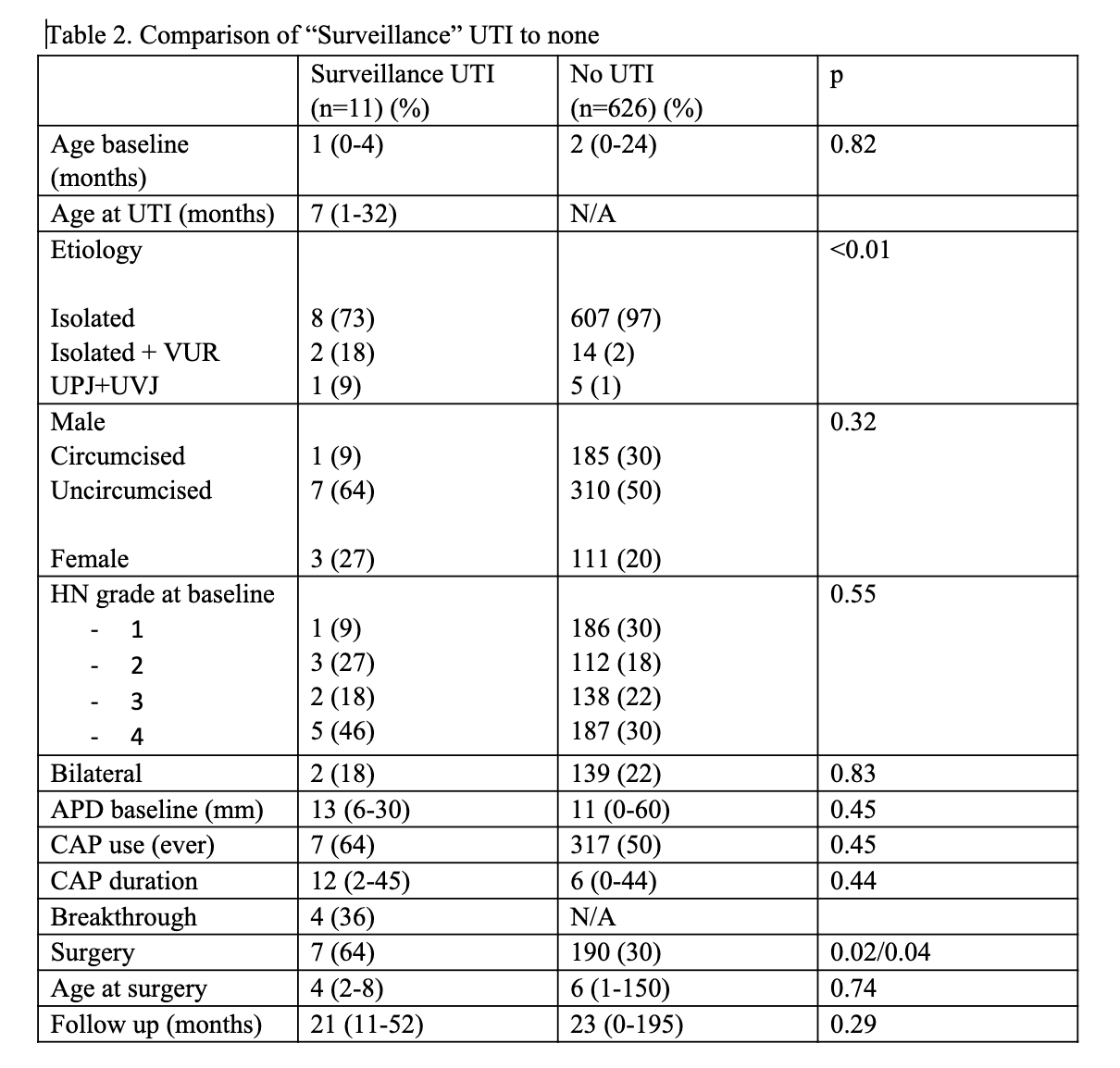
Introduction: The rate of UTI in healthy febrile infants is 7%. Isolated hydronephrosis (HN) refers to dilation of the renal pelvis and has been associated with an increased risk of UTI resulting in continuous antibiotic prophylaxis (CAP) use. Our goal was to determine the overall rate of UTI stratified by type, CAP, VUR. Methods: A HN database from 2015-22 was examined. Included patients were less than 24m at baseline with isolated HN, and those with other abnormalities were excluded. Captured variables included age, sex, circumcision status, HN severity and VUR. UTI was defined as fever with pyuria and positive culture from catheterized specimens. UTIs were categorized as index (pre-presentation), surveillance (while being followed), and post-procedural (associated with surgery/tests). Results: A total of 689 patients were included. The median age at baseline was 2m (0-24m) and follow-up was 23m (6-195). A total of 52% were prescribed CAP and received it for 6m (0-53). The overall UTI rate was 9% which developed at 5 months (0-32m) of age. UTIs were index in 32 (5%), surveillance in 11 (2%) and post-procedural in 20 (3%). After excluding procedural UTIs, the actual rate was 7%. Most patients were male (81%) and 62% were uncircumcised. Uncircumcised males comprised 77%, 64% and 63% of index, surveillance and post-procedural UTI respectively. 96% had isolated HN and 53% had high grade (SFU 3-4) 1% of had concomitant UPJ+UVJ obstruction and 3% were known to have VUR, however only 30% were investigated with VCUG. When comparing surveillance UTI to none, the only significant finding was more VUR in the surveillance group (18%) vs. 2% in the no infection group (p < 0.01). UTI characteristics by category can be reviewed in Table 1. Comparisons between surveillance and no UTIs can be reviewed in Table 2. Conclusions: The overall incidence of UTI in children with isolated HN is low. We demonstrated that the rate of UTI is similar to the general population, generating controversy regarding the necessity of CAP. This presents an opportunity to limit exposure to antibiotics to children with isolated HN. SOURCE OF Funding: NA