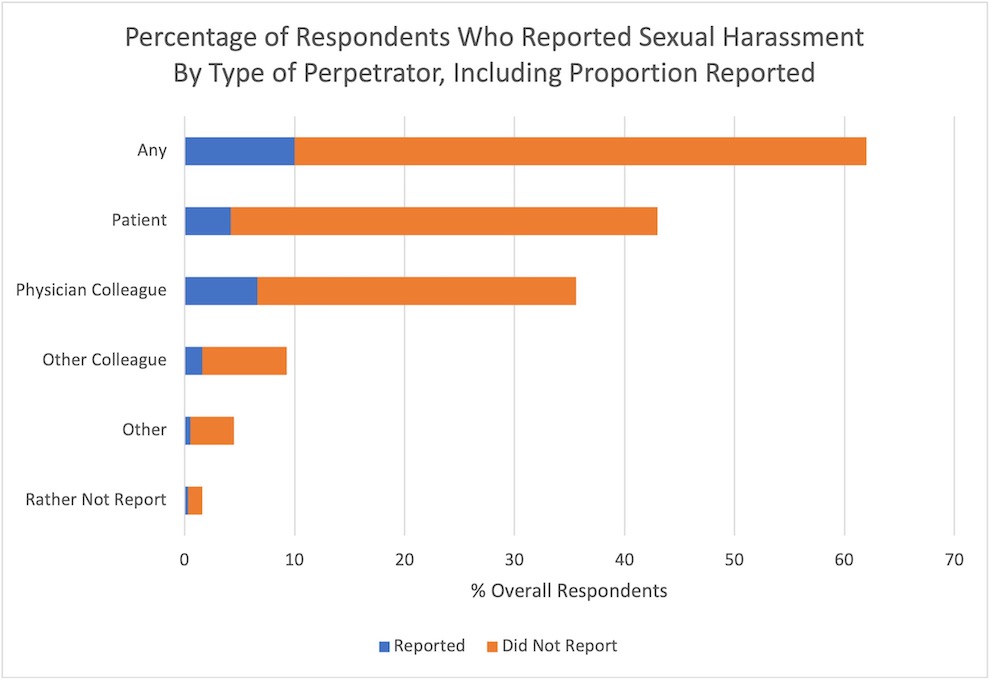
Introduction: Sexual harassment and gender discrimination toward female surgeons is a longstanding, well-recognized issue. As more women pursue training in urology, we must acknowledge the distinct challenges women urologists face within our specialty. The objective of this study was to evaluate the prevalence of sexual harassment of women urologists and trainees and to understand the factors associated with this behavior. Methods: An electronic survey census was sent to all members of the Society of Women in Urology including residents, fellows, and women urologists practicing in the United States and territories. Surveys were also distributed to urology residency programs and via social media platforms. In addition to demographic data, we solicited information about whether respondents experienced sexual harassment and allowed for free-text descriptions of these events. Results were compiled and analyzed using descriptive statistics. Results: There were 379 total female respondents with an average age of 43 (SD=18.6) years old. Of these, 75.0% were urologists in practice, 15.1% residents, and 9.8% fellows. 62.5% of respondents reported experiencing sexual harassment in training or in practice. Of those who reported experiencing sexual harassment, 70.9% described patient-perpetrated harassment, 59.5% had been harassed by a physician colleague, and 33.3% had experienced harassment from both sources. Common themes included: comments about physician appearance or clothing, inappropriate sexual comments or questions, inappropriate physical touch, and sexual advances. Only 16.0% of respondents who had experienced sexual harassment chose to report it. The incidence of harassment by each group overall, including rates of reporting, are summarized in Figure 1. Common reasons for not reporting included: presumption of institutional indifference, fear of retaliation, feeling it was not worth the time or effort, and a feeling of intimidation due to a power dynamic. Conclusions: Sexual harassment of women urologists by patients and colleagues is common and grossly underreported. Creating environments in which women feel safe to report without repercussion and clinical settings in which sexual harassment is not tolerated by patients or physicians is critical as the number of women practicing urology increases. SOURCE OF Funding: None