Session: MP59: Benign Prostatic Hyperplasia: Surgical Therapy & New Technology III
MP59-08: Waterjet ablation therapy (aquabeam) vs. urethral-sparing robot-assisted simple prostatectomy for large prostate volumes (>80mL): Results of a multicentric series according to the standardized BPH6 achievement
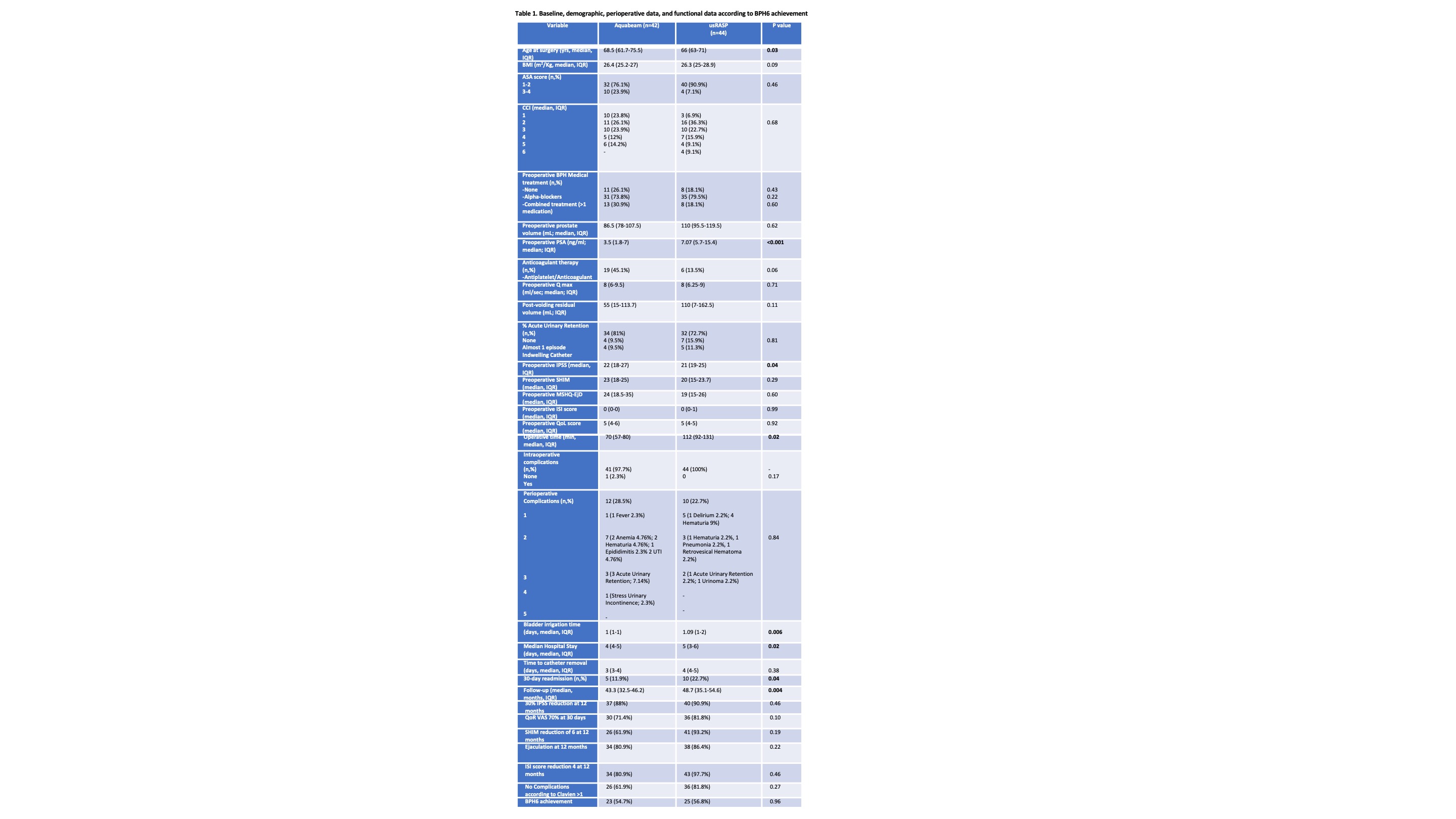
Introduction: The aim of this multicentric study was to compare outcomes of waterjet ablation therapy (WAT) vs urethral-sparing robot assisted simple prostatectomy (usRASP) for large prostate volumes (>80ml) with regard to BPH6 Methods: Three institutional BPH datasets (n=205) were matched and queried for “prostate volume>80 mL” (n=86), “WAT” (Group A; n=42) and “usRASP” (Group B; n=44). Baseline, perioperative and functional data according to BPH6 composite endpoint (adequate relief from LUTS, high-quality recovery experience, maintenance of erectile and ejaculatory function, maintenance of continence, and avoidance of high-grade complications) were compared between groups. Differences between continuous variables were assessed with Kruskal-Wallis test, while Pearson’s ?2 test was used for categorical data. For all analyses, a two-sided p<0.05 was considered significant Results: Baseline and perioperative data are reported in Table 1. Compared to group B, patients treated with WAT showed increased median age surgery (p=0.03), preoperative median IPSS (p=0.04) and lower preoperative PSA median values (p < 0.001). All other baseline variables were comparable between groups (all p=0.06; Table 1). Regarding perioperative outcomes, patients treated with usRASP revealed increased median operative time (p=0.02), prolonged bladder irrigation time (p=0.006), longer median hospital stay (p=0.02) increased 30-days readmission rate (p=0.04) and a longer follow-up timeframe(p=0.004). At a median follow-up of 43.7 months (IQR 33.8-49.7) the BPH6 achievement rate was comparable between groups (A:54.7% vs B:56.8%; p=0.96) with no significative difference between any of the domains considered (all p=0.1, Table 1) Conclusions: Compared to usRASP, WAT showed non-inferior symptom relief and ejaculatory function preservation for prostate gland>80 mL with a moderate benefit in terms of main perioperative outcomes at mid-term follow-up. Long-term outcomes of both procedures’ durability as standardized head-to-head comparisons with other novel technologies for BPH surgery are eagerly awaited in the upcoming future SOURCE OF Funding: None