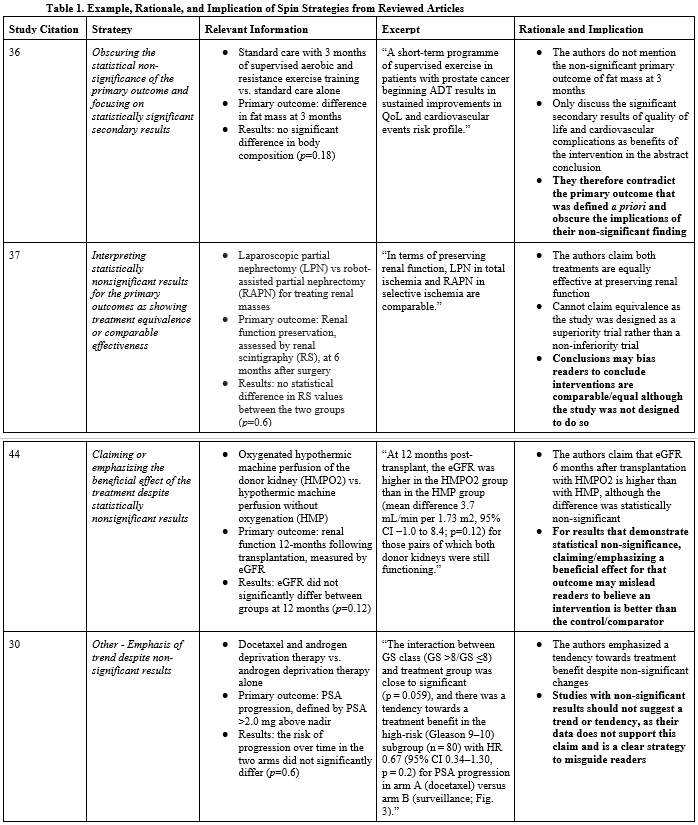
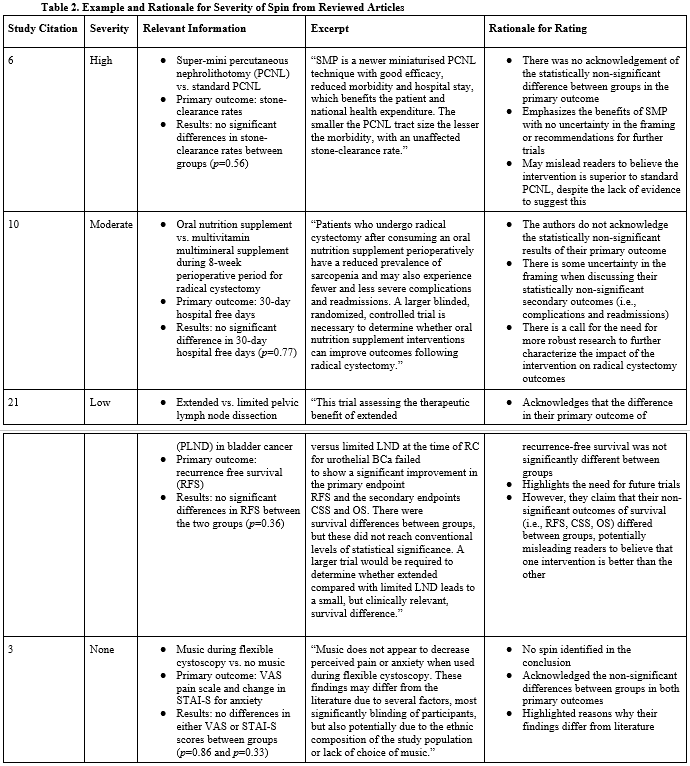
Introduction: "Spin" refers to a form of language manipulation that positively reflects negative findings or downplays potential harms. Spin has been reported in randomized controlled trials of other surgical specialties, which can lead to the recommendation of subpar or ineffective treatments. The goal of this study was to characterize spin strategies and severity in statistically non-significant urology randomized controlled trials. Methods: A comprehensive search of MEDLINE and Embase for the top five urology journals, major urology subspecialty journals, and high-impact non-urology journals from 2019 to 2021 was conducted. Statistically non-significant randomized controlled trials with a defined primary outcome were included. Screening, data extraction, and spin assessment were performed in duplicate by two independent reviewers. Results: From the database search of 3497 studies, 46 trials were included for analysis. Spin was identified in 35 studies (76%), with the majority of abstracts (n=26, 57%) and main texts (n=35, 76%) containing some level of spin. Obscuring the statistical non-significance of the primary outcome and focusing on statistically significant secondary results was the most frequently used strategy in abstracts, while “other” strategies not previously defined, specifically Emphasis of trends despite non-significant results, were the most commonly used strategies in main texts. Table 1 provides an example, rationale, and implication of each spin strategy. Moderate or high spin severity was identified in 21 (46%) abstract and 22 (48%) main text conclusions. Examples for each severity of spin level and rationale for that rating can be found in Table 2. Conclusions: Overall, our results suggest that 76% of statistically non-significant urology randomized controlled trials contained some level of spin. Readers and writers should be aware of common spin strategies when interpreting non-significant results and critically appraise the significance of results when making decisions for clinical practice. SOURCE OF Funding: None