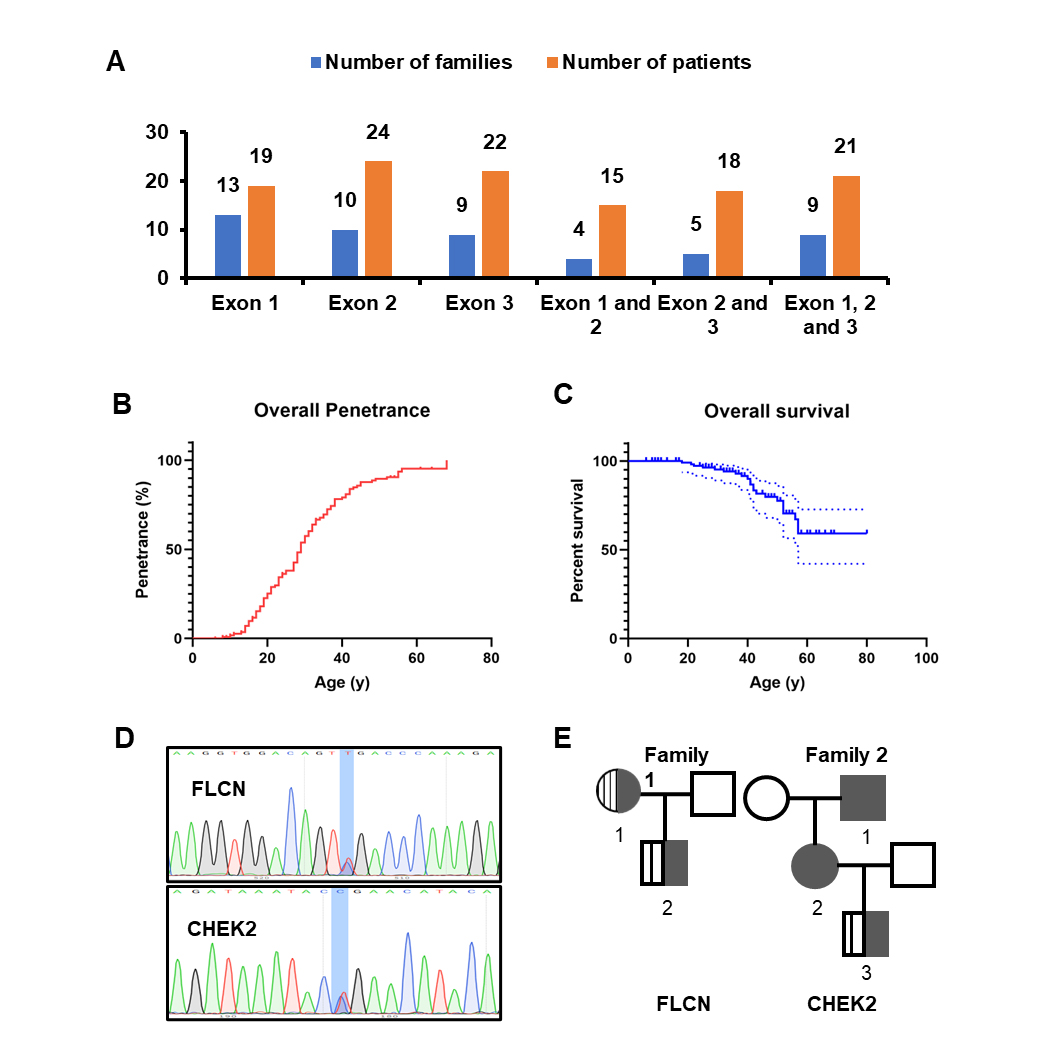
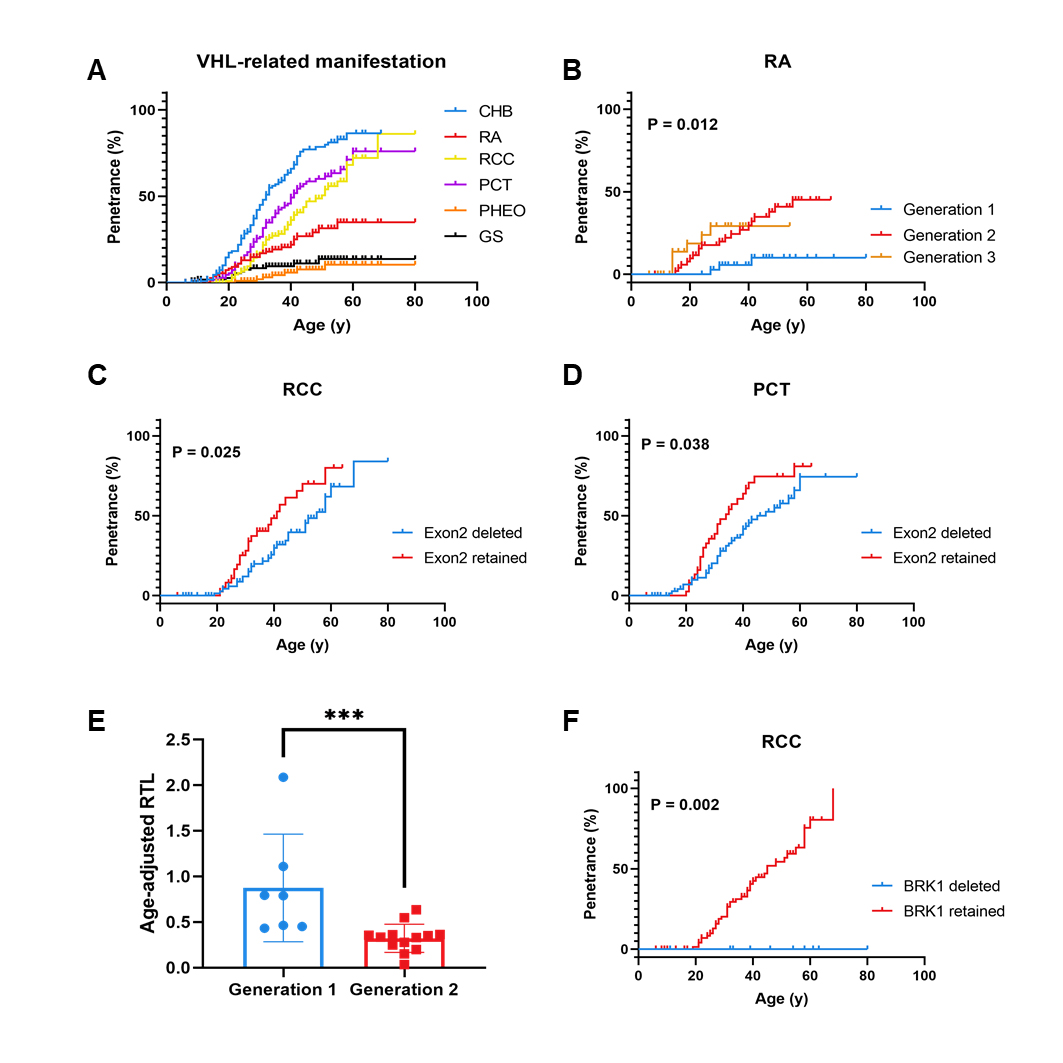
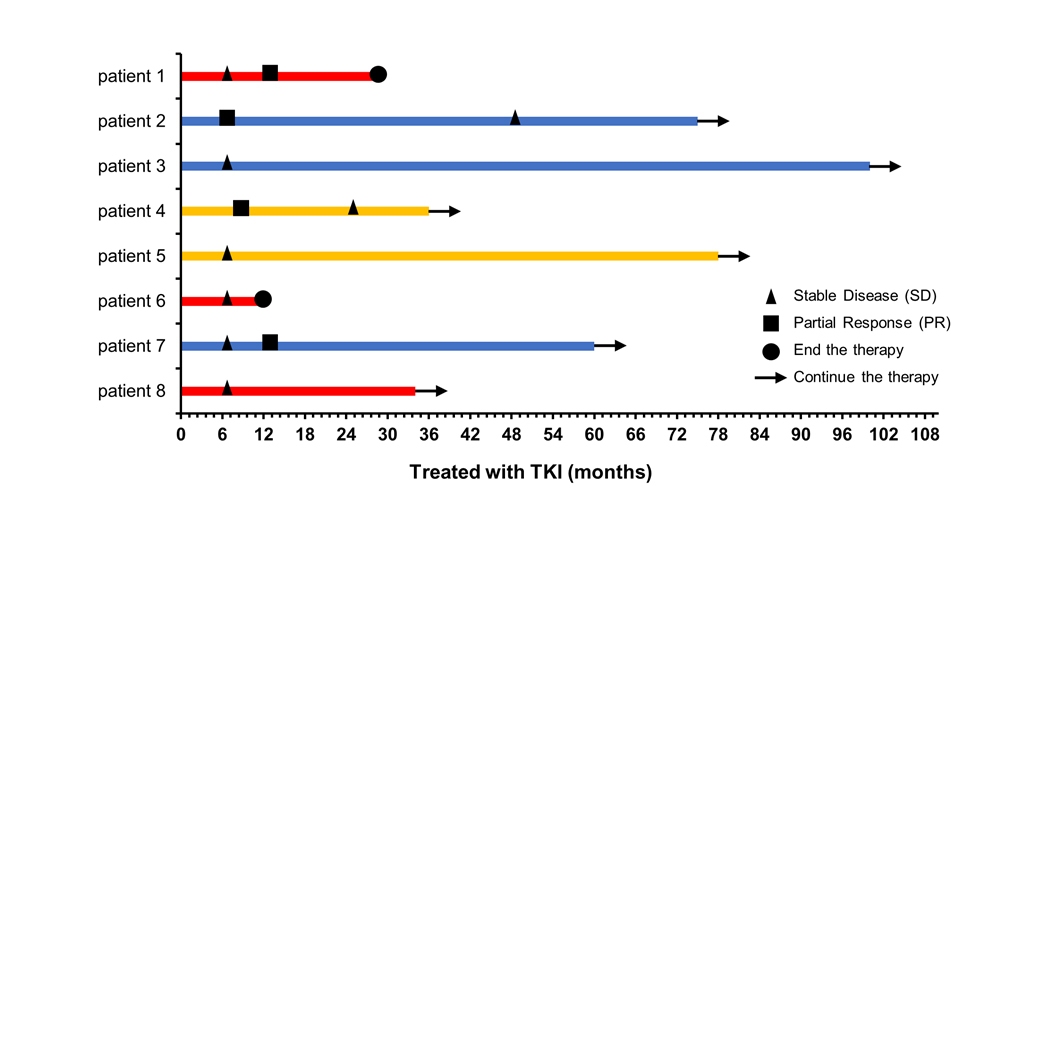
Introduction: Approximately 20-40% of patients with von Hippel-Lindau (VHL) disease, an autosomal dominant hereditary disease, exhibit large deletions (LDs). Few studies have focused on this population. Hence, we aimed to elucidate genotype-phenotype correlations and clinical outcomes in VHL patients with LDs. Methods: We included 119 VHL patients from 50 unrelated families in whom LDs were detected using traditional and next-generation sequencing methods in this retrospective study. Other germline mutations were confirmed by Sanger sequencing. Genotype-phenotype correlations and survival were analyzed in different groups using Kaplan-Meier and Cox regression. We also evaluated the therapeutic responses to tyrosine kinase inhibitors (TKIs) therapy. Results: The overall penetrance of patients whose age was < 60 was 95.2%. Two VHL patients with LDs also carried CHEK2 and FLCN germline mutations. An earlier age of onset of retinal hemangioblastoma was observed in the next generation. The patients with exon 2 deletion of VHL had an earlier onset age of renal cell carcinoma and pancreatic lesions. The risk of renal cell carcinoma was lower in VHL patients with LDs and a BRK1 deletion. The earlier onset age group received a poorer prognosis. Four of 8 (50%) patients showed a partial response to TKIs therapy. Conclusions: The number of generations and the status of exon 2 could affect onset age of VHL-related manifestation. Onset age was an independent risk factor for overall survival. TKIs therapy was effective for VHL patients with LDs. Our findings would further support clinical surveillance and decision-making processes. SOURCE OF Funding: This work was supported by the National High Level Hospital Clinical Research Funding (High Quality Clinical Research Project of Peking University First Hospital, 2022CR75), National Natural Science Foundation of China (No. 82141103; 82172617; 82172665; 81872081), the Scientific Research Seed Fund of Peking University First Hospital (2021SF01), Capital's Funds for Health Improvement and Research (2022-2-4074), and Sino-Russian Mathematics Center.