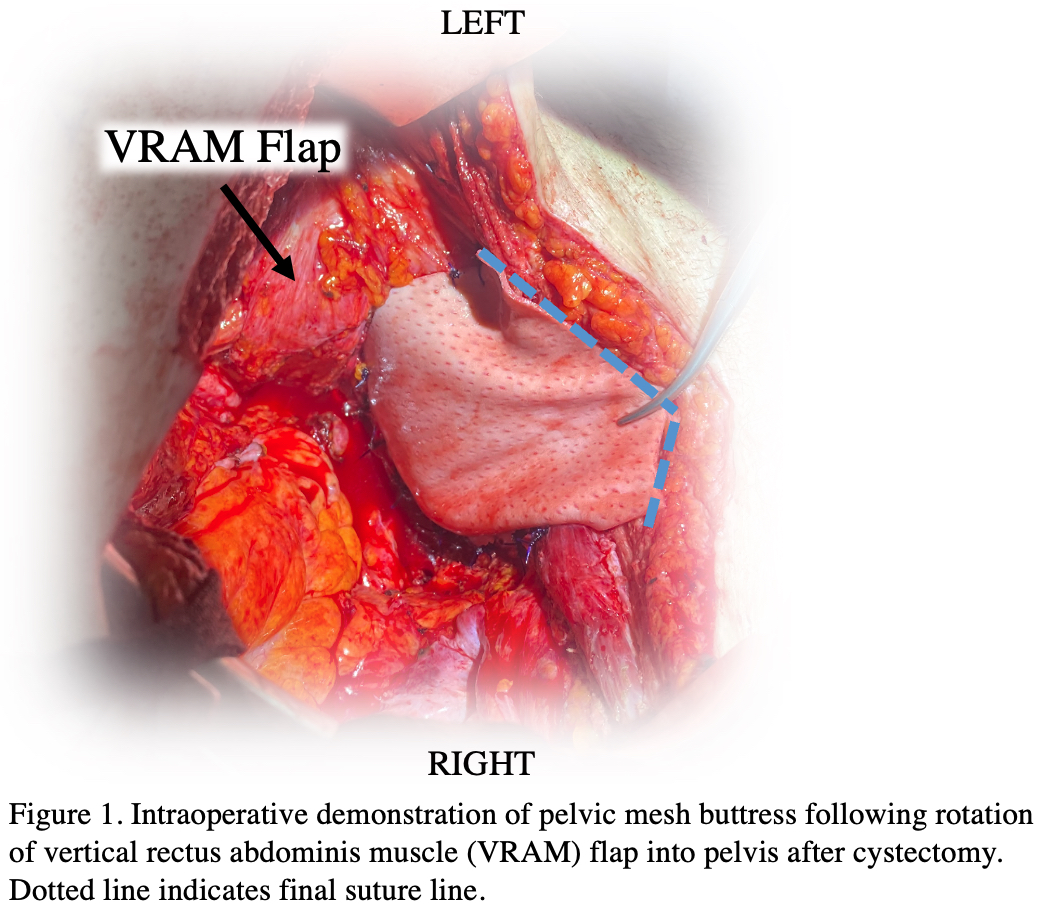
MP42-14: Biologic Mesh Buttress with Vertical Rectus Abdominis Muscle Flap to Reestablish Pelvic Integrity During Cystectomy for Anterior Urinary Fistula
Introduction: Post-radiation puboprostatic and pubourethral fistulae are devastating conditions, and surgical intervention remains highly morbid. Here, we describe a novel technique using a mesh buttress and vertical rectus abdominis muscle flap (VRAM) to restore pelvic integrity during cystectomy for anterior urinary fistulae. Methods: Patients having undergone cystectomy with ileal conduit were identified in a prospectively maintained database. Those having undergone VRAM harvest with placement of a mesh buttress for anterior urinary fistula were selected for analysis. Following supratrigonal cystectomy, all patients underwent a left-sided VRAM harvest. After the bladder plate was fulgurated, a biologic mesh was tailored to the pelvic defect and sutured to the posterior trigone. It was then incorporated circumferentially around the levator muscles and anteriorly to the pubic bone and underside of rectus fascia. Prior to circumferential closure of the underlying space, a VRAM flap was secured in the pelvis. The remainder of the mesh was then secured, creating a tunnel for the flap pedicle. Surgical metrics and post-operative outcomes were evaluated using descriptive statistics. Results: Between 2019-2021, eleven patients underwent this technique, of which five carried a diagnosis of post-radiation anterior urinary fistula with pubic osteomyelitis. The median age was 73 years, and all patients were male. Three patients previously underwent radical prostatectomy, all of whom underwent subsequent endoscopic intervention for vesicourethral anastomotic stenosis. One patient underwent transurethral resection of the prostate after radiation. One patient had no prior surgical history. Median operative time was 387 minutes and median blood loss was 500cc. Average length of stay was five days. No patients developed an immediate post-operative complication. All patients had positive intra-operative bone cultures. No patients reported persistent pubic, groin, or thigh pain after surgery. No fistula recurrence occurred at a median follow-up of 264 days. Conclusions: The use of a mesh buttress in conjunction with pelvic VRAM flap is a novel technique designed to restore pelvic integrity for patients undergoing cystectomy for an anterior urinary fistula. SOURCE OF Funding: N/a