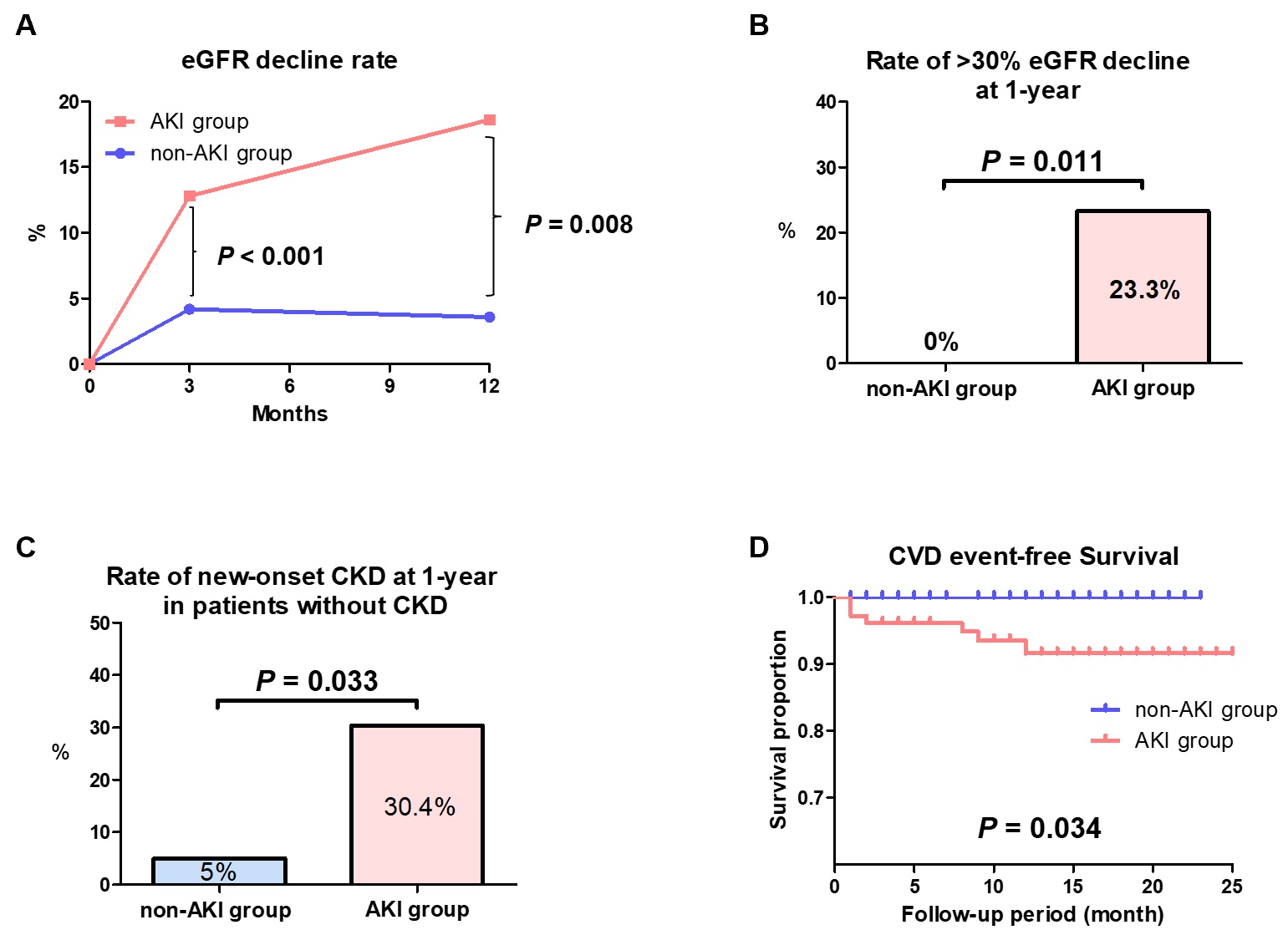
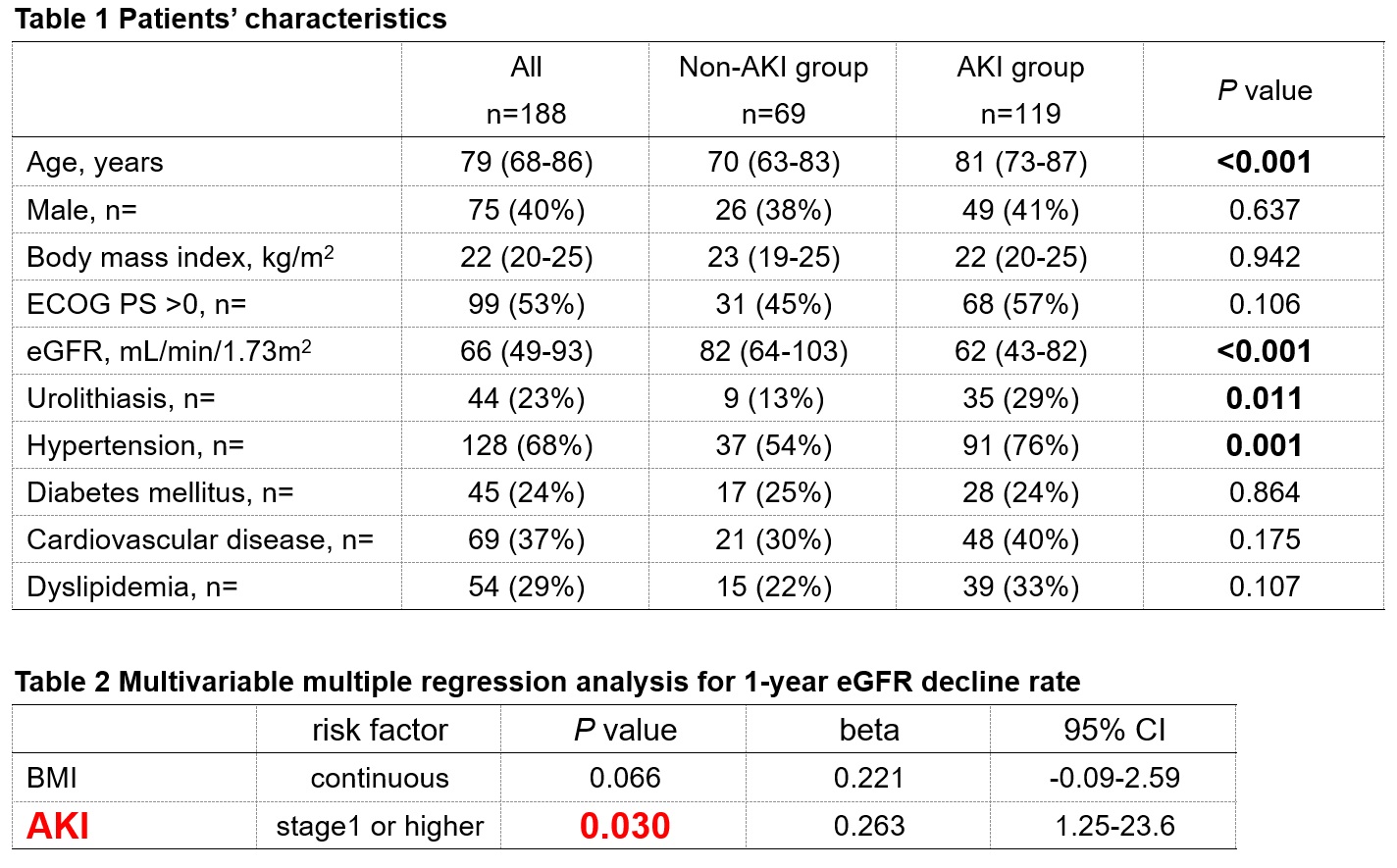
Introduction: Although acute kidney injury (AKI) is a well-known risk factor of future cardiovascular disease (CVD) events and chronic kidney disease (CKD), no study has investigated the impact of AKI on CVD events and renal outcomes in patients with urological sepsis. Methods: This prospective study included 188 patients with urological sepsis between September 2016 and September 2018. AKI was defined according to KDIGO criteria. Patients were divided into two groups: patients who developed any stage of AKI during hospitalization (AKI group) and patients who did not (non-AKI group). The primary endpoint was 1-year eGFR decline rate. In addition, we compared CVD event-free survival between two groups. Multivariable multiple regression analysis was performed to identify the risk factor of higher 1-year eGFR decline rate. Results: Median age and follow-up periods were 79 years and 12 months, respectively. The number of patients in the non-AKI and AKI groups were 69 and 119, respectively. Three-month and 1-year eGFR decline rate (Fig. A) and rate of >30% eGFR decline rate at 1-year (Fig. B) in the AKI group were significantly higher than those in the non-AKI group. The rate of new-onset CKD at 1-year in the AKI group was significantly higher than that in the non-AKI group (Fig. C). CVD event-free survival in the AKI group was significantly lower than that in the non-AKI group (Fig. D; P = 0.034). In multivariable analysis, AKI was selected as significant independent risk factor for higher 1-year eGFR decline rate in patients with urological sepsis (Table 2). Conclusions: AKI was a risk factor of future CVD events and renal impairment in patients with urological sepsis. We should closely follow-up patients with urological sepsis who developed AKI. SOURCE OF Funding: None