MP46-07: Prognostic value of preoperative vascular endothelial growth factor and vascular cell adhesion molecule-1 in bladder carcinoma treated with radical cystectomy
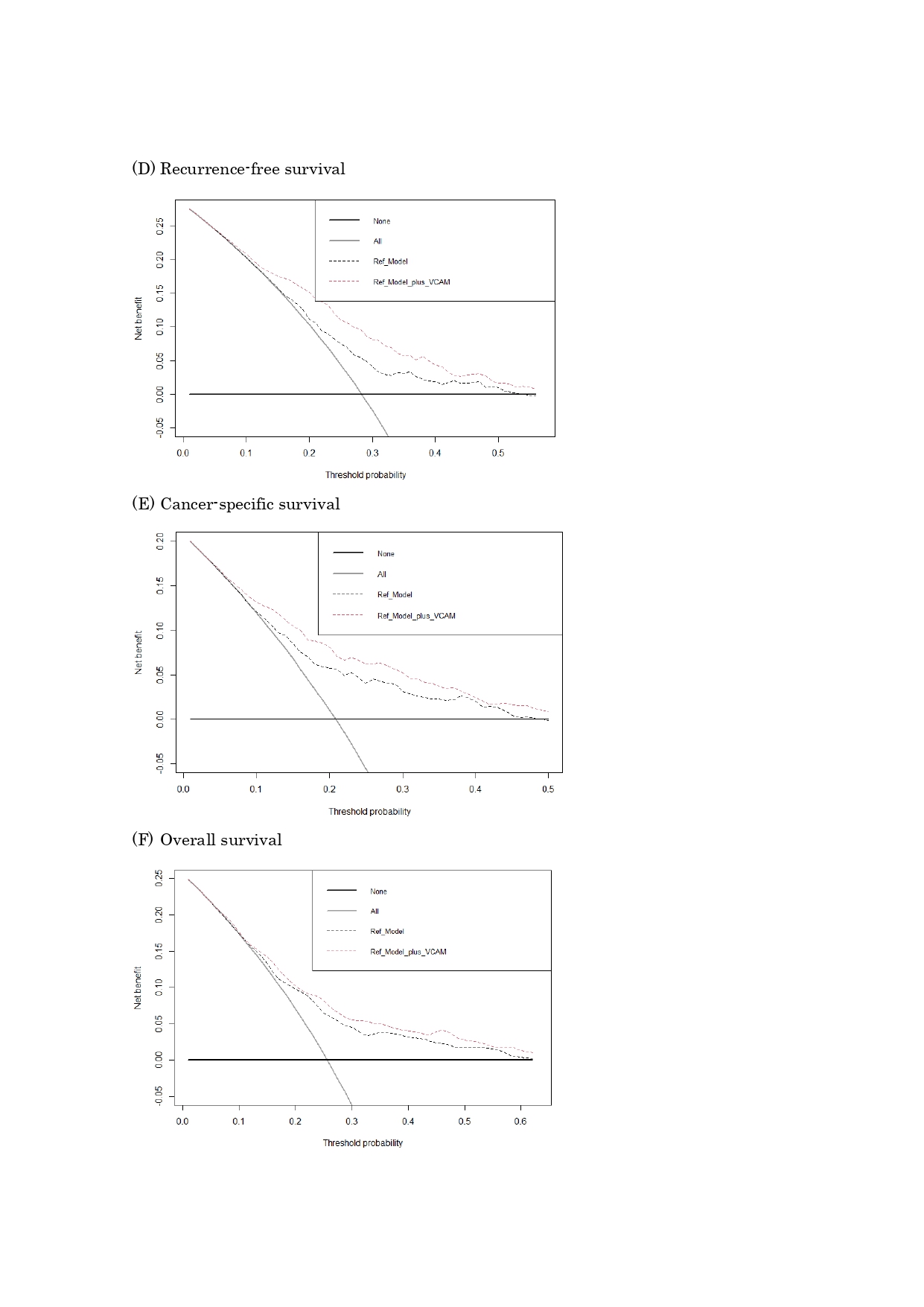
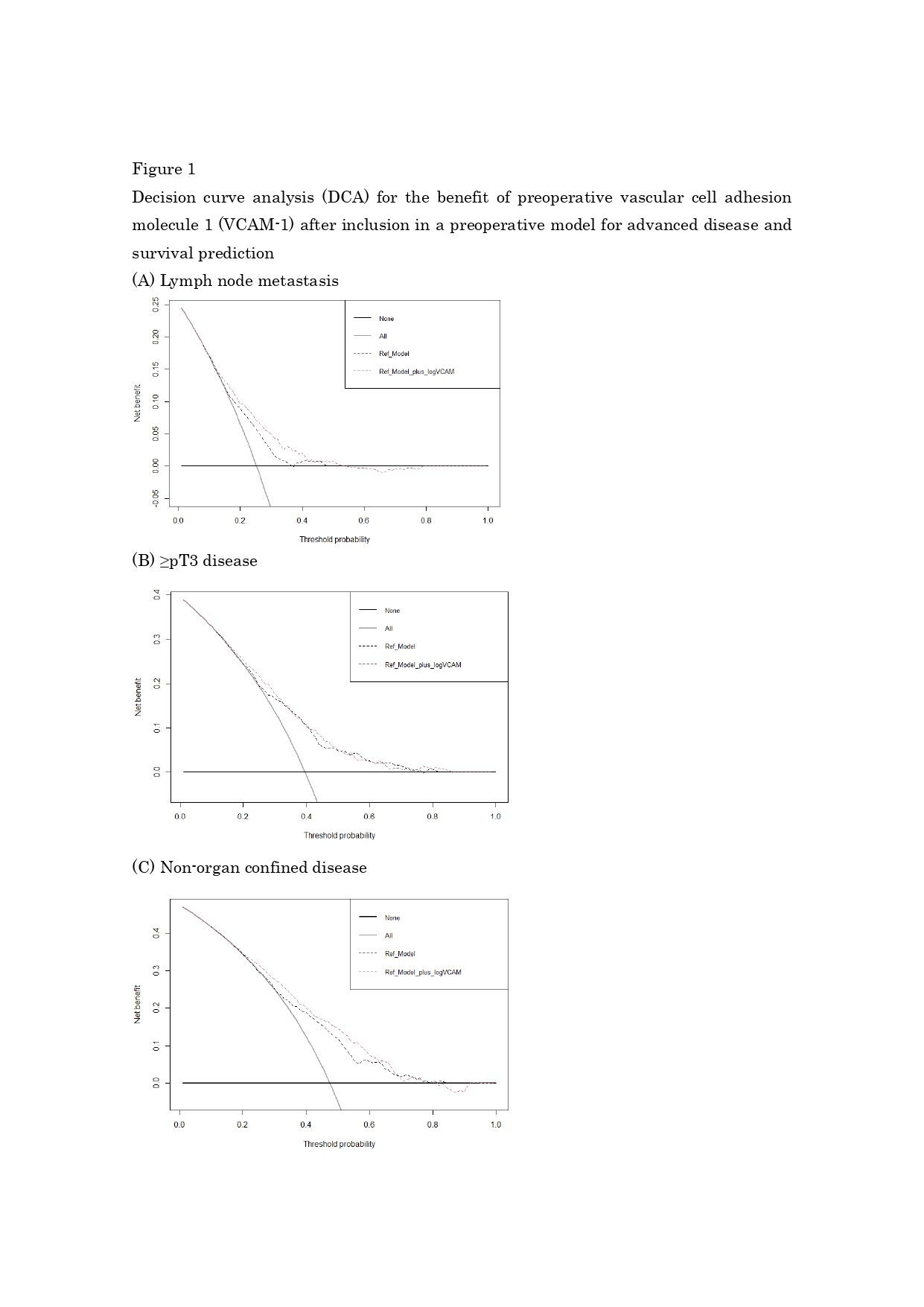
Introduction: Identification of preoperative biomarkers capturing each tumor's biological and clinical potential is crucial to improve risk stratification in patients with urothelial carcinoma of the bladder (UCB). Angiogenesis-related marker vascular endothelial growth factor (VEGF) and vascular cell adhesion molecule-1 (VCAM-1) have been shown to be elevated in UCB, but its predictive/prognostic role has not been determined. Thus, we aimed to investigate the predictive/prognostic value of these biomarkers in patients with UCB. Methods: We enrolled 1,036 patients with clinically non-metastatic advanced UCB who underwent RC. The preoperative plasma levels of VEGF and VCAM-1 were measured. The correlation between plasma VEGF/VCAM-1 and pathological and survival outcomes was assessed. The clinical net benefit was evaluated using decision-curve analysis (DCA). Results: Preoperative VCAM-1 was significantly elevated in patients with adverse pathological features. Higher VCAM-1 levels were independently associated with increased risk of lymph-node metastasis (LNM), =pT3 disease, and nonorgan-confined disease (NOCD; all p<0.001). Preoperative plasma VEGF/VCAM-1 were independently associated with recurrence-free, cancer specific, and overall survival (RFS/CSS/OS) in pre and postoperative multivariable models. Adding VCAM-1 to these models improved the discriminatory ability to predict all outcomes by a significant margin. On DCA, VCAM-1 addition to the reference models for LNM, NOCD, RFS, and CSS prediction resulted in relevant improvement. Conclusions: Elevated plasma VCAM-1 was associated with biologically and clinically aggressive UCB disease features. After validation, preoperative VCAM-1 may serve as biomarker to help identify patients likely to benefit from intensified/multimodal therapy. VCAM-1 also improved the discriminatory power of predictive/prognostic models and can be used to refine personalized clinical decision-making. SOURCE OF Funding: No funding.