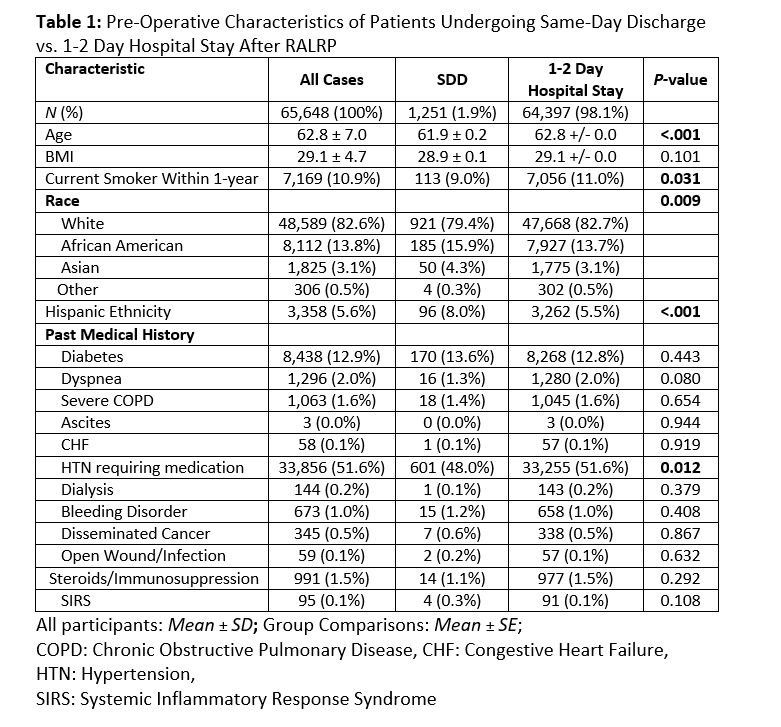
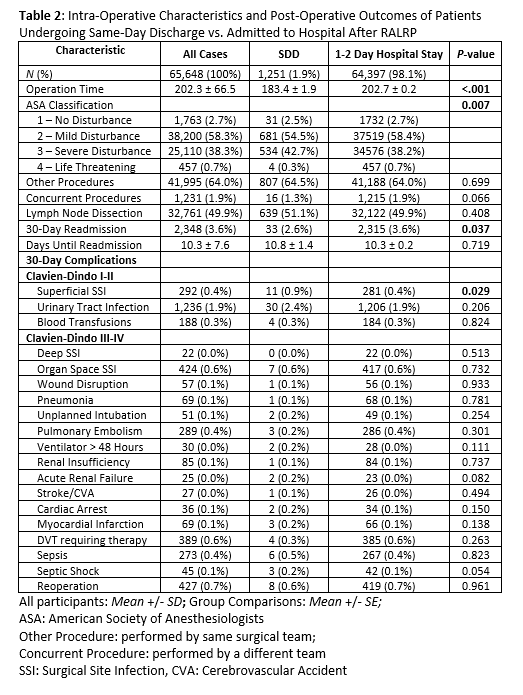
Introduction: Robot assisted laparoscopic radical prostatectomy (RALRP) has demonstrated improved postoperative pain, decreased operative time, and shortened length of stay compared to the open approach. It is now the preferred approach for the surgical management of prostate cancer. Several institutions have shown the feasibility of performing same day discharge (SDD) RALRP. We sought to evaluate trends and assess the safety of SDD RALRP using the National Surgical Quality Improvement Program (NSPIQ) database. Methods: Subjects were queried between 2012-2020 with CPT code 55866. Patients with a hospital stay of 0 days were defined as SDD RALRP and compared to patients with presumed uncomplicated course discharged postop day 1 or 2. The primary outcome of 30-day readmission rates was compared. SPSS v27.0 was used to perform statistical analysis between the two groups. Results: We identified 65,648 RALRP cases meeting study criteria, of which 1,251 (1.9%) were SDD. There was a significant association of SDD RALRP performed recently (p <.01), with the majority (53.4%) performed in 2020. Significant demographic differences for SDD RALRP included age (61.9 vs 62.8 years, p<.01), smoking history (9.0% vs. 11.0%, p=03), Hispanic (8.0% vs. 5.5%, p<.01), and race (African 15.9% vs 13.7%, Asian 4.3% vs 3.1%, p<.01). SDD RALRP patients were less likely to have hypertension (48.0% vs 51.6%, p<.01). Significant perioperative variables included shorter operation time (183 vs. 202 mins, p<.01) and fewer Level 4 ASA class (0.3% vs. 0.7%, p<.01). Post-operatively, SDD RALRP was associated with fewer 30-day readmissions (2.6% vs 3.6%, p=.04). There were no significant differences in serious adverse events. Conclusions: In recent years, there has been a significant increase in patients undergoing SDD RALRP. It is associated with fewer 30-day readmissions and does not have increased life-threatening complications. With continued advances in robotic surgery, SDD RALRP is becoming a safe option in the surgical management of prostate cancer. SOURCE OF Funding: none