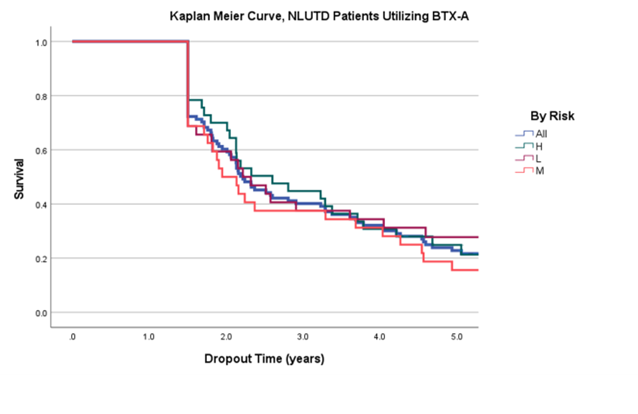
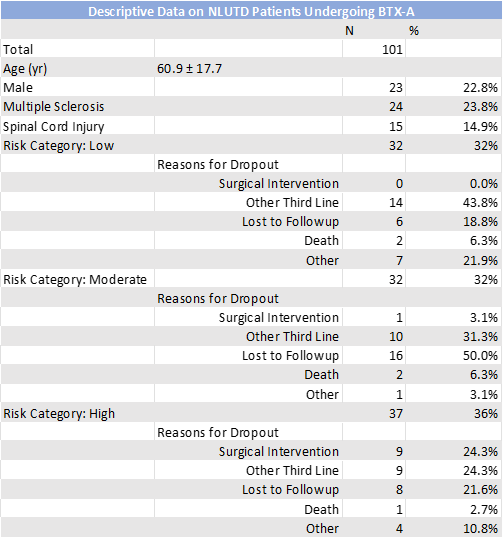
Introduction: In 2011, the United States FDA approved the use of intradetrusor OnabotulinumtoxinA (BTX-A) in patients with neurogenic lower urinary tract dysfunction (NLUTD). In these patients, BTX-A use has demonstrated improvement in episodes of urinary incontinence, total volume voided, overall quality of life, and renal preservation. However, studies on the long-term use of BTX-A in this population are limited. We sought to evaluate real-world BTX-A use in a group of patients with NLUTD over a period of several years at our institution. Methods: Using our IRB-approved BTX-A database, we identified all NLUTD patients receiving BTX-A from 2012-2018. The clinical course of each patient was retrospectively reviewed. Demographic and clinical data for each patient was collected. Each patient was risk stratified into the appropriate category according to the new American Urological Association NLUTD guidelines. Statistical analysis was performed with SPSS v27.0. Results: We identified 101 NLUTD patients that received BTX-A. 78% of patients were female and the mean age was 60.9 years. The neurologic etiologies were multiple sclerosis (23), spinal cord injury (41), distal lesion (41), and suprapontine lesion (22). 32 patients were stratified into Low, 32 Moderate, and 37 High Risk categories. At the 5-year mark, 20.8% of all patients continued BTX-A. By low, intermediate and high risk, it was 25.0%, 15.6%, and 21.6% (p=0.64). The median time to dropout was 2.2 years. Reasons for dropout include pursuing other third line therapies (33), lost to followup (30), pursuing surgical intervention (10, eg urinary diversion, suprapubic tube insertion), death (n=5). Conclusions: The compliance of all NLUTD patients utilizing BTX-A long-term over 5 years is suboptimal. The majority of patients will cease therapy in 2 years, proceeding to alternative options. Further studies are needed to delineate long-term BTX-A use in NLUTD patients, particularly those that are high risk for renal deterioration. SOURCE OF Funding: none