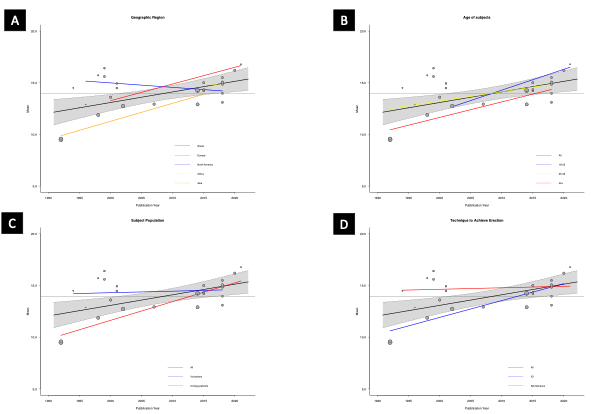
Introduction: Normative male genital measurements are clinically useful and temporal changes would have important implications. The aim of the present study is to characterize the trend of worldwide penile length over time. Methods: PRISMA guidelines were used for abstracting data and assessing data quality and validity. Pooled means and standard deviations for flaccid, stretched, and erect length were obtained. Subgroup analyses were performed by looking at differences in the region of origin, population type, and the decade of publication. Metaregression analyses were to adjust for potential confounders. Results: Seventy-five studies published between 1942 and 2021 were evaluated including data from 55,761 men. The pooled mean length estimates were flaccid length: 8.70cm (95% CI: 8.16, 9.23), stretched length: 12.93cm (95% CI: 12.48, 13.39), and erect length: 13.93cm (95% CI: 13.20, 14.65). All measurements showed variation by geographic region. Erect length increased significantly over time (QM = 4.49, df = 2, p = 0.04) in all regions of the world and across all age groups, while no trends were identified in other penile size measurements. After adjusting for geographic region, subject age, and subject population; erect penile length increased 38% over the past 29 years. Figure 1 depicts meta-regression models for mean erect length over the year of publication by A) regions of origin, B) age groups, C) population type and D) technique to achieve erection. Conclusions: The average erect penis length has increased over the past three decades across the world. Given the significant implications, attention to potential causes should be investigated. SOURCE OF Funding: None