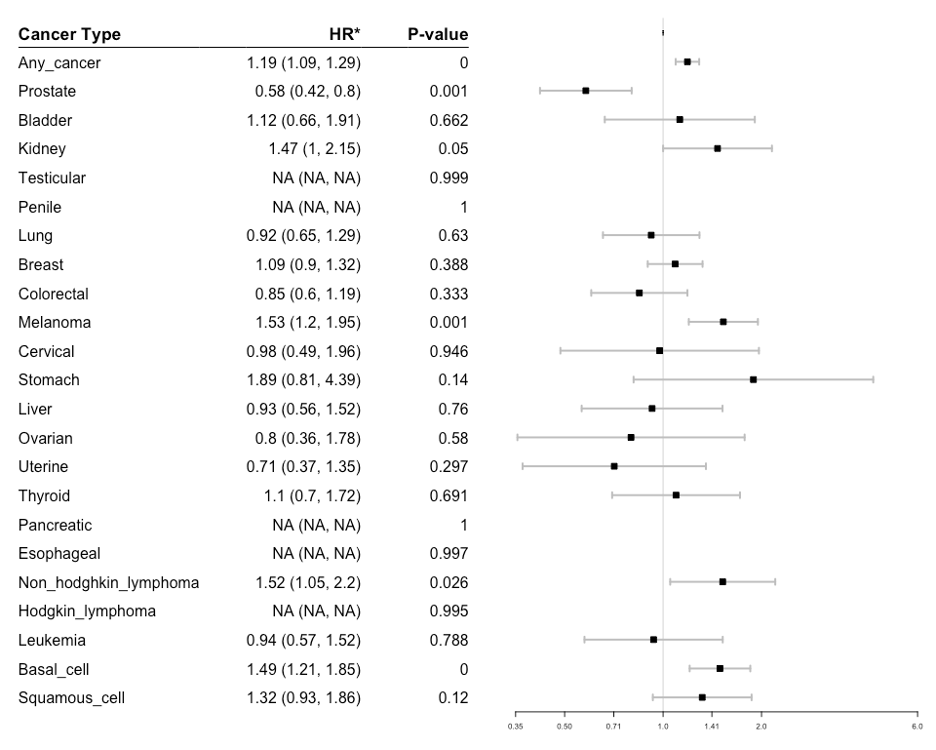
Introduction: It is estimated that inflammation accounts for 20% of all cancers. Tumor necrosis factor-alpha inhibitors (TNF-I) are widely prescribed for chronic inflammatory conditions yet modulatory effect on prostate cancer risk is not known. We hypothesize that affecting systemic TNF-alpha modifies risk of prostate cancer and performed a contemporary study in a large regional medical system. Methods: This was a retrospective, unmatched-cohort study involving a regional hospital system between 1998 and 2022. 4,209 men with TNF-I exposure for inflammatory conditions and 10,981 men with inflammatory conditions without TNF-I exposure were identified. Cox proportional hazards regression analysis, adjusting for age, race, gender, smoking status and underlying inflammatory disease type, was performed. TNF-I exposure was considered a time-varying factor, as TNF-I induction date was not fixed for patients in the TNF-I-exposed group. Models were fit incorporating all patients who developed any malignancy during the study period and individually for each type of cancer. Results of regression models were presented as forest plots with hazard ratios and 95% confidence intervals. Results: While TNF-I exposure was associated with increased risk of any malignancy (HR=1.19, 95% CI 1.09-1.29, p<0.001), exposure to TNF-I had a strongly protective effect against a diagnosis of prostate cancer (HR=0.58, 95% CI 0.42-0.80, p=0.001). Conclusions: Decreased risk of prostate cancer in men exposed to TNF-I suggests that the inflammatory milieu of prostate cancer development is potentially modulated by the anti-inflammatory effects of TNF-I and should be studied further. SOURCE OF Funding: Polsky Urologic Cancer Institute, Northwestern University Feinberg School of Medicine