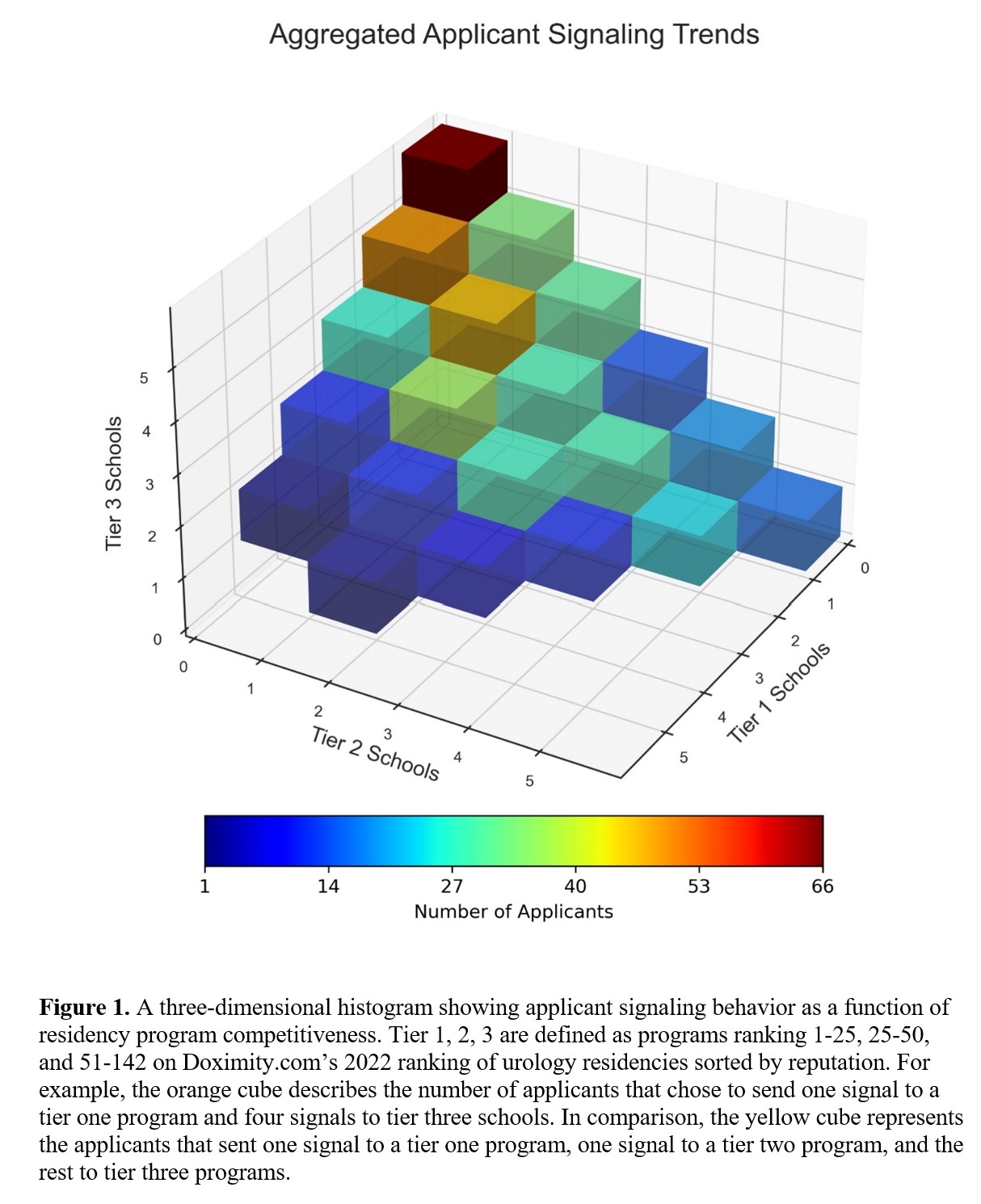
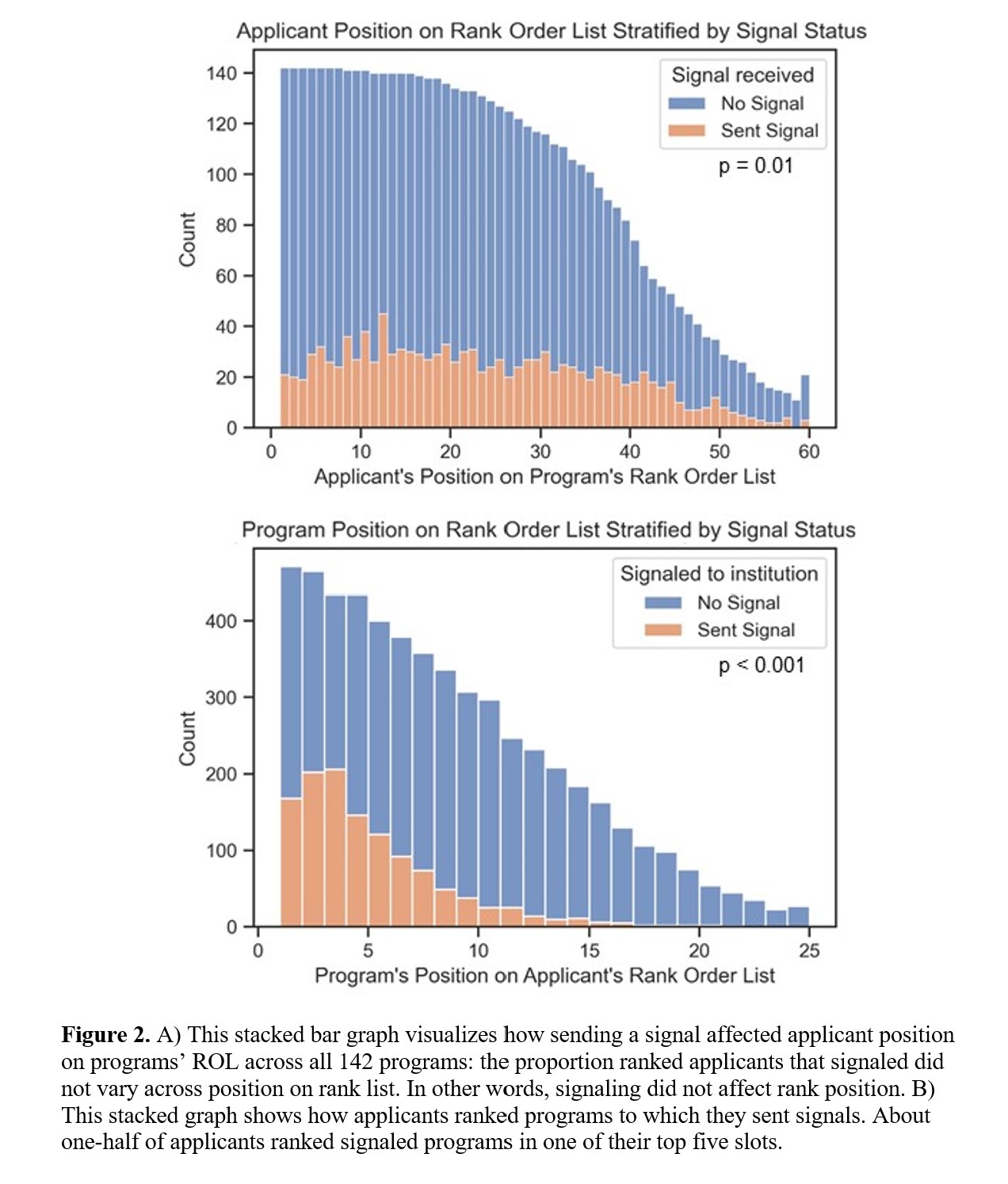
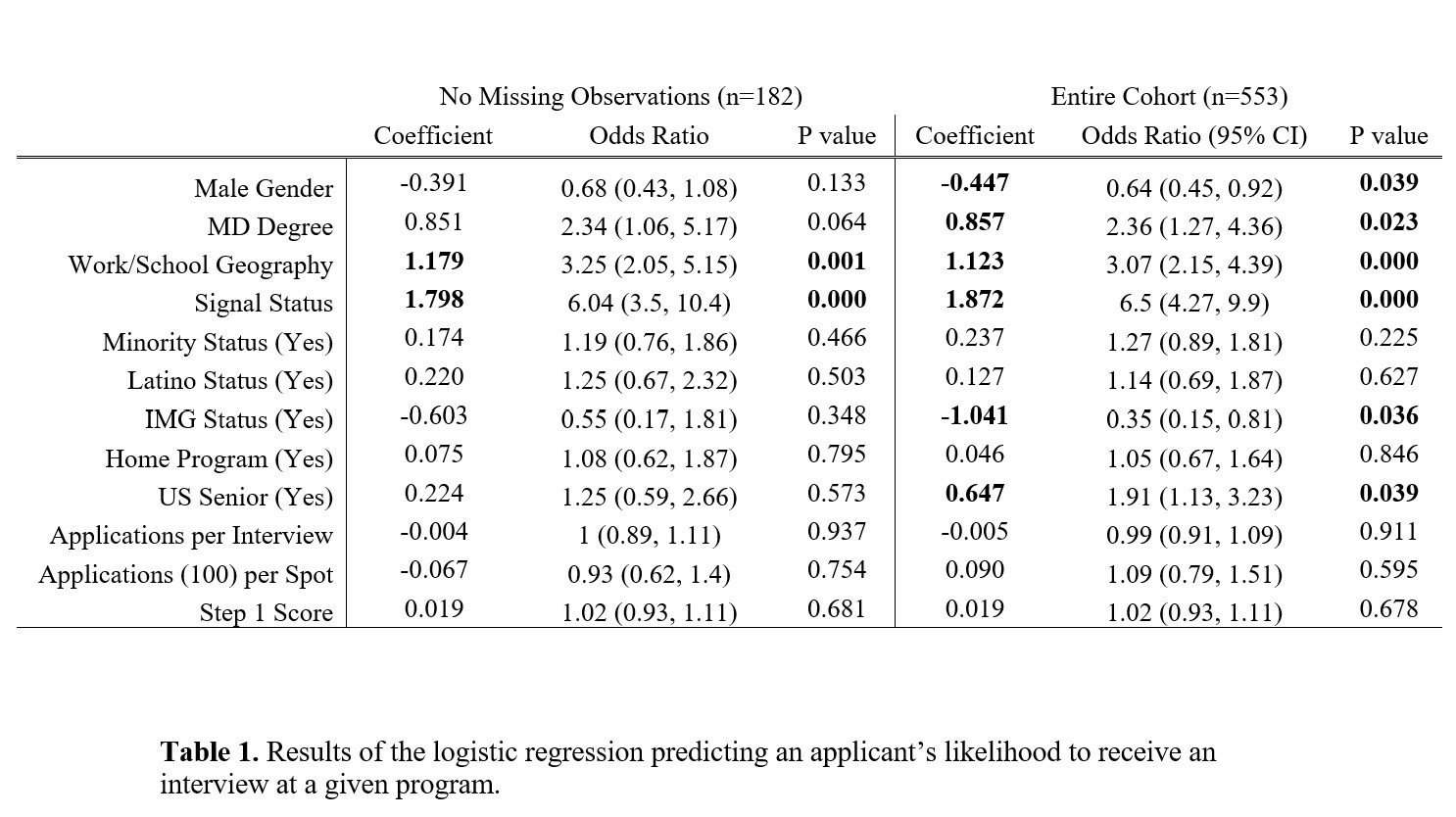
Introduction: Analyzing behavior from the implementation of signals during the American Urological Association (AUA) urology match will help clarify applicant/program signal usage and trends. Methods: Using verified data from the match as well as survey data reported by applicants and programs, a logistic regression was performed on applicant factors associated with obtaining a residency interview: age, gender, degree (MD or DO), distribution of signals, US senior status, minority status, Latino status, IMG status, presence of a home urology program, AUA geographic section, and USMLE Step 1 score. We described signal distribution strategies stratified by program competitiveness and program behavior upon receipt of signals with respect to interviewing/ranking applicants. Results: A total of 2,659 signals were sent by 553 candidates submitting rank lists for 364 positions at 142 programs. Programs received a median of 352 applications and were signaled to a median of 16 times each (IQR: 8– 26). In a logistic regression predicting interview status, we found that geographic proximity (OR 3.25, 95% CI, 2.05–5.15; p=0.001), and signal status (OR 6.04, 95% CI, 3.50–10.40; p < 0.001) were predictive of receiving an interview. Using multiple imputation to broadening the dataset, male gender (OR: 0.64, 95% CI, 0.45–0.92; p=0.039) and IMG status (OR: 0.35, 95% CI, 0.15–0.81; p=0.036) were negatively predictors, while MD degree (OR 2.36, 95% CI, 1.27–4.36; p=0.023), and US senior status (OR 1.91, 95% CI, 1.13–3.23; p=0.039), were positive predictors. Conclusions: We analyzed trends of the newly added signals. We reportedstrategies for signal dispersal, factors associated with obtaining interviews, and how signals informed program interviewing/ranking decisions. SOURCE OF Funding: none

.jpg "Ralph Grauer, MD,MBA (he/him/his) photo")