Session: PD11: Sexual Function/Dysfunction: Medical, Hormonal & Non-surgical Therapy I
PD11-08: The Effect of Vaginal Testosterone on Sexual Function and Vaginal Health: Interim Analysis for PIVoT (Prevention of Recurrent Urinary Tract Infection using Vaginal Testosterone)
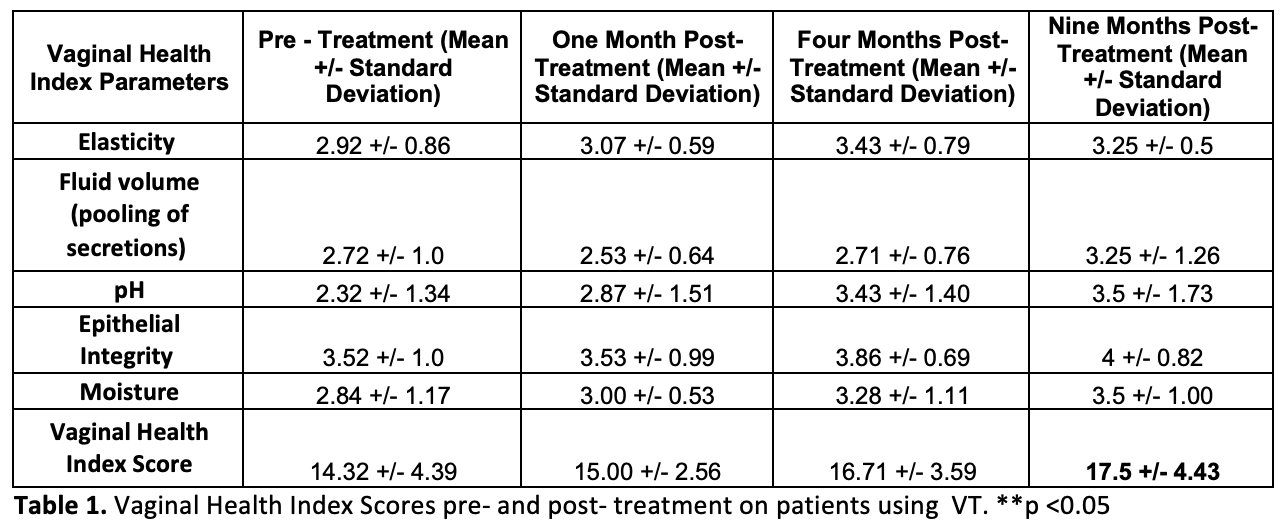
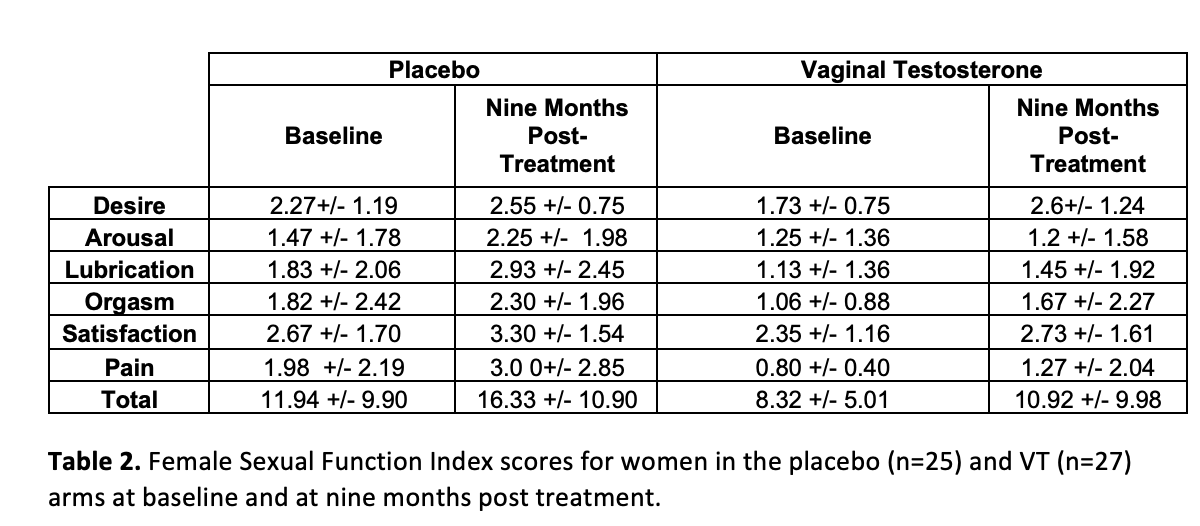
Introduction: During menopause, declining estrogen levels can lead to vaginal atrophy and changes in vaginal flora. Vaginal estrogen treats atrophy thereby restoring flora, which prevents UTIs and improves sexual function in post-menopausal women. While estrogen is effective, some patients have contraindications or are unwilling to use it. Vaginal testosterone cream (VT) has been shown to improve vaginal atrophy, however, its effects on overall vaginal health, urinary tract infections and sexual function have not been fully described. Methods: This is a randomized, double-blind study that enrolled postmenopausal women with rUTIs. Patients were randomized to VT or placebo. Vaginal health index (VHI), Female Sexual Function Index (FSFI), and vaginal swab to assess flora via DNA sequencing were collected at baseline and at one, four and nine month follow up. Results: A total of 52 women have been enrolled to date (25 placebo arm, 27 VT arm). Average VHI at enrollment was 14.52 +/- 0.67. The baseline VHI for the VT group was 15 +/-4.39 while the VHI for the placebo arm was 14.03 +/- 4.30. There was no significant difference in mean VHI scores for either group at one month. The VT group experienced a steady increase in VHI starting at the four month time point. By 9 months, women in the VT arm had experienced statistically significant increase in VHI (15.00+/-4.39 to 17.50 +/- 4.43, p = 0.04) (Table 1). Both groups experienced improvement in FSFI scores compared to baseline (Table 2). With respect to microbiome, there were significant differences between groups at baseline; with treatment although statistically significant trends were seen, the clinical significance of these trends remains unknown. Data on urinary tract infections is still being collected in this ongoing study. Conclusions: Interim analysis showed greater long term improvement in VHI scores with VT as compared to placebo, while FSFI improved in both groups. Longer treatment follow up and increased patient enrollment will be valuable in determining the effects of VT on vaginal microbiome and recurrent UTI. SOURCE OF Funding: AUA Urology Care Foundation, Maimonides Research and Development Grant