MP25-08: Can Residents be Productive in a Month Research Rotation? Impact of a Dedicated Research Rotation on Resident Productivity and Attitudes Towards Research
Assistant Professor (Education Specialist) The Ohio State University Wexner Medical Center
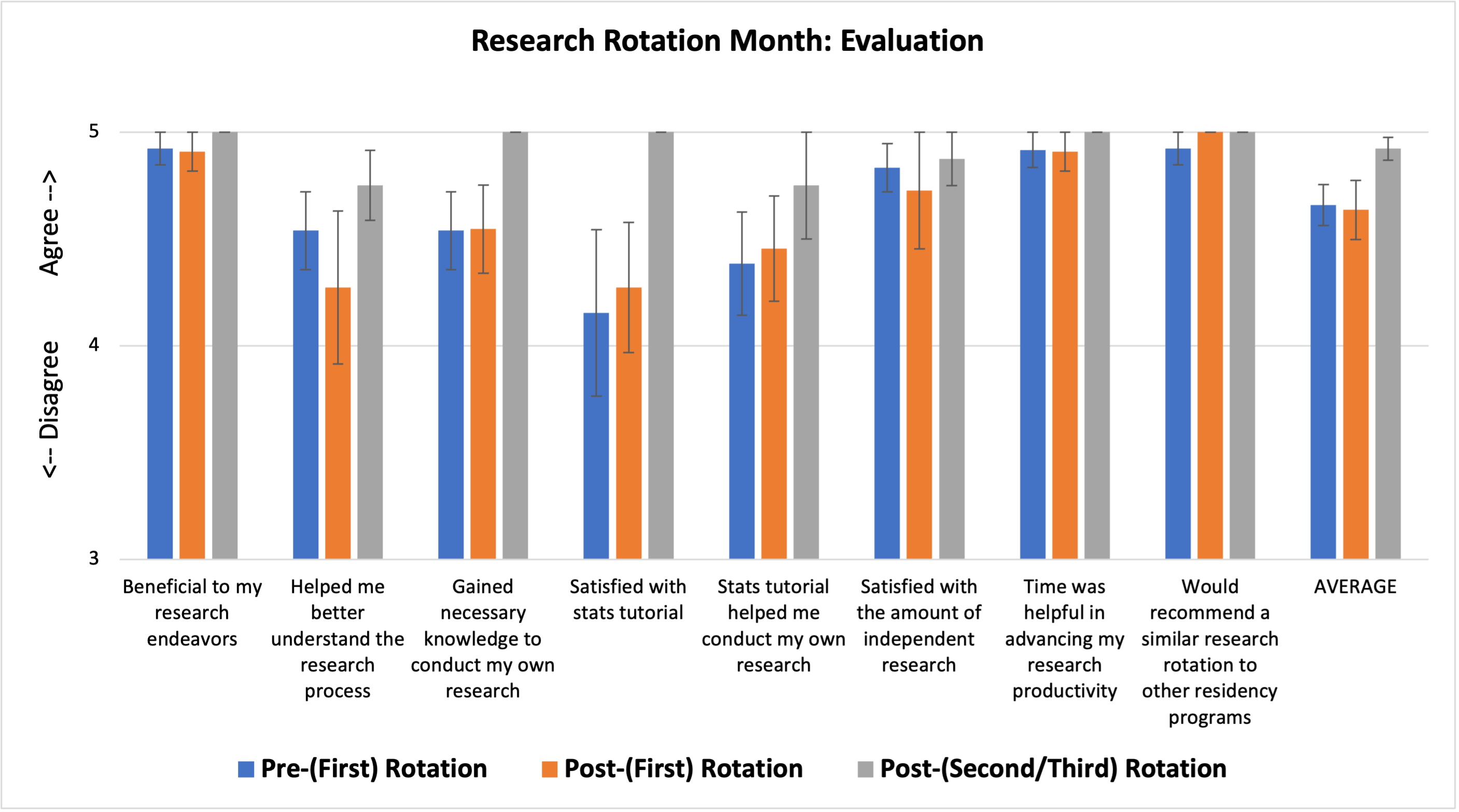
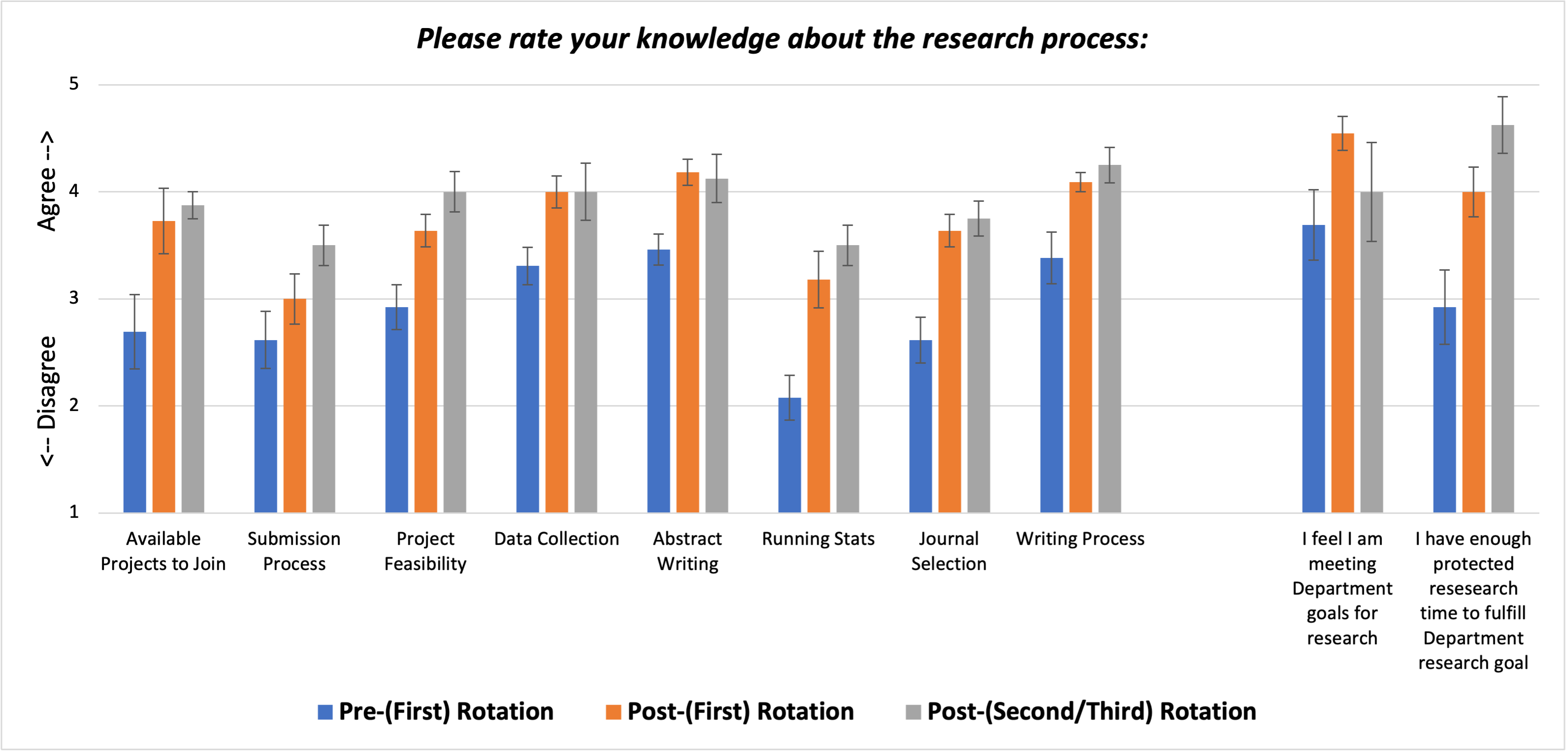
Introduction: Urology residents are expected to be clinician-scientists actively involved in research while honing their surgical skills. Proposed methods to increase resident research productivity include longitudinal mentoring, protected time, financial incentives, and formal curricula. Our residency program launched a month-long research rotation for PGY2-4 annually. The goal of this rotation was to expand knowledge of the research process, provide dedicated time for research, and increase scholarly output. We assessed the impact of this new research rotation on resident research productivity and attitudes toward research. Methods: Residents were asked to complete pre- and post-curriculum evaluations and data from 18 research months have been included from 12 residents (6 residents: multiple rotations over the 2.5 years). Results: The research rotation was rated very highly by residents, who indicated that the month was adequate time to meet their research goals, would recommend it to other residency programs, and felt it was beneficial in advancing their research productivity and ability to meet department research goals (p < 0.05, Figure 1). The rotation increased resident-reported research knowledge (p < 0.05, Figure 2). Number of resident publications increased from an average of 10.5/year (pre-rotation implementation) to an average of 18 per year (13/year just research rotation residents). First-author publications rose from an average of 4.5 pre-rotation to 15 after rotation implementation (12/year just research rotation residents). Conclusions: Dedicated research rotation may increase resident research productivity as well as attitudes towards research expectations. SOURCE OF Funding: No funding.