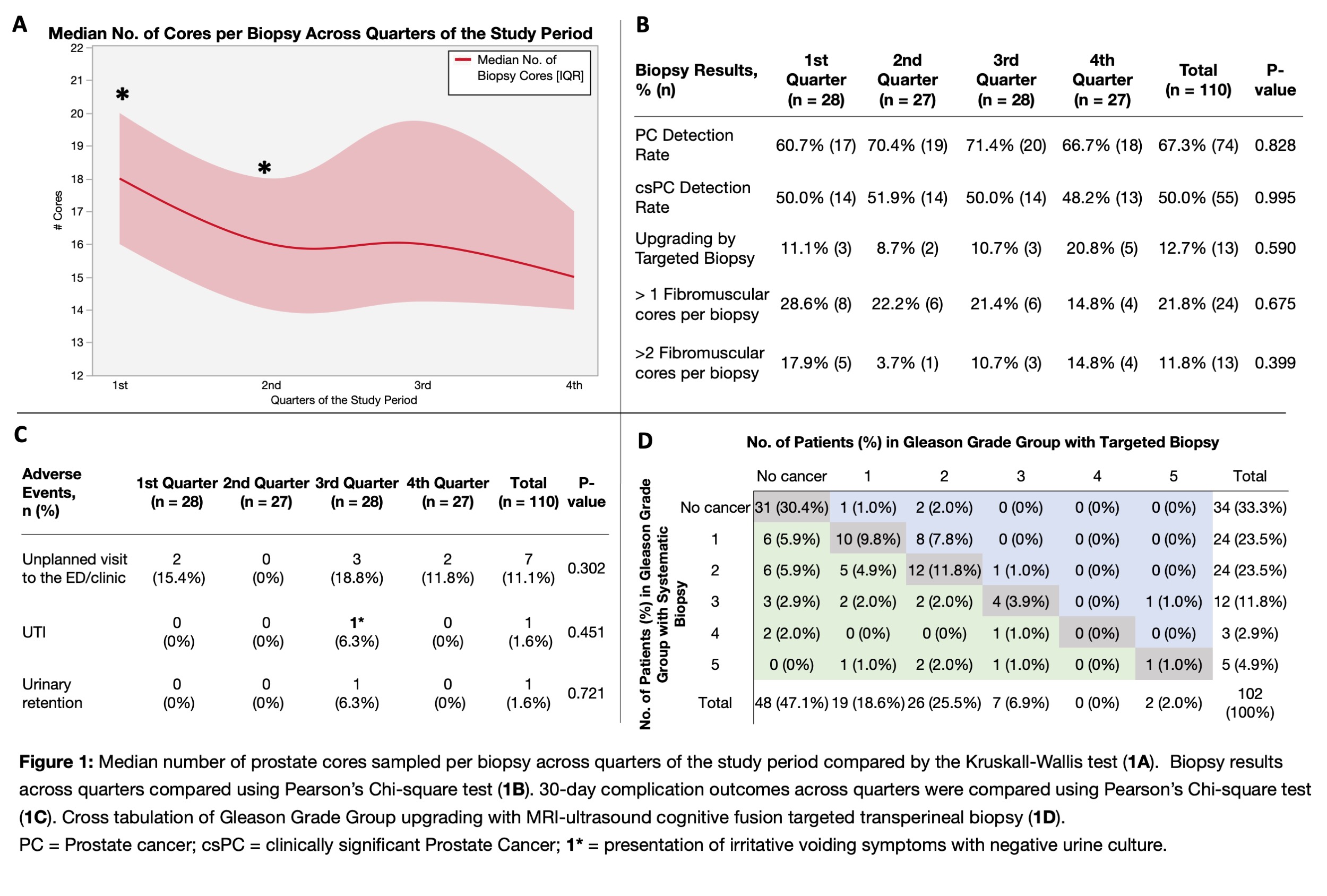
Introduction: In-office MRI-ultrasound cognitive fusion targeted transperineal biopsy (CTPB) is a cost-effective approach to a percutaneous, clean wound classification approach to biopsy. However, because transrectal biopsy remains the predominant U.S. approach to CTPB, the barriers to the adoption of the relatively novel CTPB include the learning curve to proficiency and comparative detection rates of clinically significant prostate cancer (csPC, Gleason Grade Group (GG) =2). Therefore, our study objective was to define the CTPB learning curve, which is heretofore unstudied, by assessing cancer detection, biopsy core quantity, procedure times, and adverse events (AEs) over time. Methods: We performed a retrospective review for 110 consecutive CTPB performed using PrecisionPoint (Cumberland, MD) without antibiotic prophylaxis between March 2021 and September 2022, excluding biopsies performed after focal therapy. All CTPB were performed by a single urologist (JCH) without prior experience with the platform. The cohort was divided into quarters and analyzed by univariate methods. Results: There was no significant difference in demographic or MRI characteristics between quarters. There was no difference in the detection of csPC (Q1 50%, Q2 52%, Q3 50%, Q4 48%, p=0.99) or GG upgrading by targeted biopsy across quarters (Fig 1B, 1D). The median number of cores sampled per biopsy significantly decreased after approximately 28 cases (Q1 18, Q2 16, Q3 16, Q4 15, p=0.01). There was no change in the proportion of fibromuscular (non-prostate) cores sampled across quarters (Fig 1B). Total procedure time decreased from a median of 4:06 min in Q3 to 3:00 min in Q4 (p=0.04). Rates of AEs did not differ and remained low across quarters. A single patient reported UTI with irritative voiding symptoms was found to have a negative urine culture (Fig 1C). Conclusions: Our novel study demonstrates that MRI-ultrasound cognitive fusion targeted transperineal biopsy is safe and effective without a significant learning curve, as shown by consistent csPC detection across the study period. There was a significant decrease in the number of cores obtained after approximately 28 cases with a shorter procedure time, suggesting greater procedural efficiency or refinement in the core sampling approach. SOURCE OF Funding: There was no direct funding from an outside organization or sponsor.

.jpg "Sofia Gereta, BA (she/her/hers) photo")