Department of Urology, National Cheng Kung University Hospital
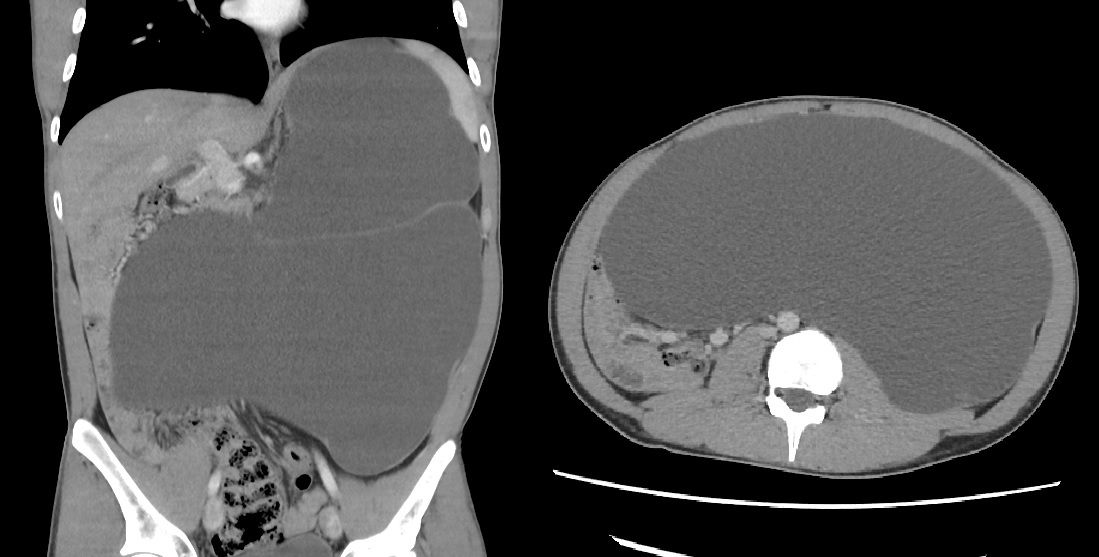
Introduction: For upper tract urothelial carcinoma (UTUC), the severity of hydronephrosis was reported to be correlated to the advanced disease. Besides, previous studies revealed that retroperitoneal nephroureterectomy seemed to show better progression free survival than transperitoneal approach in patients with UTUC. However, when large hydronephrosis presented, the difficulty of retroperitoneal approach was elaborated. This study aimed to emphasize the efficacy of the pre-operative volume reduction procedures, which would make retroperitoneoscopic nephroureterectomy more feasible. Methods: The 18 patients with severe hydronephrosis, who underwent retroperitoneoscopic nephroureterectomy performed by one experienced operator, from December 2005 to July 2022 in the tertiary center were retrospectively included. All the patients received the pre-operative volume reduction procedures. Primary outcomes, such as estimated blood loss, total operative time and hospitalized stay were documented. Results: In our study, the three types of volume reduction procedures were implemented. In benign lesions, a percutaneous nephrostomy catheter would be inserted for drainage. For possible malignant lesions, intra-operative retrograde ureteral catheter insertion or incision at the proximal site of obstructive upper ureter was performed other than percutaneous approach, for minimizing the risk of tumor seeding. Under such managements, retroperitoneoscopic nephroureterectomy could be implemented with less blood loss (mean = 25 ml, range < 10 to 150), shortened operative time (mean = 123.3 minutes, range 86 to 169) and lower hospital day (mean = 7.2 days, range 5 to 10). Only one complication (5.6%, 1/18) was noted with hypovolemic shock. Conclusions: In the patients with severe hydronephrosis, retroperitoneoscopic nephroureterectomy might be a safe, low-risk and time-saving approach after pre-operative volume reduction of hydronephrosis. SOURCE OF Funding: None.