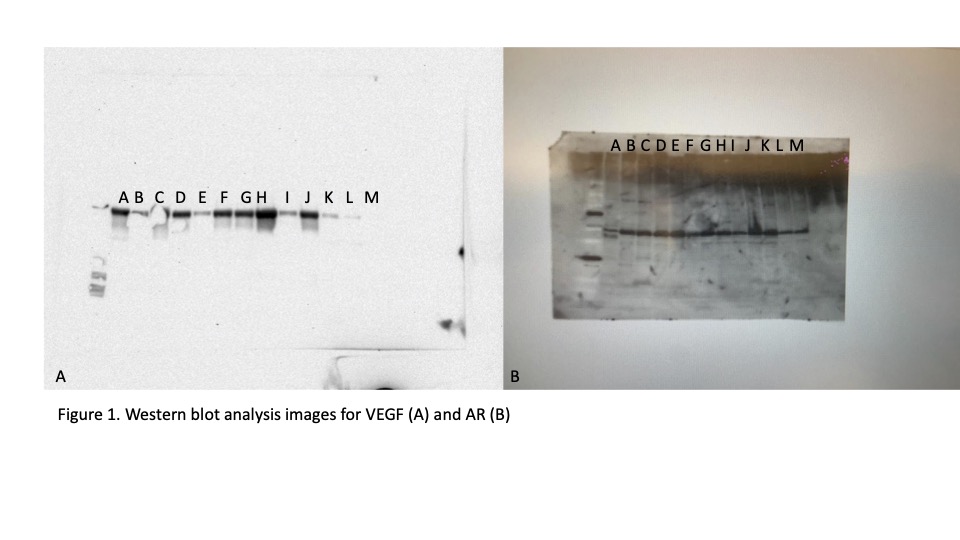
Introduction: Testosterone (T) plays an important role in the proper development and maintenance of male reproductive tissues. The normal serum testosterone levels can vary between 300 to 1000 ng/dL. However, it is unclear whether androgen receptor (AR) signaling varies based on serum T levels. The aim of this study was to assess the impact of varied serum testosterone levels on AR signaling in Human Corpus Cavernosum tissue. Based on our previous work on the Androgen Saturation hypothesis, we hypothesized that above 200 ng/dL, AR signaling would not vary. Methods: We obtained corpus spongiosum biopsies from men undergoing inflatable penile prosthesis placement for high grade erectile dysfunction. After mechanical dispersion of tissue with a homogenizer, the total protein was extracted using RIPA buffer. Quantitative detection of VEGF (Vascular endothelial growth factor), an androgen receptor marker, and AR (Androgen Receptor) expression was evaluated by western blot. The density of the bands in all the blots was quantified using densitometry analysis with ImageJ software. Results: The median age of participants was 60.7 (57.6, 65.9) years. The median serum testosterone level was 378 (257, 419) ng/dl. The western blot results (Figure 1) showed no association in the expression level of VEGF or AR regardless of the serum testosterone level. Conclusions: Even with a wide range of serum testosterone levels (209-1478 ng/dl), androgen receptor signaling was similar in penile tissue. The results of this study support our previous work to demonstrate that AR signaling may be similar regardless of T level above 200 ng/dL. This suggests that serum testosterone levels might not reflect downstream androgen receptor signaling within the penile tissue. Understanding the AR saturation hypothesis provides important context necessary for appropriate prescribing of exogenous testosterone replacement therapy to optimize patient outcomes. Markers of androgen receptor signaling in tissue could be similar regardless of serum testosterone levels. Therefore, the utility of only serum testosterone levels in considering the effect of testosterone therapy needs to be re-evaluated SOURCE OF Funding: This work was supported by: NIH Grant R01 DK130991 and Clinician Scientist Development Grant from the ACS to Ranjith Ramasamy, SMSNA Sexual Medicine Grant to Kajal Khodamoradi.