Department of Urology, Keio University School of Medicine
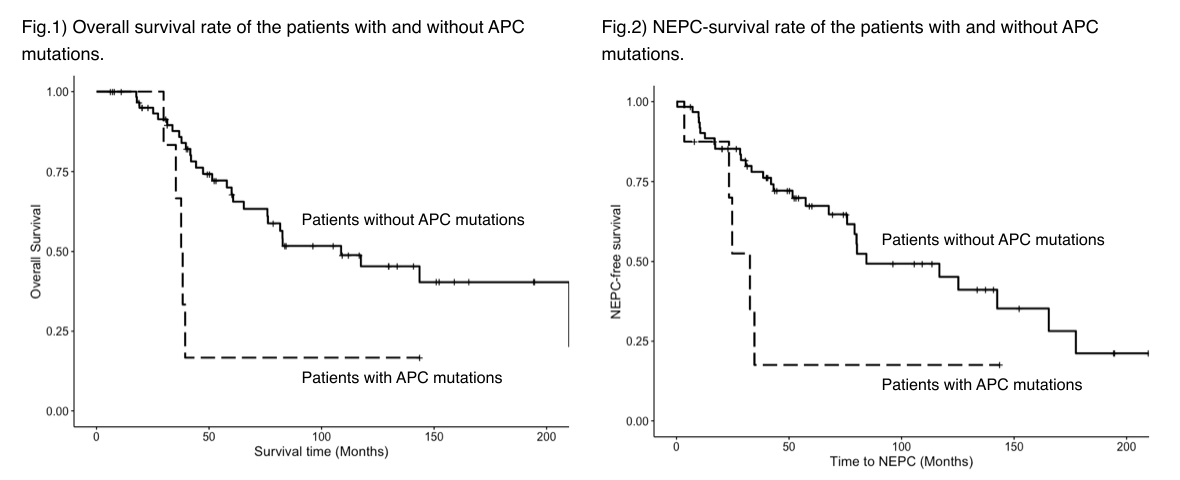
Introduction: Although therapeutic strategies for metastatic prostate cancer (PCa) have expanded, some patients still suffer rapid progression. We investigated if their genomic characteristics correlated with treatment resistance and their clinical outcomes. Methods: We identified 70 metastatic prostate cancer patients who underwent gene-panel tests since 2018. The correlation between the profiles of genomic mutation and the oncological outcomes including overall survival, time to treatment-related neuroendocrine prostate cancer (tNEPC), and the efficacy of each sequential treatment such as androgen receptor pathway inhibitors (ARPI), docetaxel (DTX), cabazitaxel (CBZ), and platinum-based chemotherapies were evaluated. Results: Among the 70 patients, 27 (38.6%) patients developed metastases after definitive therapies while 43 (61.4%) already had metastases at the initial diagnosis. The most common genomic mutations were TP53 (35.7%), BRCA2 (22.9%), PTEN (21.4%), RB1 (18.6%), MYC (14.3%), APC (11.4%), and CDK12 (10.0%). As for treatment profiles, all the patients received androgen-deprivation therapy (ADT), 53 (75.7%) patients received ARPI, 48 (68.6%) patients received DTX, 32 (45.7%) patients received CBZ, and 37 (52.9%) patients received platinum-based therapy. Second biopsy of prostate or metastatic lesion revealed the pathological transformation from adenocarcinoma to tNEPC in 25 (35.7%) patients. Univariate and Multivariate analysis also indicated that that patients with APC and MYC mutations had shorter overall survival (HR=17.9, p=0.006 and HR=3.98, p=0.018, respectively). Focusing on the 8 APC-mutated patients, while their 30% PSA response rare after ARAT or DTX were not statistically low (p=0.74 and p=0.23), five out of them (62.5%) showed NEPC in the second biopsy samples and shorter time to NEPC development compared with those without APC mutations (p=0.05). In our cohort, APC mutation did not exist alone but coincided with either RB1 (5 patients, 62.5%) or TP53 (4 patients, 50%), major tumor suppressor genes. Conclusions: APC mutation, associated with other genomic alteration of tumor suppressor and NED, can be an important prognostic indicator in PCa patients. SOURCE OF Funding: None