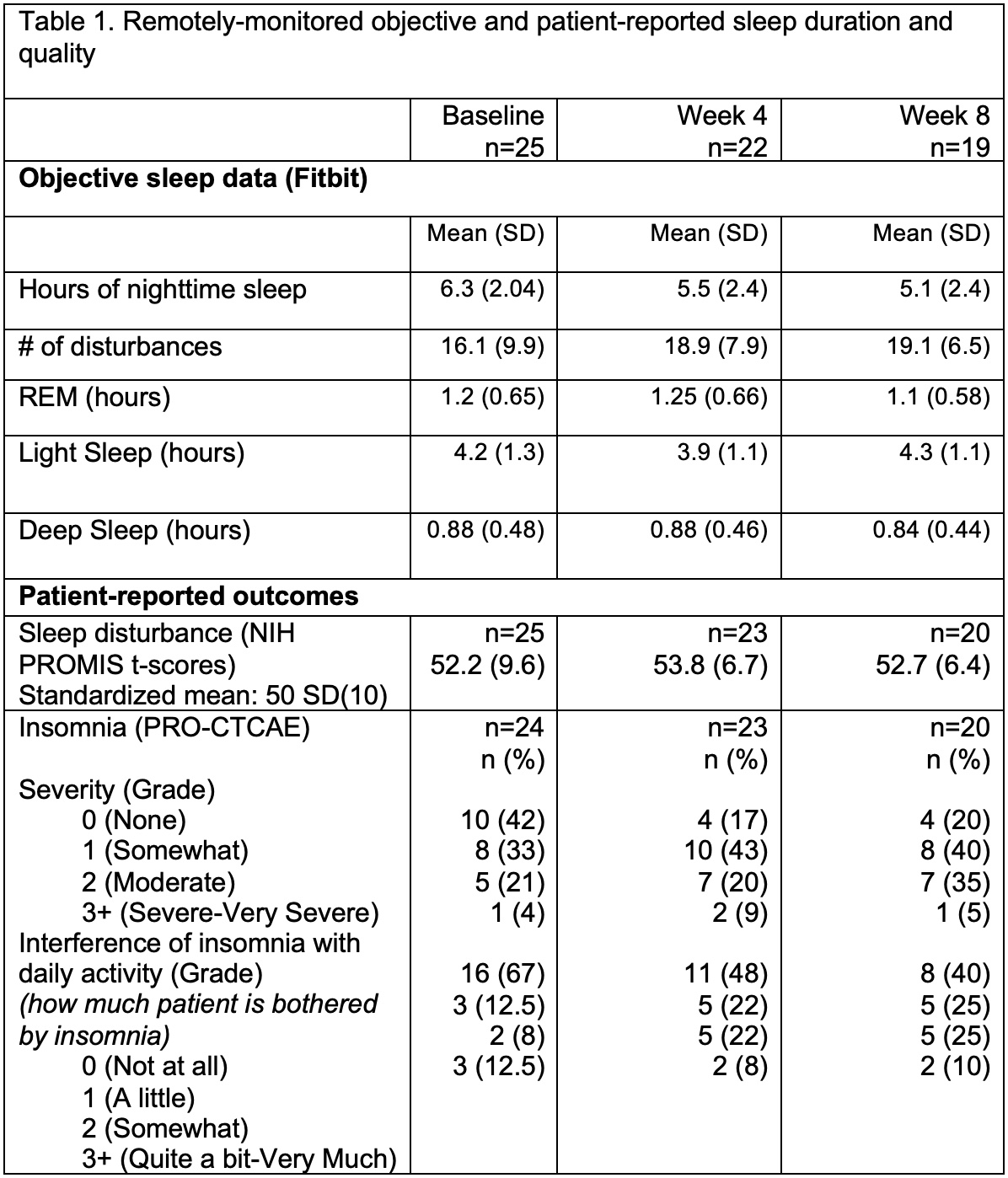
Introduction: Sleep disturbance is a common symptom experienced among men with prostate cancer (PC) undergoing ADT that can lead to increased fatigue, diminished quality of life, and poor clinical outcomes. Wearable activity monitors (e.g. Fitbits) allow for objective measures of sleep outside the clinical setting. Despite its importance, there is a current lack of information supporting the use of commercially available wearables for sleep monitoring among PC patients. Thus, we evaluated remotely-monitored longitudinal sleep measures in PC patients receiving ADT. Methods: PC patients initiating ADT and recruited from Cedars-Sinai and the Durham VA wore a Fitbit Charge HR continuously for 8 weeks to capture daily activity and sleep and monthly electronic patient-reported sleep disturbance (NIH PROMIS survey) and insomnia (PRO-CTCAE). Objective and patient-reported sleep data were summarized, and changes were calculated at 4 and 8 weeks from baseline. Results: A total of 25 patients were included in the analysis (median age 69, range 51-85, 64% Non-Hispanic White, 16% Black, 20% other race/ethnicity). Adherence to wearing the device was 100% at baseline, 88% at 4 weeks, and 76% at week 8. Sleep measures are summarized in Table 1. Objective sleep duration decreased over time (-1.5 hours at 8 weeks, p=0.02) and the number of sleep disturbances increased, although not statistically significant. Severity and interference of patient-reported insomnia (PRO-CTCAE) also worsened over time (Table 1). Conclusions: Our findings suggest that the use of wearables to remotely monitor sleep is feasible in PC patients. Sleep duration and quality were poor and worsened over time, with many awakenings and segmented sleep, which may be associated with treatment effects and other symptoms (e.g., hot flashes, nocturia). More research is needed to inform the development of tailored interventions to improve sleep in this population. SOURCE OF Funding: Department of Defense