Case Western Reserve University School of Medicine
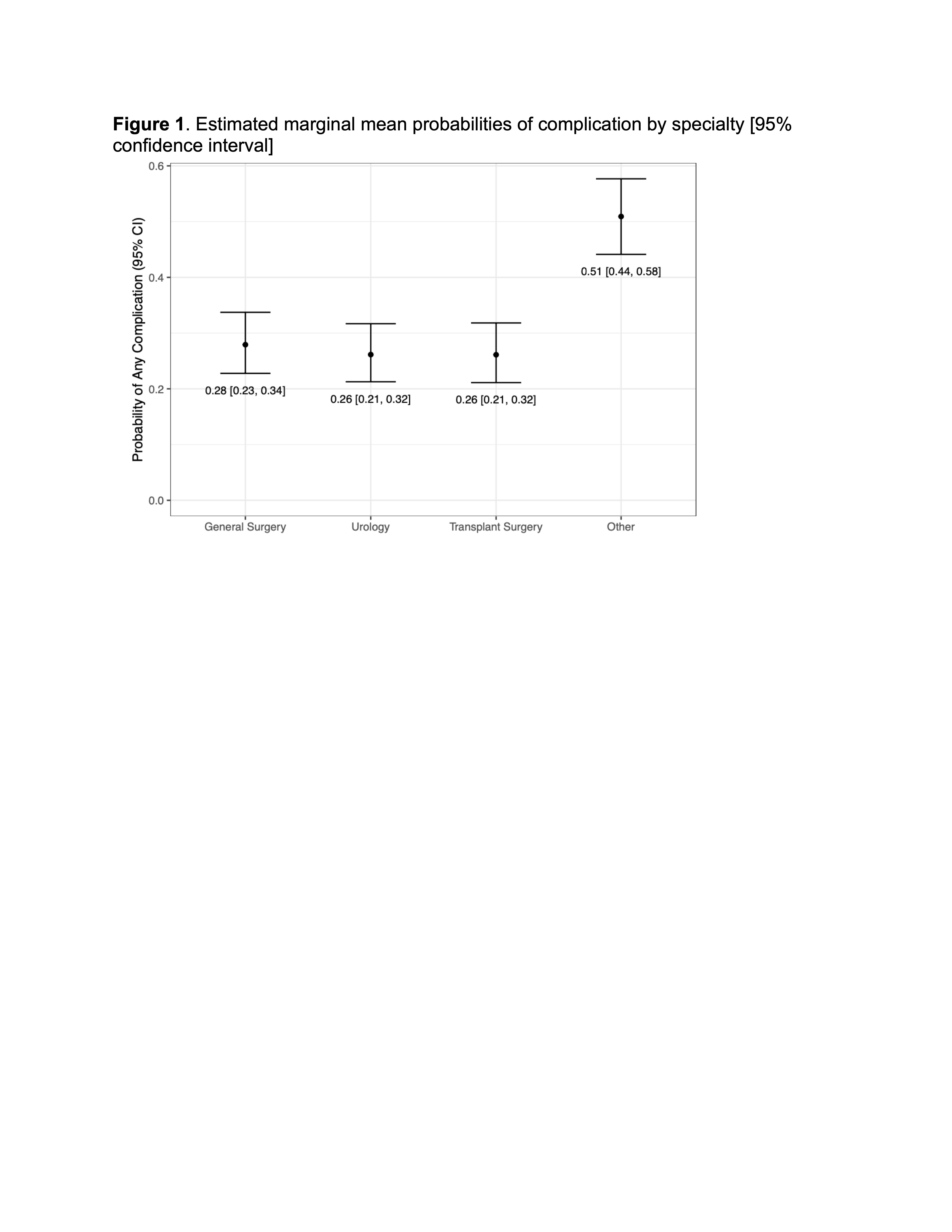
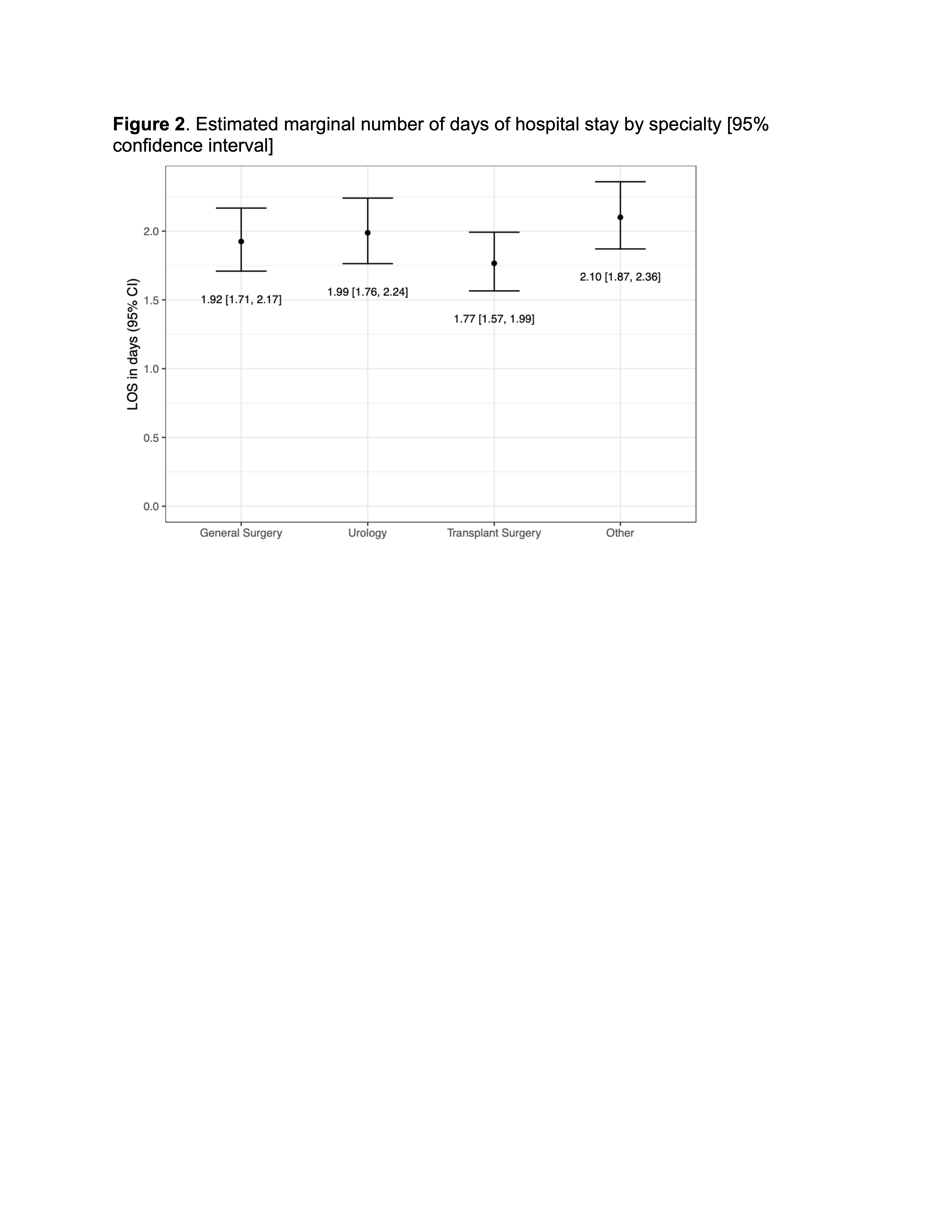
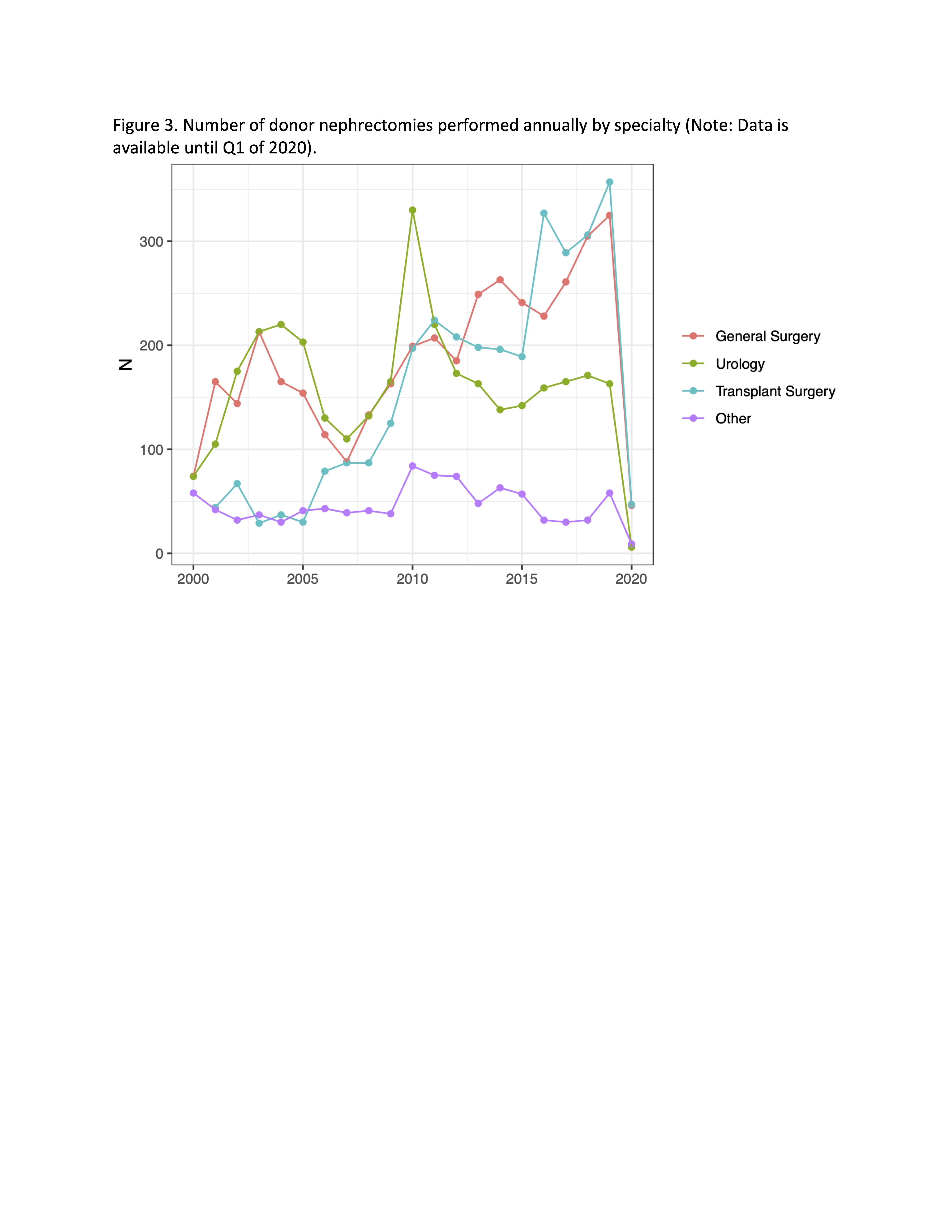
Introduction: Live donor nephrectomies (DN) were initially exclusively performed by urologists. Over time, general surgeons and transplant surgeons adopted DN into their scope of practice. Here, we investigate trends, postoperative complications, hospital length of stay, and cost across various surgical specialties performing DN. Methods: Patients undergoing live DN from 2000-2020 were identified in the Premier Healthcare Database. Physician specialties were reported for each encounter, and patient and hospital characteristics for each specialty was compared. Multivariate logistic regression was used to assess association between physician specialty and postoperative complications and length of stay. Hospital charges and costs were log transformed and analyzed via linear mixed effects models. Results: We identified 11,365 patients undergoing live DN by general surgery (n=3,922), urology (n=3,357), transplant surgery (n=3,123), and other (n=963). DN performed by urologists and transplant surgeons had similar odds ratios (OR) of complications compared to those performed by general surgery (0.91, p=0.4). The hospital length of stay for urology was similar to general surgery (incidence rate ratio (IRR) 1.03, p=0.12), and lower for transplant surgery (IRR 0.92, p<0.001). Urology had a slightly lower cost compared to general surgery ($11,666 vs $12,582) (Beta -0.08, p<0.001). Conclusions: Over the past two decades, general and transplant surgeons performed more DN with similar outcomes compared to urologists. From 2000-2020, there was an increase in annual numbers of DN performed by general and transplant surgeons and no significant differences in complications and length of stay between the surgical specialties. SOURCE OF Funding: N/A