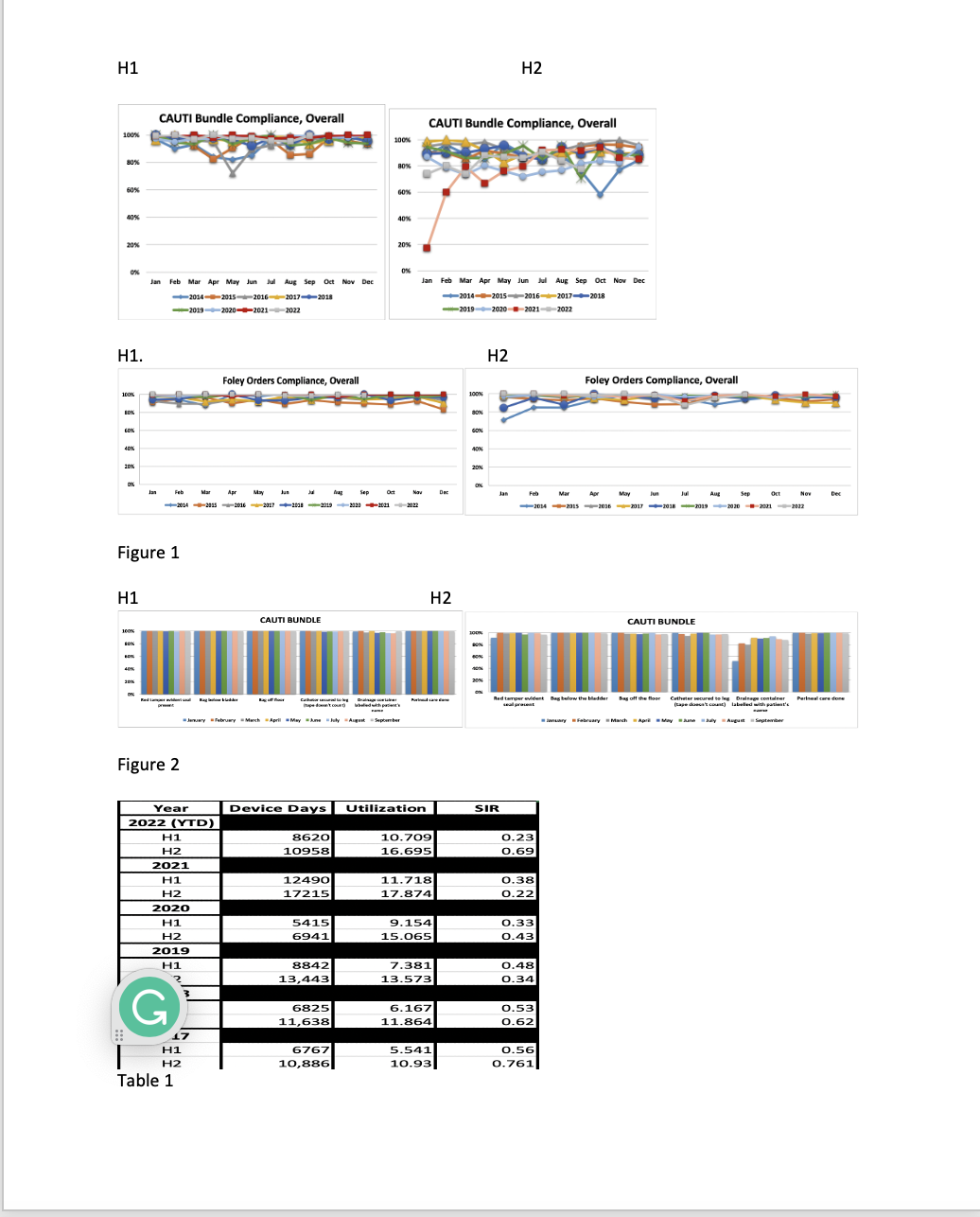
Introduction: Catheter-associated urinary tract infections (CAUTIs) account for a large proportion of urinary tract infections and account for a major healthcare expenditure nationwide. The risk of CAUTI increases 5% with each day(d) of catheterization. For over a decade, we have implemented an evidence-based, joint commission and Centers for Disease Control approved CAUTI Bundle (CB). We seek to prove if after achieving low CAUTI rates in prior years if the manpower needed to do this is worthwhile. Methods: We collected data from hospitals 1 and 2 (H1 and H2) in an urban healthcare system. Daily catheter (C) use and maintenance are monitored by a multidisciplinary hospital team. Compliance is determined by several factors: maintaining integrity of tamper-evident seal, keeping C bag below to gravity below bladder and off of floor, C secured to leg (no tape), labeled drainage bag, daily perineal care and daily C order renewal. We recorded device days (dd), utilization rates (dd/patient d) and standardized infection ratios (SIR). Non-compliance for C orders and C in > than 4 d in ICUs or >2 d in non-ICU were promptly addressed by hospital administration. Results: Over the last 8 years, CAUTI rates have remained relatively stable. C utilization steadily increased between 2017 and 2021, plateauing this calendar year. SIR increased at H2 (Table 1), attributable to a busy cardiac surgery service that routinely uses C, in addition to an ever-growing population of nursing home patients with indwelling C. Figure 1 shows overall CB and C order compliance rates. Figure 2 shows compliance rates broken down by parameters of CB for H 1 & 2. Conclusions: As utilization rates have plateaued this calendar year, we have consistently sustained SIR < 1 using our CB compliance model (CBCM) across multiple institutions with different cultures and practitioners. Efforts to further improve CAUTI incidence are ongoing with hospital-wide education programs teaching proper catheterization technique, device management and specimen collection. This study clearly demonstrates the benefits of maintaining the CAUTI bundle, and suggests that the resources required to maintain low infection rates may offset the non-reimbursable costs associated with CAUTI. SOURCE OF Funding: None