Session: MP22: Bladder Cancer: Epidemiology & Evaluation I
MP22-18: A Contemporary Analysis of Treatment of Muscle Invasive Bladder Cancer Using the National Cancer Database: Factors Associated With Receipt of Non-Aggressive Therapy
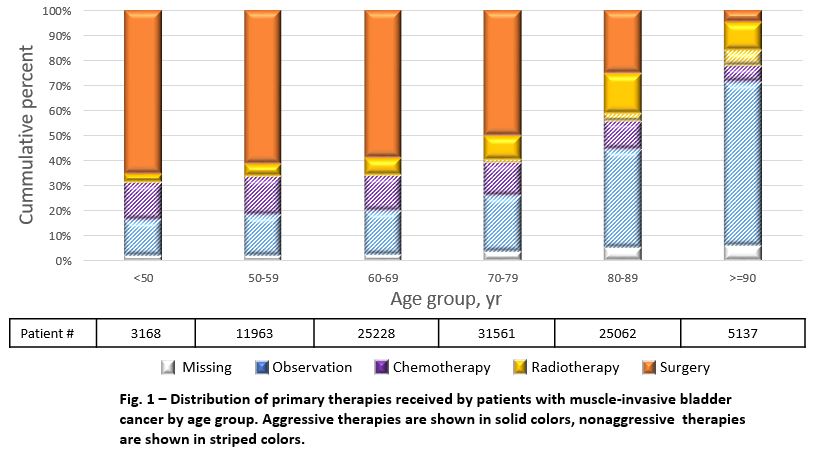
Introduction: Patients with muscle-invasive bladder cancer (MIBC) face a potentially lethal disease, yet often do not receive potentially curative therapies. This study aims to characterize the treatments received by patients with MIBC, analyze their use according to sociodemographic, clinical, pathologic, and facility measures, and to identify possibilities for improvement in care for patients with MIBC Methods: Using the NCDB, we analyzed 102,119 patients with non-metastatic muscle invasive bladder cancer diagnosed between 2009-2018. Treatments included cystectomy, radiation, chemotherapy, or observation. Treatments which included cystectomy or radiotherapy >50 Gy were considered aggressive therapy (AT). A multivariable generalized estimating equation model was used to assess the relationship of the independent variables with receiving AT. Statistical analysis was conducted using SAS version 9.4. Results: The median age was 73 years, with 72.9% male, 84.3% White, and 7.1% Black. Stage distribution included 59.4% stage II, 23.0% (III), and 17.6% (IV). Overall, 55.2% of patients received AT, while 41.1% did not, with 26.6% receiving observation alone. 45.4% of patients received cystectomy, 9.8% underwent definitive radiotherapy, and 12.8% underwent chemotherapy as primary treatment. Notably, over 30% of patients between ages of 50 and 70 did not receive aggressive therapy (Fig 1). On multivariate analysis, factors associated with lack of aggressive therapy included age >70 (OR <0.79, p<0.0001), Black race (OR 0.70, p<0.0001), Medicaid and underinsured status (OR 0.62, p<0.0001), Charlson score > 2 (OR 00.74, p<0.0001), and low volume (OR 0.72 p<0.0001), non-academic cancer program (OR 0.54, p<0.0001). Utilization of perioperative chemotherapy and chemoradiotherapy increased over time. Conclusions: Over a third of patients do not receive aggressive therapy for MIBC, with many of these patients seemingly eligible by age and comorbidity status. Prospective studies are needed to determine exactly why these patients do not receive aggressive therapy. A better understanding of patient vs access to care vs provider factors would help to focus efforts to improve care for patients with MIBC. SOURCE OF Funding: VA RDA award to JEF