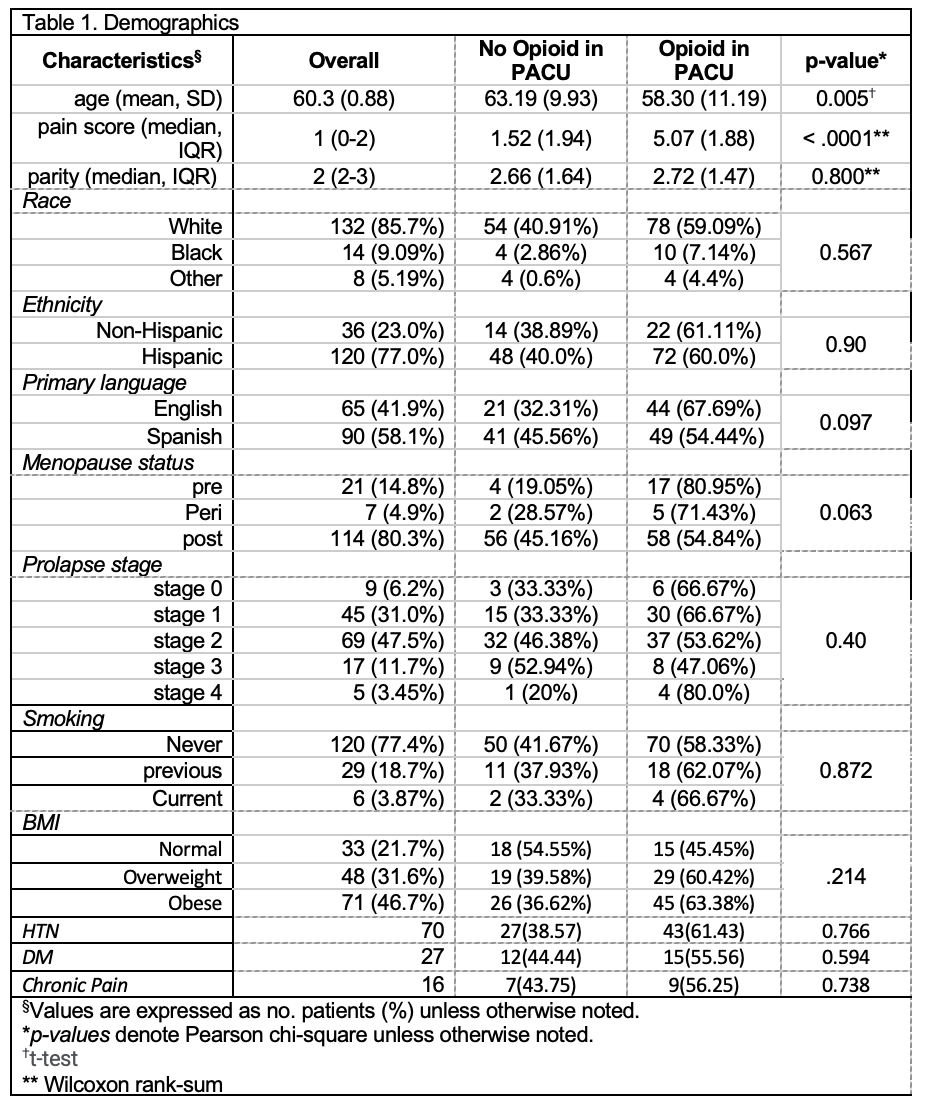
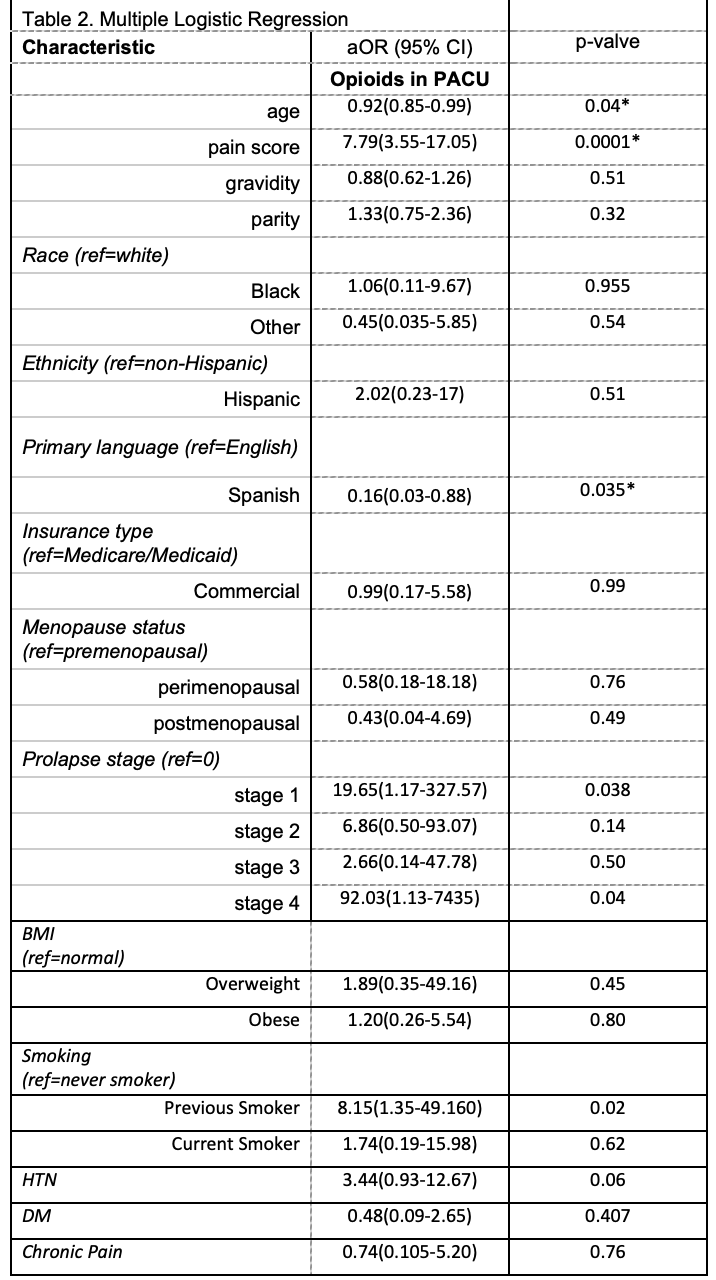
Introduction: Current literature suggests racial/ethnic disparities exist in acute pain management, where minority patients are often less likely to receive opioid medication. Lower English proficiency is correlated with minority race/ethnicity in the United States, however limited data exists on this relationship with opioid administration during post anesthesia care unit (PACU) stay. This study investigates predictors of opioid use in PACU following female pelvic floor reconstructive surgery (FPMRS). Methods: A retrospective chart review of 3,511 patients who underwent FPMRS was performed. Continuous and categorical variables were analyzed using a t-test and chi-squared test, respectively. Non-parametric data was analyzed using Wilcoxon rank-sum tests. A Multinomial logistic regression model was fitted to identify independent predictors. A p-value <0.05 was considered statistically significant. Results: Sociodemographic details off 155 women who underwent FPMRS are outlined in Table 1. Spanish as a preferred language (aOR 0.16, 95% CI: 0.03-0.88) shows a decreased likelihood of receiving opioids in the PACU. Prolapse stage 1 (aOR 19.65, 95% CI: 1.17-327.57) and 4 (aOR 92.03, 95% CI (1.13-7435) and previous smokers (aOR 8.15, 95% CI: 1.35-49.160) were associated with an increased likelihood of receiving opioids in PACU. Patient race, parity, menopausal status, BMI, and diagnosis of hypertension, diabetes or chronic pain were not predictive of receiving opioids in the PACU (Table 2). Conclusions: Our results showed Spanish speaking patients are more likely to receive opioids in the PACU. Previously reported disparities in postoperative opioid use including race and ethnicity did not appear to exist in our unique Hispanic minority-majority patient population. Instead, our study implicates the importance of communication in acute postoperative pain management. The etiology of this language-related disparity is complex and future studies to investigate are warranted. SOURCE OF Funding: N/A