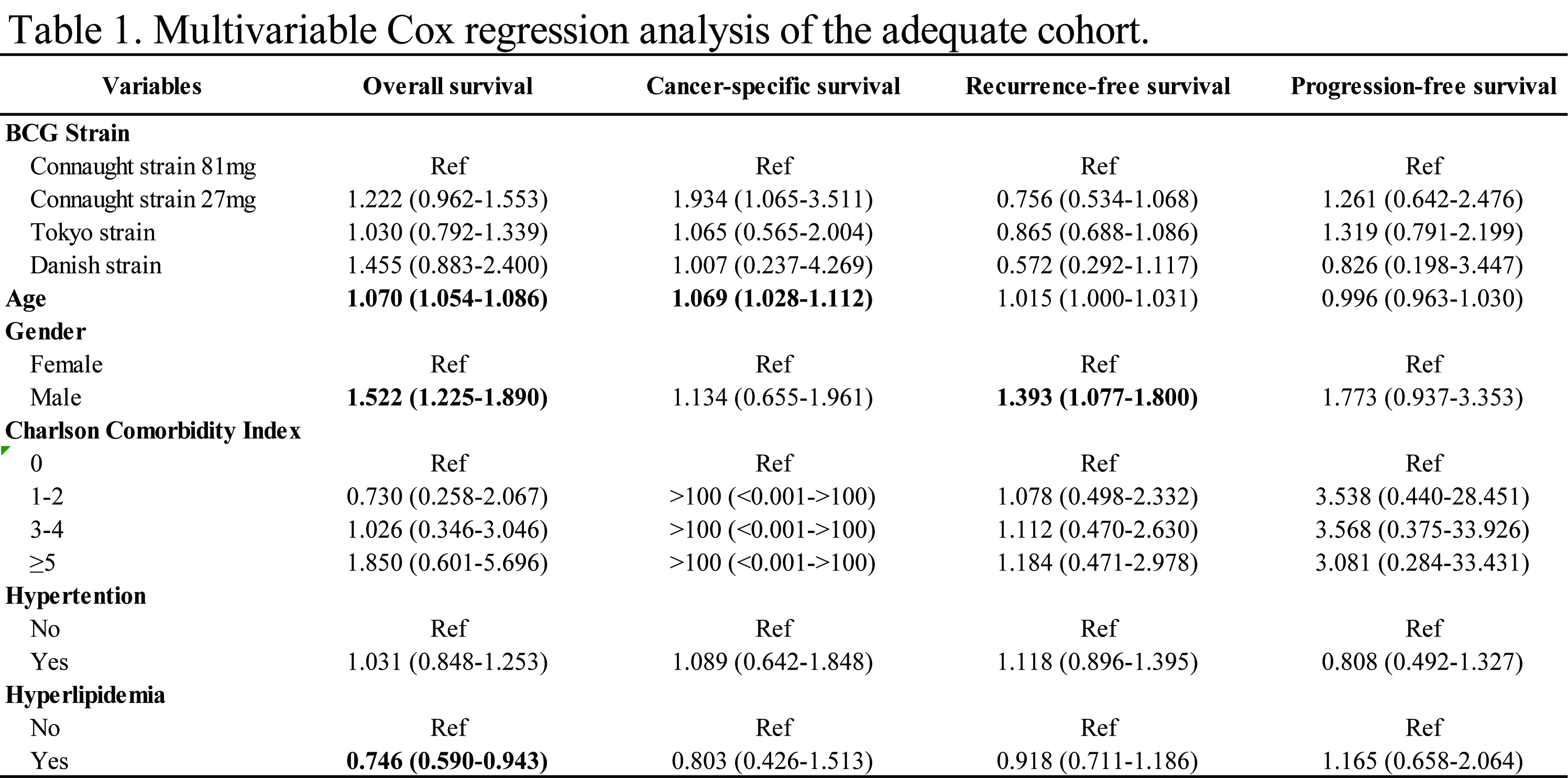
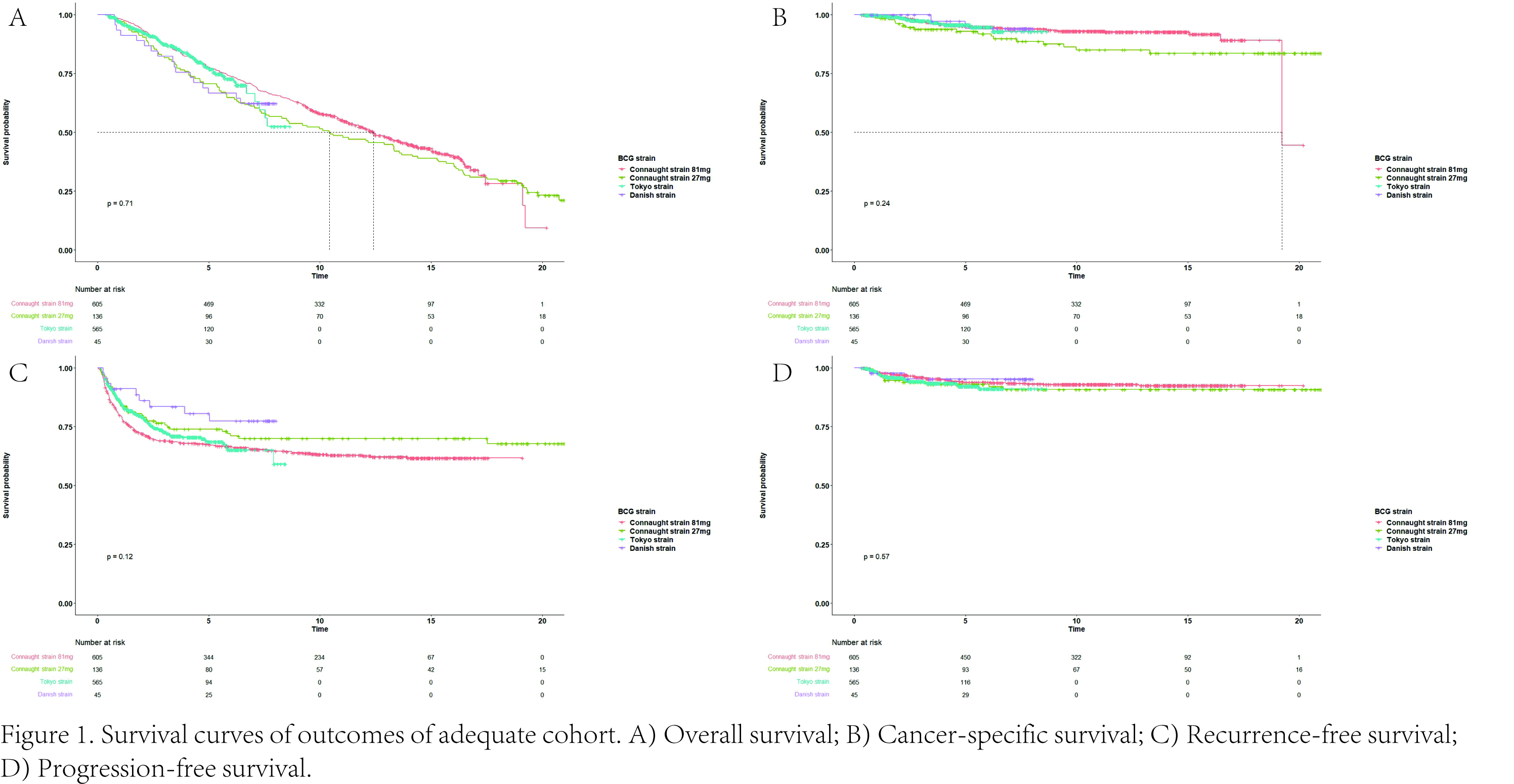
Introduction: Adjuvant intravesical Bacillus Calmette–Guérin (BCG) immunotherapy is recommended for non-muscle-invasive bladder cancer (NMIBC), except those low-risk patients. However, whether different strains of BCG have different efficacy on survival outcomes in the long term remains controversial. The current study tries to provide further evidence with a territory-wide retrospective cohort. Methods: We retrospectively included 2,602 NMIBC patients with adjuvant intravesical BCG immunotherapy around Hong Kong from 2001 to 2020. Kaplan–Meier plotter with the log-rank test was used to explore overall survival (OS), cancer-specific survival (CSS), recurrence-free survival (RFS), and progression-free survival (PFS). Multivariable Cox regression analysis was used to balance clinical characteristics and to estimate hazard ratios (HRs) with a 95% confidence interval (CI). Adequate BCG treatment subgroup analysis was performed. Results: Of 2,602 patients, 1291 (49.6%) received Connaught strain 81mg, 199 (7.6%) received Connaught strain 27mg, 1014 (49.2%) received Tokyo strain, and 98 (3.8%) received Danish strain. Although the Connaught strain 27mg group were inferior to the Connaught strain 81mg group in OS (HRs: 1.256, 95% CI: 1.047-1.507), CSS (HRs: 1.693, 95% CI: 1.079-2.657) and PFS (HRs: 1.857, 95% CI: 1.198-2.876) in the whole cohort, the differences were eliminated upon subgroup analysis focusing on patients who received adequate BCG treatment (Table 1, Figure 1). The other two strains, i.e. Tokyo and Danish strains, had similar survival outcomes with the Connaught strain 81mg group in both the whole cohort and the adequate BCG treatment subgroup. Conclusions: In this large BCG cohort, no significant differences in survival outcomes were observed between Connaught, Tokyo, and Danish strains as soon as adequate BCG treatment was given. SOURCE OF Funding: UGC Research Matching Fund 8601521