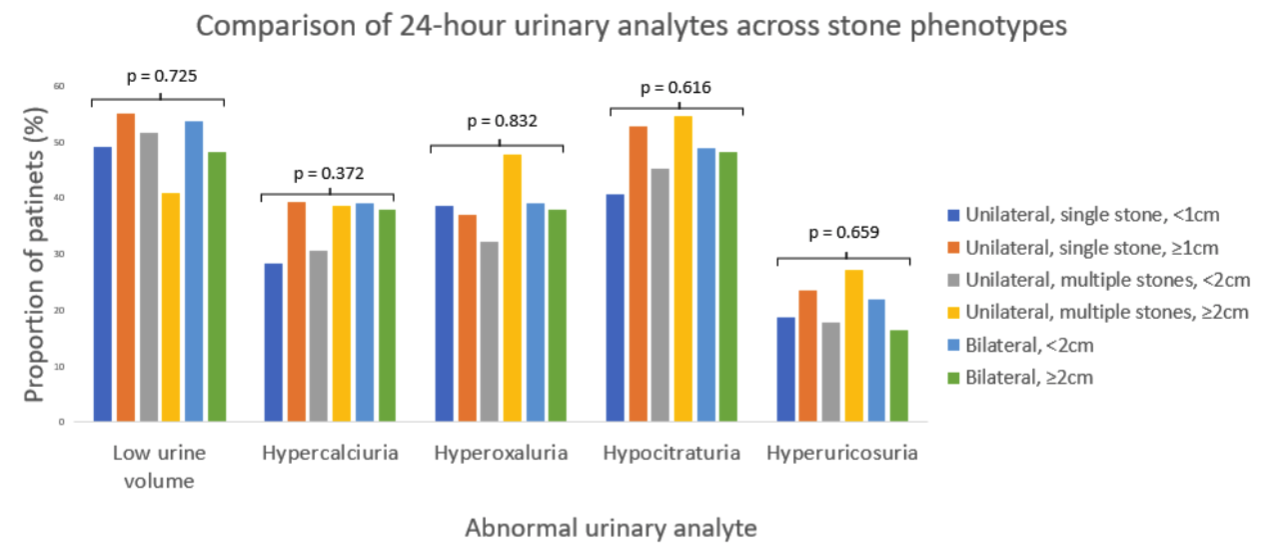
Introduction: The American Urologic Association defines high risk stone formers as those with medical conditions predisposing to stone formation, solitary kidneys, repeated stone episodes or those who present with multiple stones initially. How the initial radiographic stone configuration is related to 24-hour urine test outcomes is unknown. We hypothesized that those with small, unilateral stones may have different 24-hour urine parameters than those with bilateral or larger stone burdens. Methods: The Registry for Stones of the Kidney and Ureter (ReSKU) database was queried for all patients who underwent 24-hour urine testing between 2015 and 2022. In addition to demographic characteristics and medical history, the initial presenting stone characteristics were identified and characterized according to laterality, stone count, overall stone burden and location. These patients were then categorized by presenting phenotype, and their 24-hour urine characteristics were compared using ANOVA for continuous variables and chi-square for categorical variables. Results: 511 patients met our inclusion criteria and were categorized into one of six phenotypes - based on laterality, stone size and number of stones (Figure 1). The mean age for the entire cohort was 55 years, 51% male and for 90% of patients this was their first stone. In comparing the 24-hour urinary analytes as continuous variables across all six phenotypes, there were no differences. Rates of abnormal urinary analytes were tabulated (Figure 1) and no significant differences in rates of hypovolemia (=2L, p = 0.725), hypercalciuria (>250mmol/day for males, >200mmol/day for females, p = 0.372), hyperoxaluria (>40mg/day, p = 0.746) or hypocitraturia ( <450mmol/day for males, <550mmol/day for females, p = 0.422) or hyperuricosuria (>0.8 mmol/day for males, >0.750mmol/day for females, p = 0.659) were noted. Conclusions: There was no difference when comparing values of 24-hour urine analytes based on initial stone configuration, including stone multiplicity and/or volume, which calls into question the utility of recommending 24-hour testing for high volume stone formers. Further research should focus on novel methods to identify patients at high risk for stone recurrence or metabolic abnormalities. SOURCE OF Funding: None

.jpg "Kevin Chang, BA (he/him/his) photo")