Vanderbilt University Medical Center, Nashville, TN
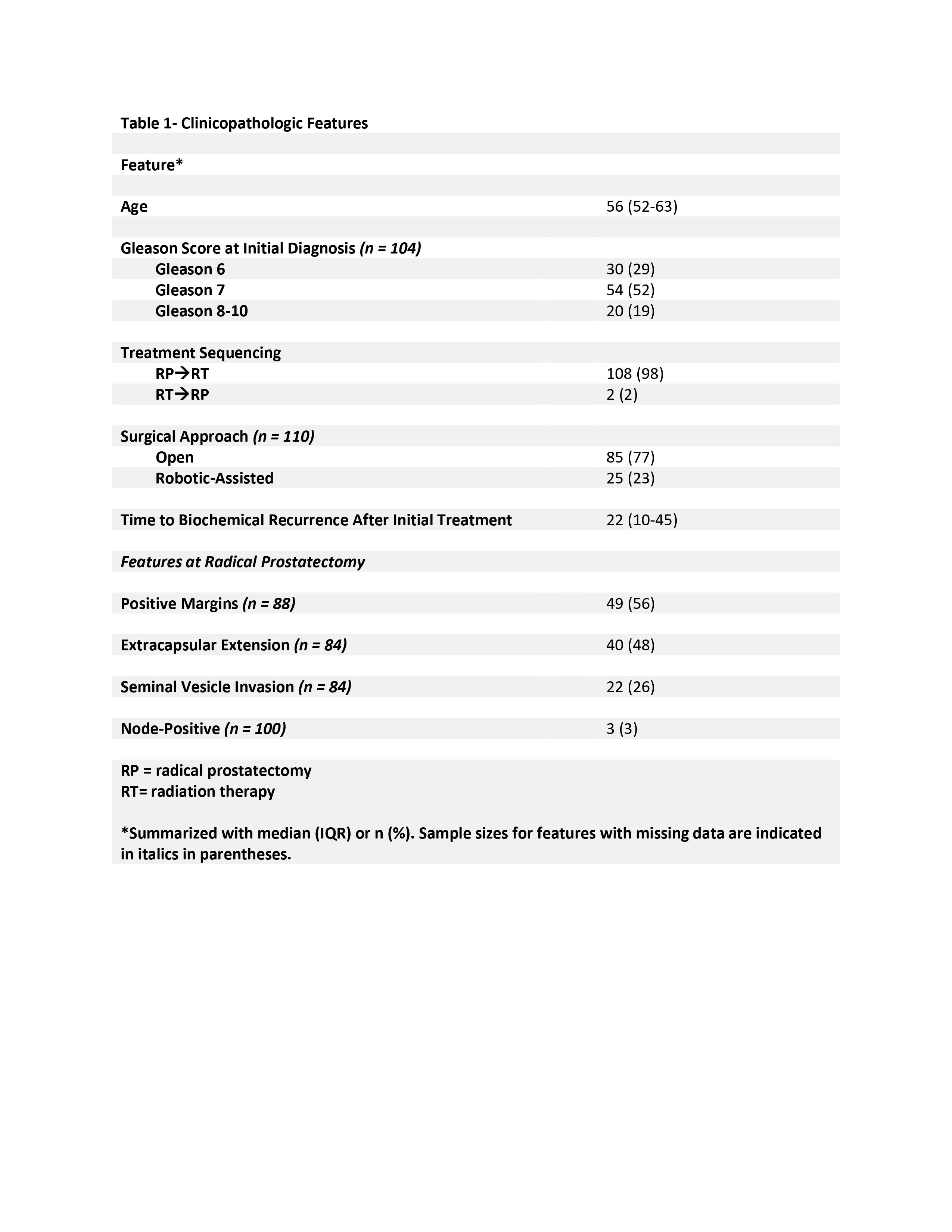
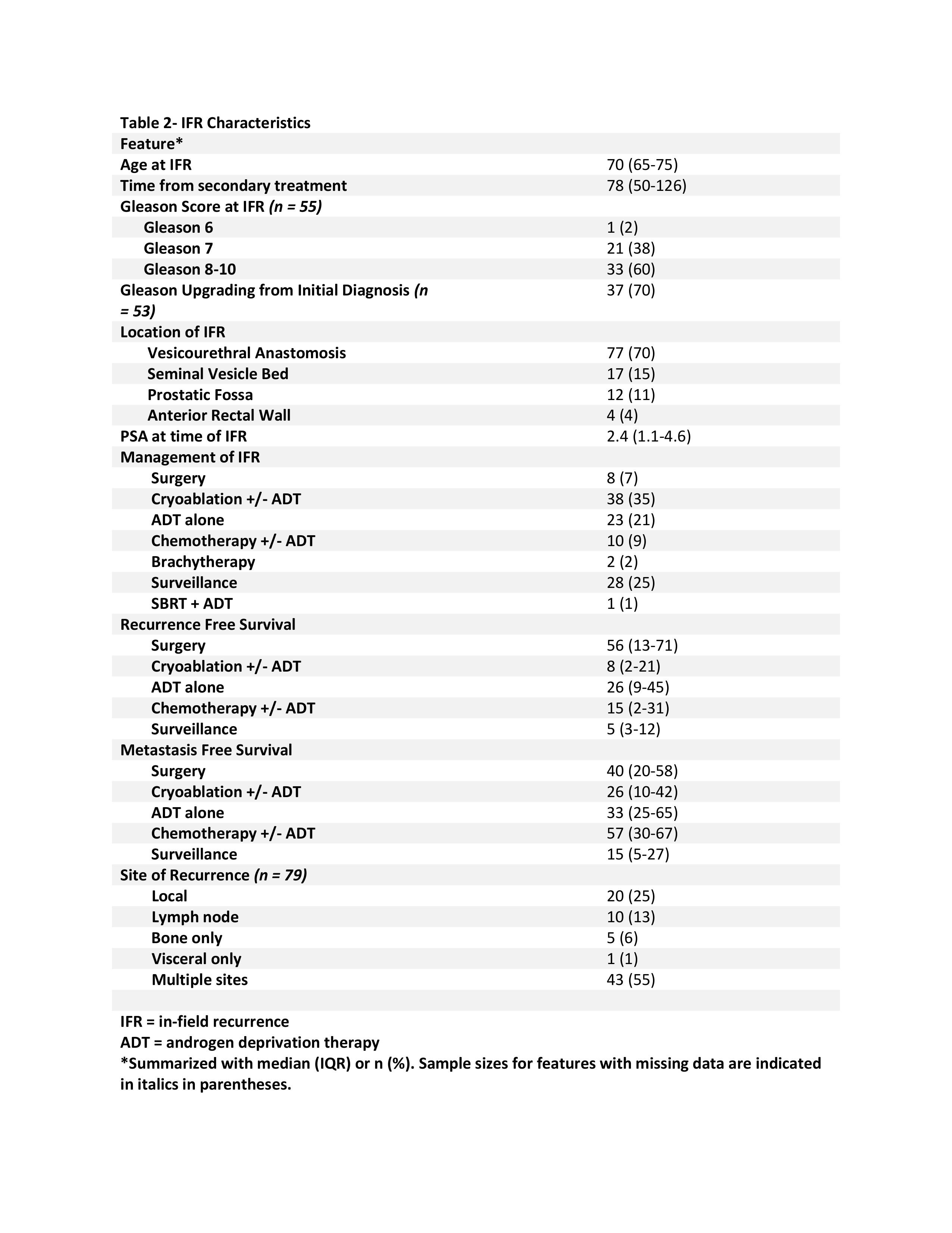
Introduction: Following local therapy for prostate cancer (PCa), 20-50% of men develop biochemical recurrence, requiring additional treatment. For a select number of men, there is persistence of local disease following salvage therapy without distant metastasis, termed in-field recurrence (IFR). This presents a challenging clinical scenario, with little data guiding optimal management. Our group sought to define the natural history, oncologic outcomes, and treatment patterns associated with IFR. Methods: We queried a prospectively maintained, single institution, prostate cancer registry to identify men developing IFR following radical prostatectomy and radiation from 1990-2020. IFR was defined as biopsy-proven recurrent PCa or presence of persistent choline-avid lesions in the prior radiation field without concerns for metastasis on choline PET imaging. Clinicopathologic features were recorded. Continuous features were summarized with medians and interquartile ranges (IQRs) and categorical features were summarized with frequencies and percentages. Results: In total, 110 patients with IFR were identified. Clinicopathologic features are listed in Table 1. Median time to IFR after salvage therapy was 78 months (IQR 50-126). Median follow-up after IFR was 69 months (IQR 40-97). IFR characteristics are documented in Table 2. At last follow-up, 98 patients recurred at a median of 10 months (IQR 3-27). Distant metastasis developed in 50 patients (45%) at a median of 27 months (IQR 14-50). Twenty patients (18%) had persistent or recurrent local disease following initial management. Fourteen died from PCa at a median of 39 months after treatment of IFR (IQR 23-60). Median follow-up from IFR was 76 months (IQR 48-100) in those alive at last follow-up. Conclusions: We found IFR presents years following completion of therapy for initial PCa recurrence. While curative management strategies may be attempted, local and distant metastatic recurrence is common and often requires systemic androgen-deprivation therapy. However, many patients experience durable long-term survival. SOURCE OF Funding: NA