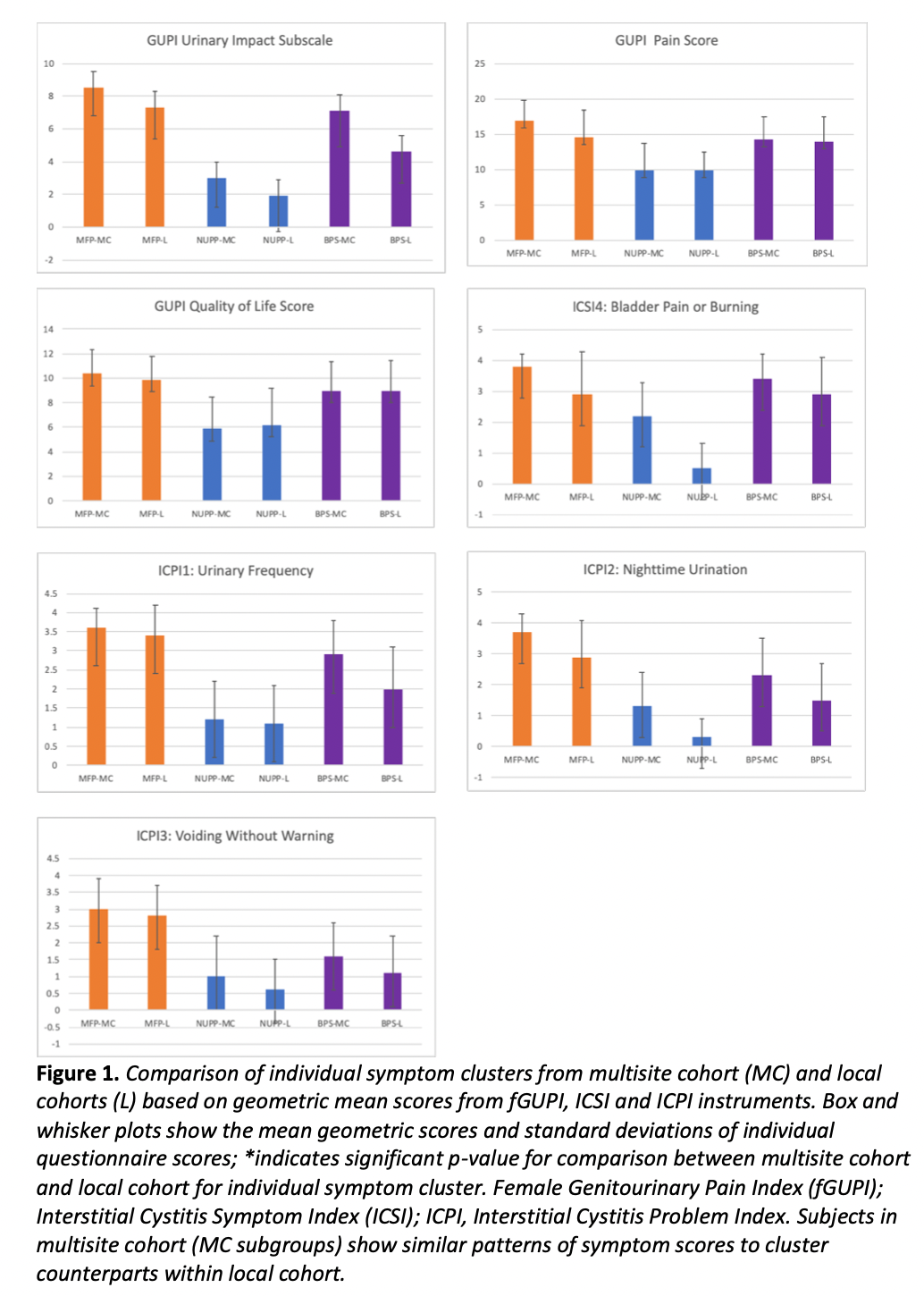
Introduction: Patients with chronic urologic pelvic pain present a unique challenge as their underlying condition is largely a diagnosis of exclusion. In the present analysis, we extend symptom cluster definitions from a pilot study evaluating bladder pain among ambulatory females to a multicenter prospectively recruited dataset using unsupervised machine learning techniques to assess the stability and reproducibility of these bladder pain phenotypes. Methods: Unsupervised machine learning techniques were applied to patient reported symptoms extracted from the female Genitourinary Pain Index and Interstitial Cystitis Symptom and Problems Indices. Responses from 130 premenopausal female subjects without current opioid use enrolled in the Multidisciplinary Approach to the Study of Chronic Pelvic Pain (MAPP) research network were analyzed. Symptom clusters generated from the MAPP multisite cohort (MC) were compared to previously published pilot data results to assess for alignment and concordance. Results: Symptom clusters included a nonurological pelvic pain group with localized pain unrelated to the micturition cycle (NUPP-MC), a myofascial pelvic pain group (MFP-MC) with stranguria, sensation of incomplete bladder emptying, urinary urgency and high symptom bother/severity, and a bladder specific-pain group (BPS-MC) with pain worsened by bladder filling and relieved by bladder emptying. Cluster comparisons demonstrated concordance by subtype between local and multisite cohorts on various domains of bladder pain (Figure 1). MFP–MC patients had more pain severity (p < 0.001), diffuse body pain involvement (p=0.02), pelvic floor tenderness (p=0.01), and increased number of flares (p=0.009). MFP-MC cluster assignation was associated with severe sexual dysfunction, impaired relationship scores as well as sleep and anxiety disturbances. Conclusions: Patient reported symptoms can be utilized to perform deep phenotyping and identify distinct subgroups of perceived bladder pain. Phenotypic clusters appear stable both in a single institutional pilot cohort and a larger multi-site study. Further validation of these phenotypes and their associations with response to therapy will clarify how to target treatment of bladder pain. SOURCE OF Funding: None