Northwestern University Feinberg School of Medicine
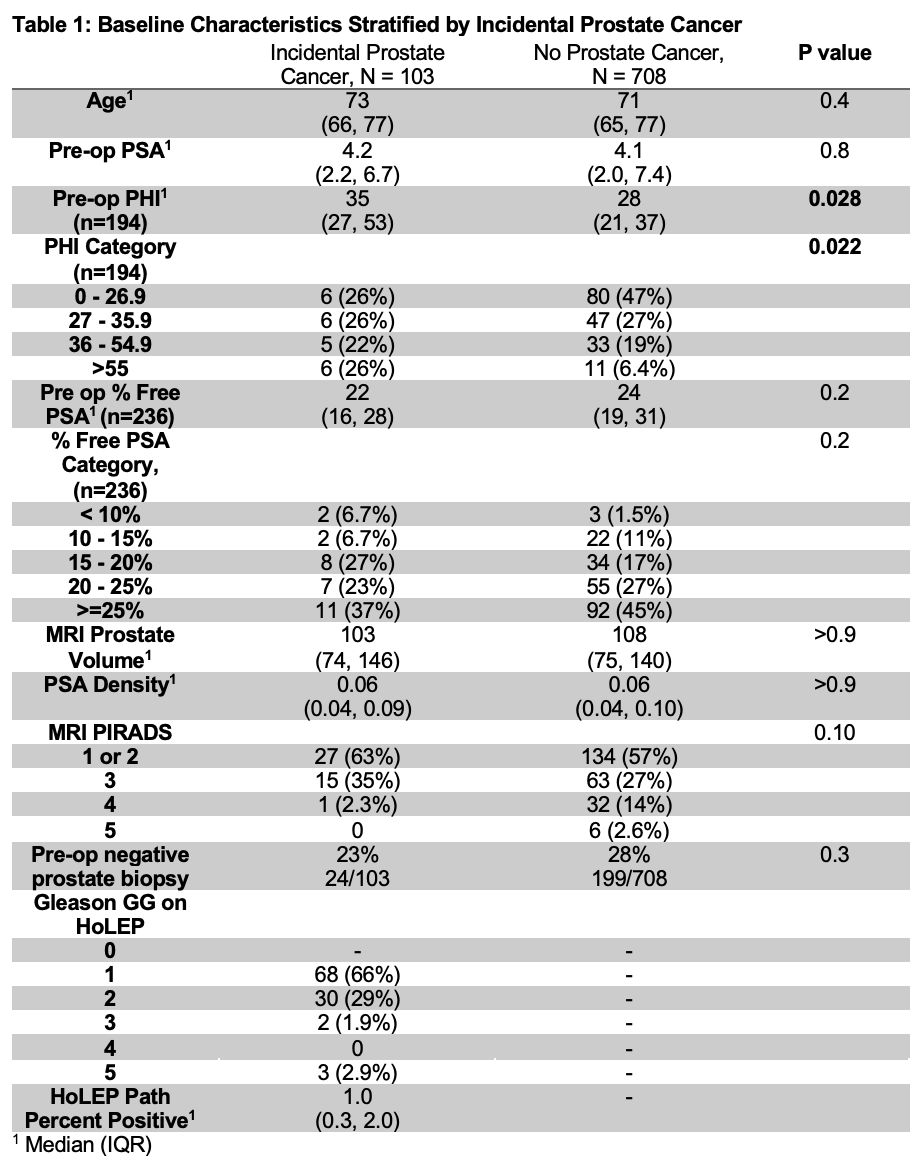
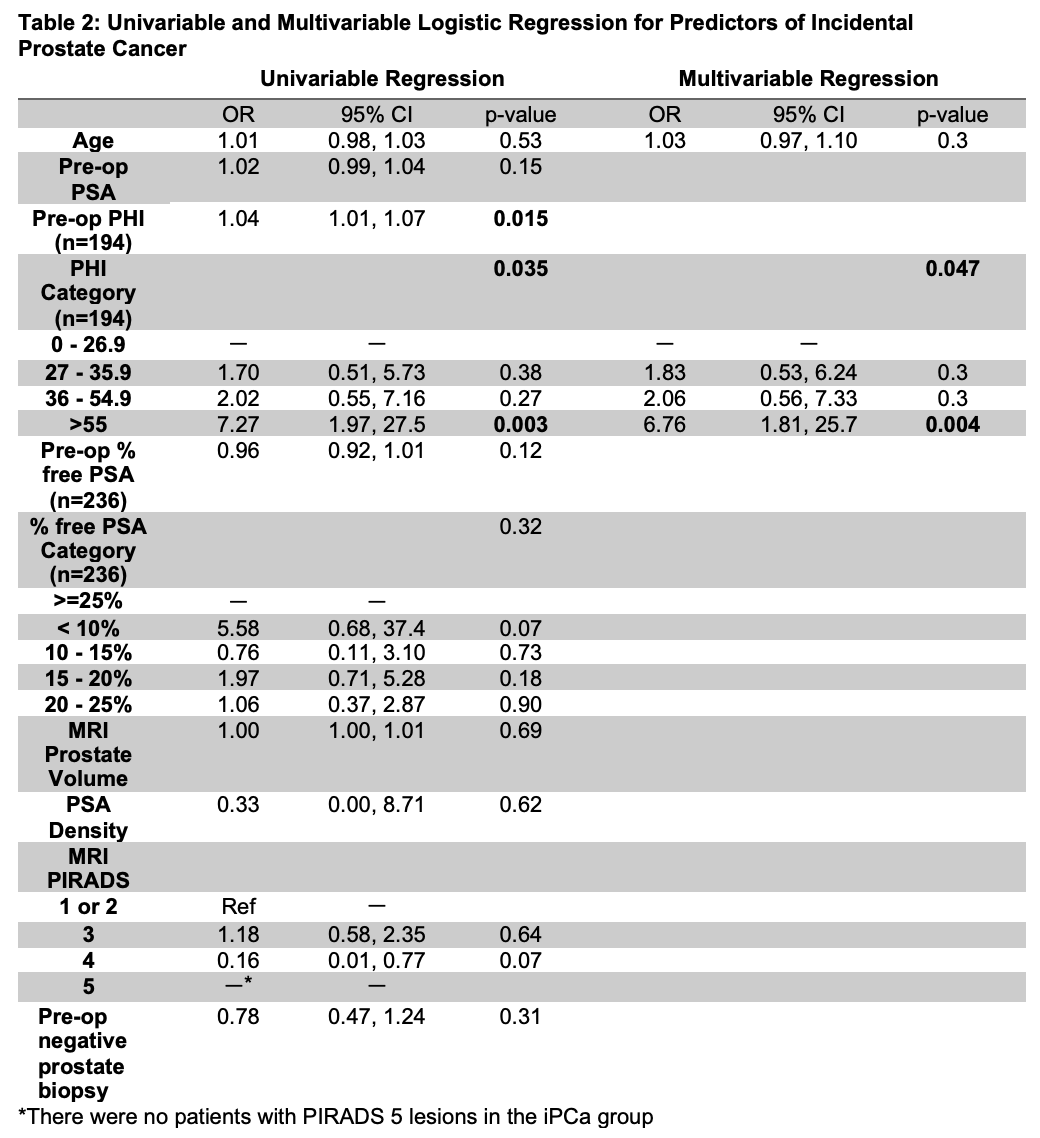
Introduction: Holmium laser enucleation of the prostate (HoLEP) is a size-independent treatment option for BPH. Unfortunately, despite an appropriate work up for elevated PSA, incidental prostate cancer (iPCa) is found in up to 20% of men undergoing HoLEP. HoLEP is not a therapeutic surgical treatment for prostate cancer, so we sought to identify risk factors for iPCa at the time of HoLEP for pre-operative risk stratification. Methods: We retrospectively queried for men undergoing HoLEP from January 2021-July 2022, and obtained clinicopathologic data. Men with prior history of prostate cancer were excluded (n=55). T test, chi-squared, Fisher’s exact test, and multivariable logistic regression were performed. Results: On univariable regression, PHI >55 was a significant predictor of iPCa (OR 7.27, 95% CI 1.97-27.5, p=0.003), which remained significant on multivariable adjustment for age (OR 6.76, 95% CI 1.81-25.7, p=0.004). On univariable regression, preoperative PSA (p=0.15), % Free PSA (p=0.12), MRI prostate volume (p=0.69), PSA density (p=0.62), prior negative biopsy (p=0.31), and MRI PIRADS were not significantly associated with iPCa. Of the 39 patients who had pre-operative PIRADS 4 or 5 lesions, 36 patients had pre-operative negative biopsy, and only one patient was ultimately found to have iPCa. 66% (68/103) of iPCa was Gleason Grade Group 1 with a median of 1% of tissue positive. Conclusions: PHI >55 is an independent predictor of iPCa at time of HoLEP. To our knowledge, this is the first report of the association of PHI and iPCa. SOURCE OF Funding: None