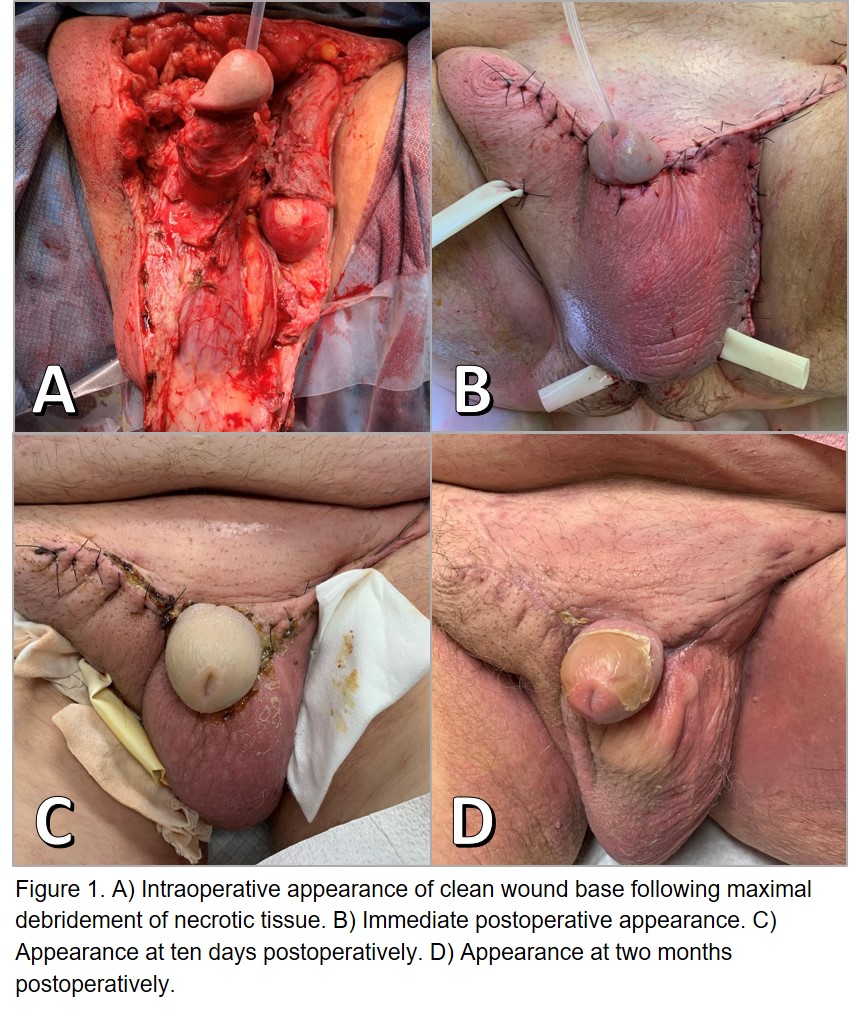
Introduction: Fournier’s gangrene (FG) is a necrotizing infection of the male genitalia associated with significant loss of genital tissue. Traditionally, loss of >50% of scrotal skin is thought not to be amenable to primary closure and is often left to heal by secondary intention due to concern for infection recurrence. We hypothesize that delayed primary closure (DPC) for FG patients is feasible and safe for large skin defects. Methods: A single institution retrospective review was done from October 2020 to October 2022 of adult males that underwent DPC for FG. Patients were assessed for overall stability at serial debridements and a healthy wound bed prior to closure. All patients had minimum follow-up at 1 and 4 weeks for drain removal and wound check. Additional follow-ups were scheduled as needed. Clinical data including demographics, medical history, length of stay, operative details, and complications were collected. Results: We identified 13 patients that underwent DPC. Average age was 61.3 years and average BMI was 36.2 kg/m2. The majority of patients had hypertension and/or diabetes mellitus (84.6%). Median number of FG debridements was 2 (IQR 2-3), with a median time to closure of 6 days (IQR 3-11) and length of stay of 11 days (IQR 9-16). Average genital defect size was 119 cm2 (range 44-346 cm2). Five patients (38.4%) were closed using scrotal flaps alone; other closures used advancement flaps from the inner thigh, lower abdomen, and perineum. There were 4 Clavien-Dindo III complications: 2 partial flap necrosis, 1 wound dehiscence, and 1 instance of bleeding. Three were successfully managed by re-exploration and re-closure. One flap failure occurred in a patient with pre-existing radiation and rectourethral fistula. After re-closure attempt, the wound re-opened and was left to heal by secondary intention. The majority of patients were able to be discharged home directly (69.2%). At an average follow-up of 3.5 months, 46.2% of patients had no known complications. One patient (7.7%) experienced superficial genital cellulitis at 6.5 weeks post-op which was successfully managed with antibiotics. Conclusions: Our data from a single institution shows that DPC is safe and effective with few infectious sequelae. Patients with large defects may benefit from less complex wound management requirements and discharge directly to home. SOURCE OF Funding: None