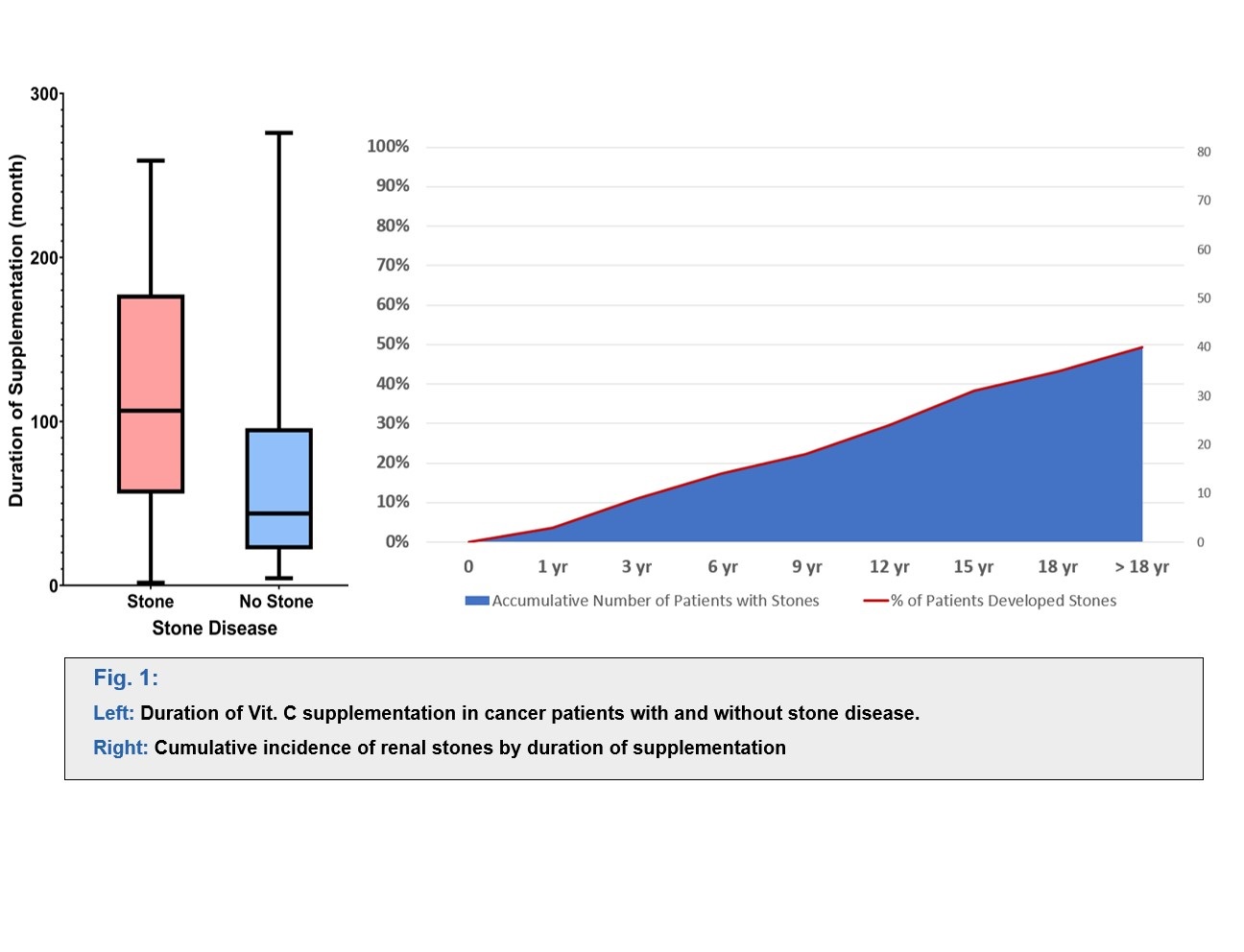
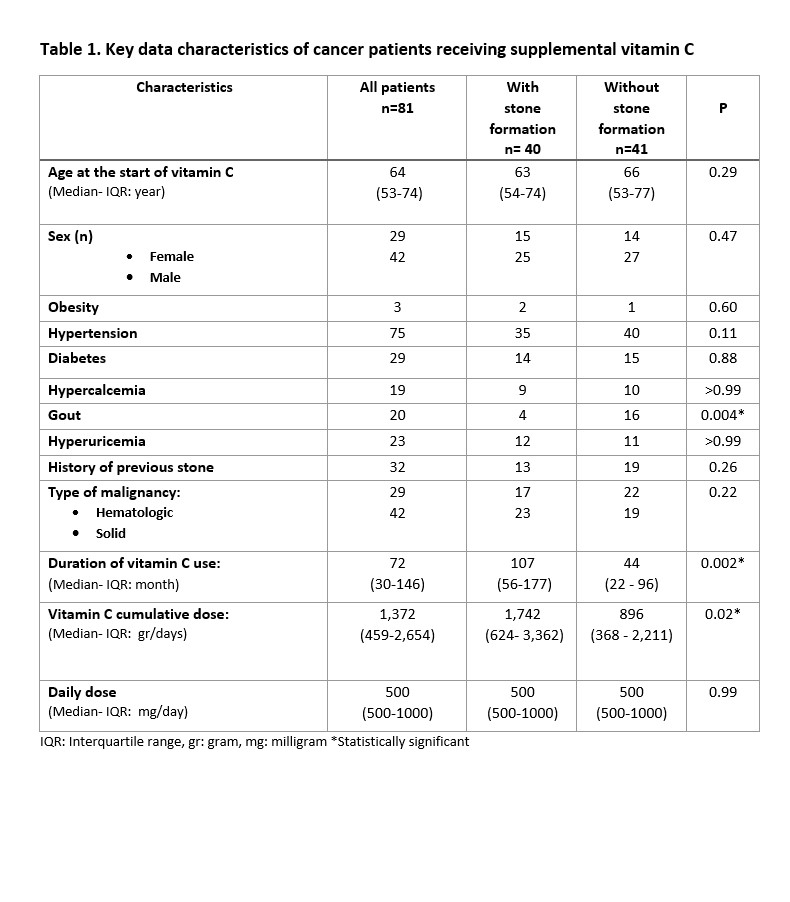
Introduction: Vitamin C has been proposed as a complementary therapy in cancer patients to improve survival and quality of life. However, vitamin C is a known metabolic precursor of oxalate, potentially increasing the risk of kidney stone disease. We aimed to investigate potential associations between vitamin C parameters and stone formation in malignancies. Methods: Patients with cancer who were taking vitamin C =200 mg for =3 months were retrospectively identified from using ICD-10 and CPT codes. Those with recurrent urolithiasis (=2 stone events) or a history of stone >3mm within the year prior to vitamin C initiation were excluded from the study. New kidney stone formation were characterized based on imaging studies before and after initiation of vitamin C. Descriptive statistics and logistic regression were used to analyze stone formation risk and investigate potential predictors. Results: A total of 81 patients were included. Patient demographics and vitamin C therapy details are summarized in Table 1. Median age for total cohort was 64 years. 42 patients had solid cancers (urologic and non-urologic) and 29 had hematologic malignancies. Median dose and duration of supplementation were 500 mg and 6 years, respectively, with a mean cumulative dose of 1.4 kilograms. Duration and cumulative dose of vitamin C were associated with new stone development (Figure 1). Moreover, a significant association was found between calcium oxalate supersaturation and the risk of subsequent stone formation regardless of dose differences. (RR=2.54, P=0.01) Conclusions: Our findings suggest that vitamin C supplementation confer lithogenic risk in cancer patients that may happen at doses lower than previously suggested. Furthermore, the duration of supplementation may affect cumulative risk of new stone disease as an independent risk factor. Our results also reinforce the importance of supersaturation urinary testing in this cohort of patients. SOURCE OF Funding: N/A