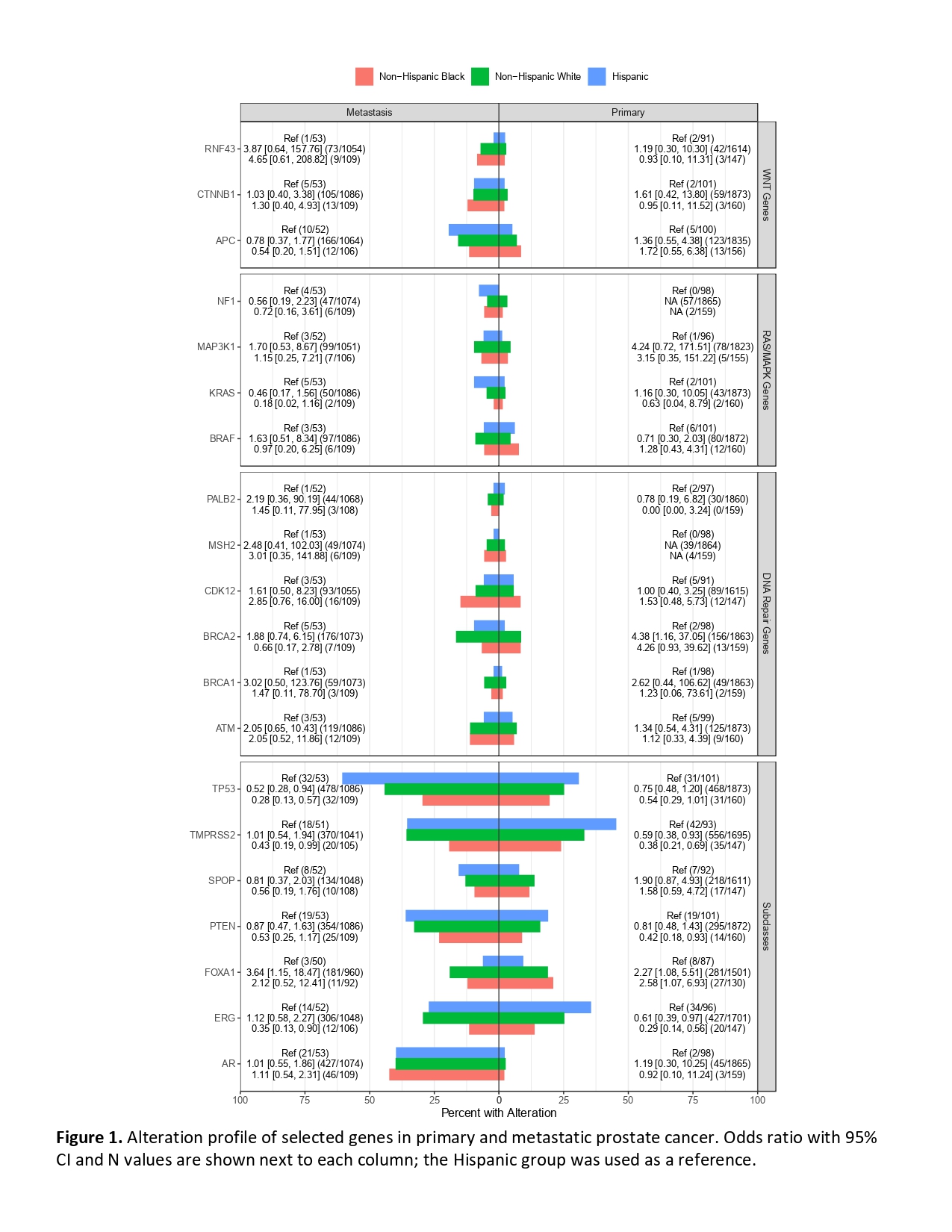
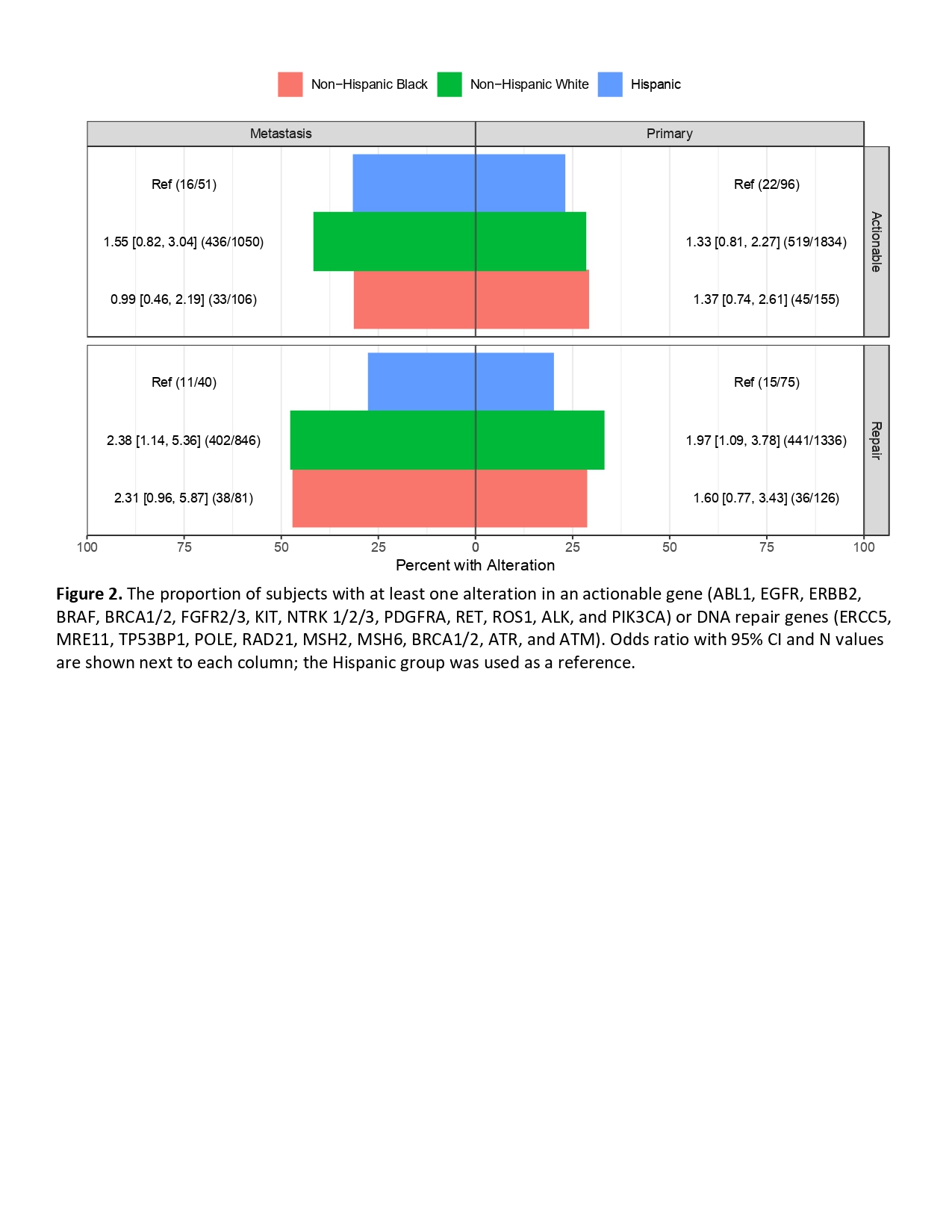
Introduction: Prostate cancer is the most common cancer among Hispanic men and a leading cause of cancer death in Hispanic countries. Differences in DNA alterations in prostate cancer among White, Black, and Asian men have been widely described. This is the first description of the DNA alterations frequency in primary and metastatic prostate cancer of Hispanic men. Methods: We utilized the targeted next-generation sequencing tumor genomic profiles from men with prostate cancer who underwent clinical sequencing tests at academic medical centers (GENIE 11th), for a total of 4,169 patients. We used data from all institutions with the Ethnicity category available for Spanish/Hispanic, non-Hispanic White, and non-Hispanic Black men. Numbers of men by ethnicity and racial categories were analyzed via Fisher’s exact test. Results: Our final cohort comprised 2,140 primary and 1,251 metastatic adenocarcinomas. Among primary cancer, TMPRSS2 alterations were less common in White men as compared with Hispanic men (32.80% vs 45.16%; P=0.017) and Black men (23.81% vs 45.16%; P=0.0009). FOXA1 alterations were present more common in Black men than Hispanic men (20.77% vs 9.20%; P=0.024). For metastatic disease, TP53 alterations were less common in White men as compared with Hispanic (44.01% vs 60.38%; P=0.023) or Black (29.36% vs 60.38%; P= <0.001) men. FOXA1 alterations occurred more frequently in White men than Hispanic men (18.85% vs 6.00%; P=0.022). No significant differences were noted in the prevalence of actionable alterations between races. As patient and tumor characteristics are unknown in this dataset, differences in these characteristics according to race were not considered in the analyses. Conclusions: There appear to be clear differences in the frequency of DNA alterations in primary and metastatic prostate cancer among Hispanic, white, and black men. Notably, we found no significant differences in the prevalence of actionable genetic alterations between the groups, suggesting that a significant number of Hispanic men could benefit from the development of targeted therapies. SOURCE OF Funding: J.E.S is supported by the Frederick J. and Theresa Dow Fund of the New York Community Trust, the Vinney Scholars Award, and a Damon Runyon Cancer Research Foundation Physician-Scientist Training Award. F.R.S. is supported by NCI CA2333216, CA043703, CA241956, and CA254566.