Assistant Professor of Urology Dept. of Urology Ludwig-Maximilians University Munich
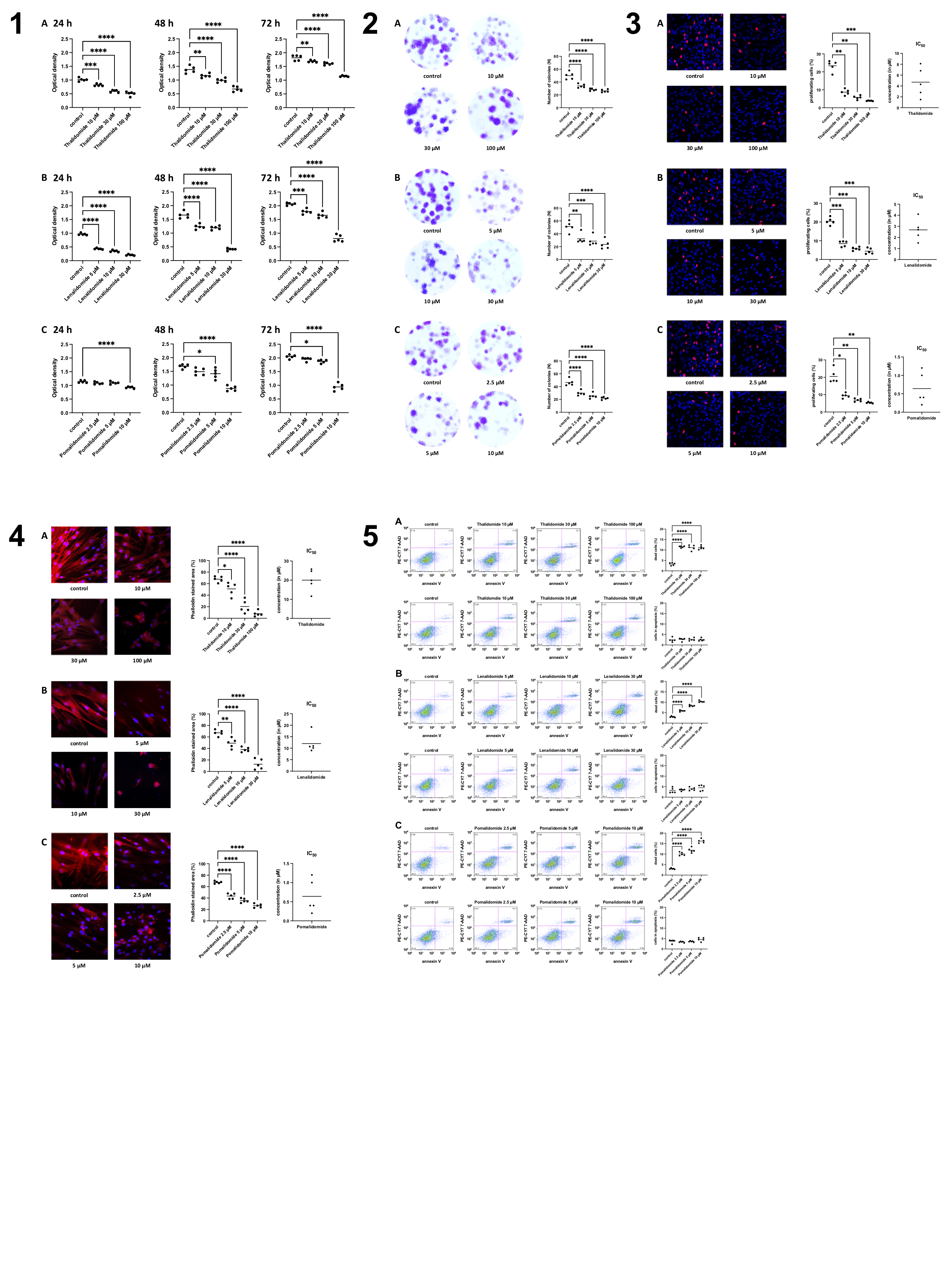
Introduction: While lower urinary tract symptoms (LUTS) consist of voiding (BPH) and storage disorders (OAB), new AUA and EAU guidelines take into account the mounting number of patients suffering from both, so called “mixed LUTS”. Recently, we could show that IMiDs (thalidomide, lenalidomide and pomalidomide) inhibit prostate smooth muscle contraction, modulate cytoskeletal actin organization, and reduce prostate stromal cell growth at the same time, without showing cytotoxic effects. Based on these promising data, we now investigated the effects of IMiDs on cellular functions, including cytoskeletal organization, and growth in bladder cells. Methods: Experiments were carried out in an immortalized line of cultured human bladder detrusor smooth muscle cells (HBdSMC). Cytoskeletal organization was visualized by phalloidin staining, while cell growth was assessed using an EdU and cell colony assay. Cell viability was quantified in CCK8 assay, and FACS. Results: IMiDs ([A] thalidomide 10-100µM, [B] lenalidomide 5-30µM, and [C] pomalidomide 2.5-10µM) significantly reduced the number of viable WPMY-1 cells in a concentration- and time-dependent manner (fig. 1). Correspondingly, proliferation of WPMY-1 cells was significantly reduced in a concentration-dependent manner (fig. 2 and 3), without showing pro-apoptotic effects (fig. 4). In parallel, IMiDs induced cytoskeletal disorganization: while the cellular shape of control cells was characterized by many long and thin protrusions containing bundles of actin filaments, this structure collapsed after treatment with IMiDs (fig. 5). Conclusions: IMiDs impair human detrusor smooth muscle growth, which is paralleled by a breakdown of the cytoskeleton, which may inhibit exaggerated bladder smooth muscle contraction in OAB. Urodynamic effects in vivo and a possible application in LUTS appear possible. Together with our previous data, this may suggest a possible novel drug class in LUTS treatment. SOURCE OF Funding: None.